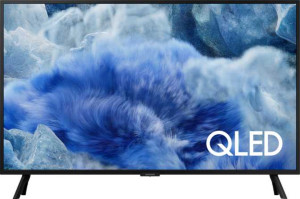
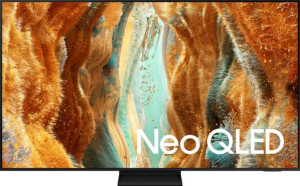
At the foundation, both the QN85Q8FAAF and the QN85QN70FAF share an identical panel specification: a 84.5″ 4K (3840 x 2160) QLED LCD display at 52 ppi, with a 10-bit color pipeline rendering 1.07 billion colors, a 144Hz refresh rate, and full 178° viewing angles in both directions. HDR support is also a perfect match — both carry HDR10, HDR10+, and HLG, while neither supports Dolby Vision.
The two meaningful differentiators lie in backlighting technology and adaptive sync compatibility. The QN85QN70FAF uses a Mini-LED backlight, which enables a significantly higher number of local dimming zones compared to the conventional LED backlight in the QN85Q8FAAF. In practice, this translates to deeper blacks, more precise brightness control in high-contrast scenes, and better HDR punch — a tangible picture quality advantage, especially in dark-room viewing. On the gaming front, the QN85QN70FAF also adds Nvidia G-Sync and AMD FreeSync Premium Pro on top of standard FreeSync Premium, making it compatible with a broader range of GPUs and enabling variable refresh rate with HDR — something the QN85Q8FAAF cannot deliver.
The QN85QN70FAF holds a clear edge in this category. Its Mini-LED backlighting is a genuine upgrade in display quality, not just a spec checkbox, and its wider adaptive sync ecosystem makes it the stronger choice for both cinephiles and gamers. The QN85Q8FAAF is competitive on paper but falls behind on the two specs that matter most for real-world performance differentiation.