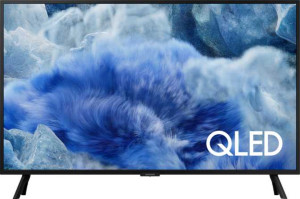
Samsung QN85Q8FAAF 85"
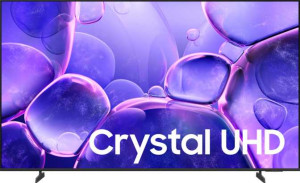
Samsung UN85U8000FF 85"

Samsung QN85Q8FAAF 85" Samsung UN85U8000FF 85"

Overview

Welcome to our in-depth comparison of the Samsung QN85Q8FAAF 85″ and the Samsung UN85U8000FF 85″ — two 85-inch 4K televisions from Samsung that share the same screen size but take notably different approaches to picture technology, motion handling, and physical design. While both sets agree on many fundamentals, the battlegrounds here are clear: panel technology and refresh rate on one side, and size, weight, and power efficiency on the other. Read on to discover which of these large-screen TVs is the right fit for your living space and viewing needs.

Common Features

  • Both TVs have a 4K (UHD) display resolution.
  • Both TVs have a screen size of 84.5″.
  • Both TVs have a resolution of 3840 x 2160 px.
  • Both TVs have a pixel density of 52 ppi.
  • Both TVs support 1070 million display colors with 10-bit bit depth.
  • HDR10 support is available on both products.
  • HDR10+ support is available on both products.
  • Both TVs use LED-backlit LCD panel technology.
  • Bluetooth is available on both products, with version 5.3.
  • Both TVs support Wi-Fi, including Wi-Fi 4 (802.11n) and Wi-Fi 5 (802.11ac).
  • Both TVs use HDMI 2.1 and include one RJ45 port.
  • Miracast support is available on both products.
  • Neither TV has a 3.5 mm audio jack socket.
  • Both TVs deliver 2 x 10W audio output power with stereo speakers.
  • Dolby Digital support is available on both products.
  • Dolby Audio support is available on both products.
  • Digital Out support is available on both products.
  • Neither TV has SRS TheaterSound HD or a subwoofer, and neither supports Dolby Virtual.
  • Both TVs support VESA mounting.
  • AirPlay is available on both products.
  • Both TVs have a built-in smart TV platform and are compatible with Google Assistant and Alexa.
  • Neither TV works with Siri or Apple HomeKit.
  • Remote smartphone control support is available on both products.
  • USB recording support is available on both products.
  • Both TVs have a standby power consumption of 0.5W.

Main Differences

  • The Samsung QN85Q8FAAF 85″ uses a QLED panel in addition to LED-backlit LCD, while the Samsung UN85U8000FF 85″ uses LED-backlit LCD only.
  • The refresh rate is 144Hz on the Samsung QN85Q8FAAF 85″ and 60Hz on the Samsung UN85U8000FF 85″.
  • The Samsung QN85Q8FAAF 85″ has 4 HDMI ports, while the Samsung UN85U8000FF 85″ has 3 HDMI ports.
  • The Samsung QN85Q8FAAF 85″ has 2 USB ports, while the Samsung UN85U8000FF 85″ has 1 USB port.
  • The width is 1899.9 mm on the Samsung QN85Q8FAAF 85″ and 1889.9 mm on the Samsung UN85U8000FF 85″.
  • The weight is 41322 g on the Samsung QN85Q8FAAF 85″ and 29200 g on the Samsung UN85U8000FF 85″.
  • The thickness is 27.9 mm on the Samsung QN85Q8FAAF 85″ and 77 mm on the Samsung UN85U8000FF 85″.
  • The height is 1087.1 mm on the Samsung QN85Q8FAAF 85″ and 1083.5 mm on the Samsung UN85U8000FF 85″.
  • The volume is 57624.137991 cm³ on the Samsung QN85Q8FAAF 85″ and 157673.41205 cm³ on the Samsung UN85U8000FF 85″.
  • A rechargeable remote control is included with the Samsung QN85Q8FAAF 85″ but not with the Samsung UN85U8000FF 85″.
  • The operating power consumption is 265W on the Samsung QN85Q8FAAF 85″ and 218W on the Samsung UN85U8000FF 85″.
Specs Comparison
Samsung QN85Q8FAAF 85"

Samsung QN85Q8FAAF 85"

Samsung UN85U8000FF 85"

Samsung UN85U8000FF 85"

Display:
display resolution 4K (UHD) 4K (UHD)
Display type QLED, LED-backlit, LCD LED-backlit, LCD
screen size 84.5" 84.5"
resolution 3840 x 2160 px 3840 x 2160 px
pixel density 52 ppi 52 ppi
display colors 1070 million 1070 million
bit depth 10-bit 10-bit
refresh rate 144Hz 60Hz
supports HDR10
supports HDR10+
supports Dolby Vision
supports HLG
has anti-reflection coating
has an ambient light sensor
maximum horizontal viewing angle 178º 178º
maximum vertical viewing angle 178º 178º

Both the Samsung QN85Q8FAAF and the Samsung UN85U8000FF share the same 84.5″ panel size, 3840 x 2160 (4K UHD) resolution, 52 ppi pixel density, 10-bit color depth, and 1.07 billion display colors — meaning their base picture quality foundations are identical on paper. HDR support is also a wash: both handle HDR10, HDR10+, and HLG, while neither supports Dolby Vision. Anti-reflection coating and an ambient light sensor are present on both, and viewing angles max out at a wide 178° in both directions for each model.

The two meaningful differentiators are panel technology and refresh rate. The QN85Q8FAAF uses QLED technology — a quantum-dot layer over the LCD backlight — which typically delivers noticeably higher peak brightness and more saturated, accurate colors compared to a standard LED-LCD like the UN85U8000FF. More impactfully, the Q8FAAF runs at a 144Hz refresh rate versus the U8000FF′s 60Hz. In practice, 144Hz means dramatically smoother motion in fast-action content and sports, and it opens the door to high-frame-rate gaming with reduced motion blur and input lag — benefits that 60Hz simply cannot match.

The QN85Q8FAAF has a clear advantage in this category. Its QLED panel raises the color and brightness ceiling above what the standard LED-LCD in the U8000FF can achieve, and the jump from 60Hz to 144Hz is one of the most perceptible display upgrades a viewer or gamer can experience. Unless the U8000FF′s lower price point is a deciding factor, the Q8FAAF wins the display comparison outright.

Connectivity:
Has Bluetooth
HDMI version HDMI 2.1 HDMI 2.1
HDMI ports 4 3
supports Wi-Fi
Wi-Fi version Wi-Fi 4 (802.11n), Wi-Fi 5 (802.11ac) Wi-Fi 4 (802.11n), Wi-Fi 5 (802.11ac)
Bluetooth version 5.3 5.3
USB ports 2 1
RJ45 ports 1 1
supports Miracast
has a socket for a 3.5 mm audio jack
has an external memory slot
has a VGA connector
has a DVI connector

At the wireless level, the two TVs are evenly matched: both carry Bluetooth 5.3, dual-band Wi-Fi 5 (802.11ac), and Miracast support. Bluetooth 5.3 ensures stable, low-latency connections to soundbars, headphones, and peripherals, while Wi-Fi 5 is more than capable of streaming 4K content without bottlenecking either set.

Where the gap opens up is in wired connectivity. The QN85Q8FAAF comes equipped with 4 HDMI 2.1 ports and 2 USB ports, while the UN85U8000FF offers only 3 HDMI 2.1 ports and a single USB port. For a living room setup with a gaming console, Blu-ray player, soundbar, and streaming device all competing for slots, that extra HDMI port on the Q8FAAF removes the need for an external switch entirely. The additional USB port similarly adds flexibility for media drives or service dongles without juggling connections.

The QN85Q8FAAF holds the edge in connectivity. The wireless foundations are identical across both models, but the Q8FAAF′s superior port count — one more HDMI and one more USB — is a tangible, everyday advantage for users running multi-device home theater or gaming setups.

Audio:
supports Dolby Digital
audio output power 2 x 10W 2 x 10W
supports Digital Out
has SRS TheaterSound HD
has stereo speakers
has Dolby Audio
supports Dolby Virtual
has a subwoofer
HDMI ARC / eARC HDMI ARC, HDMI eARC HDMI ARC, HDMI eARC

Audio is the rare category where these two televisions are in complete lockstep. Both deliver 2 x 10W stereo output, support Dolby Digital and Dolby Audio, include Digital Out, and offer both HDMI ARC and eARC — the latter being the more important of the two, as eARC carries lossless, high-bandwidth audio formats to a connected soundbar without compression.

Neither model includes a subwoofer or any virtualization processing, which is typical for flat-panel TVs at this size. The 20W total output is adequate for casual viewing but will fall short in larger rooms or for users who want cinematic impact — making the eARC port the most practically valuable audio feature on both sets, since it enables a full external sound system to take over seamlessly.

This group is a complete tie. Every audio specification — power output, format support, and port options — is identical across the QN85Q8FAAF and the UN85U8000FF. Audio hardware should not be a deciding factor between these two models; prospective buyers who prioritize sound quality will want to budget for an external soundbar or AV receiver regardless of which TV they choose.

Design:
width 1899.9 mm 1889.9 mm
weight 41322 g 29200 g
thickness 27.9 mm 77 mm
height 1087.1 mm 1083.5 mm
volume 57624.137991 cm³ 157673.41205 cm³
Supports VESA mount

Footprint-wise, these two 85″ sets are nearly interchangeable — width and height differ by only a few millimeters. The story changes sharply, however, when you look at depth and weight. The QN85Q8FAAF measures just 27.9 mm thick, making it an exceptionally slim panel that sits flush and unobtrusive whether wall-mounted or on a stand. The UN85U8000FF, by contrast, is 77 mm deep — nearly three times thicker — which is more characteristic of a conventional LED-LCD chassis and will protrude noticeably from a wall mount.

Weight tells the opposite story. Despite its slimmer profile, the Q8FAAF comes in at 41.3 kg, compared to the U8000FF′s considerably lighter 29.2 kg. That 12 kg difference is significant during installation: at 85″, a heavier panel demands more robust wall-mount hardware and ideally a two-person install. The lighter U8000FF is meaningfully easier to maneuver and places less stress on mounting infrastructure.

Neither product wins this category outright — the advantage depends entirely on use case. The Q8FAAF has the clear edge for aesthetics and wall-mounting depth, delivering a sleek, low-profile look. But if ease of installation and reduced mount load are the priority, the U8000FF′s lighter weight is a genuine practical benefit. Both support VESA mounting, so the choice here comes down to whether you value a slimmer silhouette or a lighter, easier-to-handle set.

Features:
release date April 2025 March 2025
has AirPlay
has built-in smart TV
compatible with Google Assistant
works with Alexa
works with Siri/Apple HomeKit
supports a remote smartphone
has a rechargeable remote control
supports USB recording
operating power consumption 265W 218W
standby power consumption 0.5W 0.5W
has a search browser
has a sleep timer
has a child lock
warranty period 1 years 1 years
has voice commands

The smart platform experience is essentially identical on both TVs: AirPlay, Google Assistant, Alexa, smartphone remote support, USB recording, voice commands, and a full browser are all present on each model. Neither supports Apple HomeKit/Siri, and both carry a one-year warranty. For smart home integration and day-to-day usability, either set will behave the same way.

Two meaningful differences do emerge. First, the QN85Q8FAAF includes a rechargeable remote control, while the UN85U8000FF does not. This is a quality-of-life distinction that eliminates the recurring cost and inconvenience of disposable batteries — a small but genuinely appreciated perk over years of ownership. Second, power consumption diverges noticeably: the Q8FAAF draws 265W during operation versus the U8000FF′s 218W. That 47W gap, running several hours daily, adds up to a measurable difference on an electricity bill over the lifespan of the TV.

The QN85Q8FAAF has a narrow edge thanks to its rechargeable remote, which is a convenience most users will appreciate daily. However, the UN85U8000FF counters with lower power consumption, which is the more financially significant factor over time. Neither advantage is decisive enough to define the category — users who prioritize convenience lean toward the Q8FAAF, while those mindful of running costs will favor the U8000FF.

Comparison Summary & Verdict

After examining every specification, these two Samsung 85-inch 4K TVs reveal themselves as products aimed at different priorities. The Samsung QN85Q8FAAF 85″ stands out with its QLED panel and 144Hz refresh rate, making it the stronger choice for viewers who demand vivid colors and ultra-smooth motion — particularly for sports and gaming. Its slimmer 27.9 mm profile and rechargeable remote add a premium feel, though it does consume more power at 265W and weighs considerably more. The Samsung UN85U8000FF 85″, by contrast, offers a more modest 60Hz LED panel but wins on lighter weight at 29200 g and lower operating power consumption of 218W, making it a more practical and energy-conscious option for everyday TV watching. Both share strong smart TV features, HDR10+ support, and solid connectivity, so neither disappoints on fundamentals.

Samsung QN85Q8FAAF 85
Buy Samsung QN85Q8FAAF 85" if...

Buy the Samsung QN85Q8FAAF 85″ if you want a premium QLED picture with a 144Hz refresh rate, more HDMI and USB ports, and a slimmer, rechargeable-remote-equipped design.

Samsung UN85U8000FF 85
Buy Samsung UN85U8000FF 85" if...

Buy the Samsung UN85U8000FF 85″ if you prioritize a significantly lighter TV with lower power consumption and a more straightforward LED panel for everyday viewing.