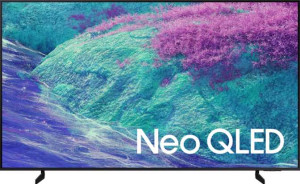
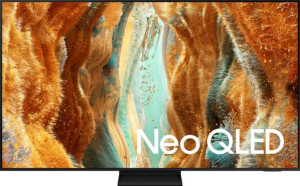
Samsung QN85QN1EFAF 85"
Samsung QN85QN70FAF 85"

Samsung QN85QN1EFAF 85" Samsung QN85QN70FAF 85"

Common Features

  • Both products have a 4K (UHD) display resolution.
  • Both products feature a QLED, LED-backlit, LCD, and Mini-LED display type.
  • Both products have a screen size of 84.5″.
  • Both products have a resolution of 3840 x 2160 px.
  • Both products have a pixel density of 52 ppi.
  • Both products have 1070 million display colors.
  • Both products have a 10-bit bit depth.
  • Both products have a 144Hz refresh rate.
  • Both products support AMD FreeSync, AMD FreeSync Premium, and AMD FreeSync Premium Pro for adaptive synchronization.
  • Both products support Bluetooth.
  • Both products have 4 HDMI ports.
  • Both products support Wi-Fi 4 (802.11n) and Wi-Fi 5 (802.11ac).
  • Both products have Bluetooth version 5.3.
  • Both products have 2 USB ports.
  • Both products have 1 RJ45 port.
  • Both products support Miracast.
  • Both products support Dolby Digital.
  • Both products have a 2 x 10W audio output power.
  • Both products support Digital Out.
  • Both products support Dolby Digital Plus.
  • Both products support Dolby Atmos.

Main Differences

  • Samsung QN85QN1EFAF 85″ supports AMD FreeSync, AMD FreeSync Premium, and AMD FreeSync Premium Pro, while Samsung QN85QN70FAF 85″ supports Nvidia G-Sync, AMD FreeSync Premium, and AMD FreeSync Premium Pro for adaptive synchronization.
  • Samsung QN85QN1EFAF 85″ has HDMI version 2.0, while Samsung QN85QN70FAF 85″ has HDMI version 2.1.
  • Samsung QN85QN1EFAF 85″ supports DVB-T, DVB-T2, DVB-C, DVB-S, and DVB-S2 standards, while Samsung QN85QN70FAF 85″ supports DVB-T, DVB-T2, DVB-S, DVB-S2, and DVB-C standards.
  • Samsung QN85QN1EFAF 85″ includes a rechargeable remote control, while Samsung QN85QN70FAF 85″ does not include a rechargeable remote control.
  • Samsung QN85QN1EFAF 85″ has an operating power consumption of 250W, while Samsung QN85QN70FAF 85″ has an operating power consumption of 235W.
  • Samsung QN85QN1EFAF 85″ has a width of 1902.5 mm, while Samsung QN85QN70FAF 85″ has a width of 1901.7 mm.
  • Samsung QN85QN1EFAF 85″ weighs 41504 g, while Samsung QN85QN70FAF 85″ weighs 19187 g.
  • Samsung QN85QN1EFAF 85″ has a thickness of 27.9 mm, while Samsung QN85QN70FAF 85″ has a thickness of 26.9 mm.
  • Samsung QN85QN1EFAF 85″ has a height of 1087.1 mm, while Samsung QN85QN70FAF 85″ has a height of 1086.5 mm.
  • Samsung QN85QN1EFAF 85″ has a volume of 57702.996225 cm³, while Samsung QN85QN70FAF 85″ has a volume of 55580.700645 cm³.
Specs Comparison
Samsung QN85QN1EFAF 85"

Samsung QN85QN1EFAF 85"

Samsung QN85QN70FAF 85"

Samsung QN85QN70FAF 85"

Display:
display resolution 4K (UHD) 4K (UHD)
Display type QLED, LED-backlit, LCD, Mini-LED QLED, LED-backlit, LCD, Mini-LED
screen size 84.5" 84.5"
resolution 3840 x 2160 px 3840 x 2160 px
pixel density 52 ppi 52 ppi
display colors 1070 million 1070 million
bit depth 10-bit 10-bit
refresh rate 144Hz 144Hz
supports HDR10
supports HDR10+
supports Dolby Vision
supports HLG
Adaptive synchronization AMD FreeSync, AMD FreeSync Premium, AMD FreeSync Premium Pro Nvidia G-Sync, AMD FreeSync Premium, AMD FreeSync Premium Pro
has anti-reflection coating
has an ambient light sensor
maximum horizontal viewing angle 178º 178º
maximum vertical viewing angle 178º 178º

Both the Samsung QN85QN1EFAF 85″ and the Samsung QN85QN70FAF 85″ share many similarities in their display specifications. Both feature a 4K UHD resolution (3840 x 2160 px), a QLED display type, and an LED-backlit, LCD, Mini-LED configuration. Additionally, both models offer a pixel density of 52 ppi, a 10-bit color depth, and 1070 million display colors. The screen size for both is identical at 84.5″, and they also support HDR10, HDR10+, and HLG, with no support for Dolby Vision.

One key difference between the two models lies in their adaptive synchronization technology. The QN85QN1EFAF 85″ supports AMD FreeSync, AMD FreeSync Premium, and AMD FreeSync Premium Pro, while the QN85QN70FAF 85″ offers Nvidia G-Sync in addition to the same AMD FreeSync features. Both displays have anti-reflection coatings and ambient light sensors, ensuring enhanced viewing in various lighting conditions.

Both models boast impressive viewing angles, with a maximum horizontal and vertical viewing angle of 178º, making them equally well-suited for wide seating arrangements. The refresh rate for both models is 144Hz, delivering smooth motion for fast-moving content.

Connectivity:
Has Bluetooth
HDMI version HDMI 2.0 HDMI 2.1
HDMI ports 4 4
supports Wi-Fi
Wi-Fi version Wi-Fi 4 (802.11n), Wi-Fi 5 (802.11ac) Wi-Fi 4 (802.11n), Wi-Fi 5 (802.11ac)
Bluetooth version 5.3 5.3
USB ports 2 2
RJ45 ports 1 1
supports Miracast
has a socket for a 3.5 mm audio jack
has an external memory slot
has a VGA connector
DVB standards DVB-T, DVB-T2, DVB-C, DVB-S, DVB-S2 DVB-T, DVB-T2, DVB-S, DVB-S2, DVB-C
has a DVI connector

The Samsung QN85QN1EFAF 85″ and the Samsung QN85QN70FAF 85″ both offer a strong selection of connectivity features, with a few key differences. Both models include Bluetooth support, with both using Bluetooth version 5.3. They also both offer 4 HDMI ports, and support for Wi-Fi 4 (802.11n) and Wi-Fi 5 (802.11ac), making them well-equipped for wireless streaming and connections.

However, there is a distinction in HDMI versions. The QN85QN1EFAF 85″ uses HDMI 2.0, while the QN85QN70FAF 85″ upgrades to HDMI 2.1, allowing for potentially higher data transfer speeds and enhanced features like 4K at 120Hz for compatible devices. Both models support Miracast, but neither includes a 3.5mm audio jack, external memory slot, or VGA connector. They also both have 2 USB ports and 1 RJ45 Ethernet port.

When it comes to DVB standards, both products support DVB-T, DVB-T2, DVB-S, and DVB-S2. However, the QN85QN70FAF 85″ adds support for DVB-C, while the QN85QN1EFAF 85″ does not. Both models lack a DVI connector, completing the shared connectivity features.

Audio:
supports Dolby Digital
audio output power 2 x 10W 2 x 10W
supports Digital Out
supports Dolby Digital Plus
has SRS TheaterSound HD
has stereo speakers
has Dolby Atmos
has Dolby Audio
supports Dolby Virtual
has a subwoofer
HDMI ARC / eARC HDMI ARC, HDMI eARC HDMI ARC, HDMI eARC

The audio specifications of the Samsung QN85QN1EFAF 85″ and the Samsung QN85QN70FAF 85″ are nearly identical. Both models support Dolby Digital, Dolby Digital Plus, Dolby Atmos, and Dolby Audio, ensuring high-quality sound processing. They also both feature 2 x 10W audio output power and stereo speakers, providing clear and balanced sound. Additionally, both models support Digital Out and offer HDMI ARC / eARC connectivity for audio passthrough to external sound systems.

Neither model includes SRS TheaterSound HD, Dolby Virtual support, or a subwoofer. These features are absent in both products. However, both televisions offer robust audio capabilities, with similar support for Dolby’s immersive sound technologies and essential audio output features.

In summary, there are no significant differences in the audio specifications between the two models, making their audio performance virtually the same.

Design:
width 1902.5 mm 1901.7 mm
weight 41504 g 19187 g
thickness 27.9 mm 26.9 mm
height 1087.1 mm 1086.5 mm
volume 57702.996225 cm³ 55580.700645 cm³
Supports VESA mount

The Samsung QN85QN1EFAF 85″ and the Samsung QN85QN70FAF 85″ are similar in their overall design dimensions, with only slight differences. The QN85QN1EFAF 85″ has a width of 1902.5 mm, while the QN85QN70FAF 85″ is slightly narrower at 1901.7 mm. In terms of height, the QN85QN1EFAF 85″ measures 1087.1 mm, while the QN85QN70FAF 85″ is marginally shorter at 1086.5 mm.

The QN85QN1EFAF 85″ is heavier, weighing 41504 g, compared to the QN85QN70FAF 85″, which is significantly lighter at 19187 g. As for thickness, the QN85QN1EFAF 85″ is 27.9 mm thick, while the QN85QN70FAF 85″ is slightly thinner at 26.9 mm. Additionally, the volume of the QN85QN1EFAF 85″ is 57702.996225 cm³, whereas the QN85QN70FAF 85″ has a volume of 55580.700645 cm³.

Both models support VESA mounting, making them compatible with standard wall mounts. Despite the slight differences in size, weight, and thickness, the overall design and mounting compatibility are nearly identical between the two models.

Features:
release date April 2025 April 2025
has AirPlay
has built-in smart TV
compatible with Google Assistant
works with Alexa
works with Siri/Apple HomeKit
supports a remote smartphone
has a rechargeable remote control
supports USB recording
operating power consumption 250W 235W
standby power consumption 0.5W 0.5W
has a search browser
has a sleep timer
has a child lock
warranty period 1 years 1 years
has voice commands

The Samsung QN85QN1EFAF 85″ and the Samsung QN85QN70FAF 85″ are similar in terms of features, with only a few differences. Both models support AirPlay, have built-in smart TV functionality, and are compatible with Google Assistant and Alexa. Neither model works with Siri or Apple HomeKit. Both televisions also support a remote smartphone, have a search browser, sleep timer, and child lock, and come with a 1-year warranty period. Additionally, both models feature voice command capabilities and support USB recording.

One key difference between the two is the rechargeable remote control. The QN85QN1EFAF 85″ comes with a rechargeable remote, while the QN85QN70FAF 85″ does not. Another difference is in their power consumption. The QN85QN1EFAF 85″ has an operating power consumption of 250W, while the QN85QN70FAF 85″ uses slightly less at 235W. However, both models have the same standby power consumption of 0.5W.

Overall, the features of these two models are very similar, with the main distinctions being the rechargeable remote and slightly lower operating power consumption on the QN85QN70FAF 85″.

Comparison Summary

This is a specification comparison between Samsung QN85QN1EFAF 85″ and Samsung QN85QN70FAF 85″. Both products share a 4K (UHD) display resolution, 144Hz refresh rate, and support for Dolby Digital. However, they differ in a few key areas: Samsung QN85QN1EFAF 85″ supports AMD FreeSync, while Samsung QN85QN70FAF 85″ supports Nvidia G-Sync; the QN85QN1EFAF has HDMI 2.0, whereas the QN85QN70FAF has HDMI 2.1; and the QN85QN1EFAF has a rechargeable remote control, unlike the QN85QN70FAF. Additionally, the QN85QN1EFAF has a higher operating power consumption of 250W compared to the 235W of the QN85QN70FAF.