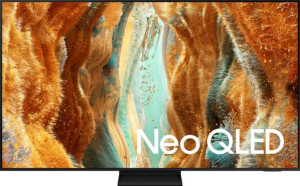
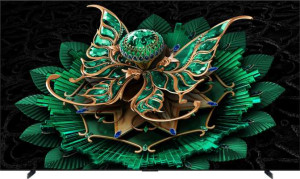
At the panel level, the Samsung QN85QN70FAF and the TCL 85C7K are nearly mirror images of each other. Both use a QLED Mini-LED LCD panel at 84.5″–84.6″, share an identical 3840×2160 resolution at 52 ppi, produce 1.07 billion colors via a 10-bit panel, and run at a 144Hz refresh rate — meaning motion clarity, color volume, and sharpness are effectively equivalent on paper.
The most meaningful differentiator in HDR support is Dolby Vision: the TCL 85C7K includes it, while the Samsung does not. Dolby Vision uses dynamic, scene-by-scene metadata to fine-tune brightness and color in real time, and it remains the dominant HDR format on streaming platforms like Netflix and Apple TV+. Both TVs share HDR10, HDR10+, and HLG, so Samsung users are not without options, but the absence of Dolby Vision is a real limitation for streaming-heavy use cases. On the gaming side, the Samsung counters with Nvidia G-Sync compatibility — a feature the TCL lacks — making it the stronger choice for PC gamers using Nvidia GPUs who want certified variable refresh rate support.
Overall, neither TV holds a dominant lead, but the advantage depends on your primary use case. The TCL 85C7K has a clear edge for home theater and streaming thanks to Dolby Vision, while the Samsung QN85QN70FAF has a specific but meaningful advantage for Nvidia-based PC gaming via G-Sync. All other display characteristics — panel type, resolution, refresh rate, viewing angles, and color depth — are functionally identical.