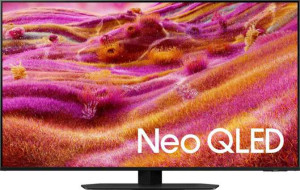
Samsung QN98QN90FAF 98"
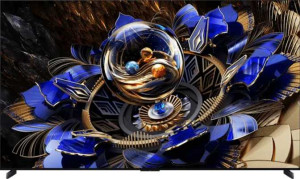
TCL 98X11K 98"

Samsung QN98QN90FAF 98" TCL 98X11K 98"

Overview

When it comes to choosing between the Samsung QN98QN90FAF 98″ and the TCL 98X11K 98″, both televisions share a remarkable foundation: 98-inch 4K QLED Mini-LED panels with identical resolution and color depth. Yet beneath that common ground lie meaningful differences in refresh rate, smart home compatibility, and connectivity that could make one a significantly better fit for your living room than the other. Read on to find out how these two giants truly stack up.

Common Features

  • Both TVs have a 4K (UHD) display resolution.
  • Both TVs feature a QLED, LED-backlit, LCD, Mini-LED display type.
  • Both TVs have a screen size of 97.5″.
  • Both TVs have a resolution of 3840 x 2160 px.
  • Both TVs have a pixel density of 45 ppi.
  • Both TVs support 1070 million display colors with a 10-bit bit depth.
  • HDR10 support is available on both TVs.
  • Bluetooth is available on both TVs.
  • Both TVs have an HDMI version of 2.1 with 4 HDMI ports.
  • Wi-Fi support is available on both TVs.
  • Both TVs have 2 USB ports and 1 RJ45 port.
  • Miracast support is available on both TVs.
  • A 3.5 mm audio jack is not available on either TV.
  • Digital Out support is available on both TVs.
  • SRS TheaterSound HD is not available on either TV.
  • Stereo speakers are present on both TVs.
  • Dolby Virtual support is not available on either TV.
  • A subwoofer is included on both TVs.
  • Both TVs support HDMI ARC and HDMI eARC.
  • VESA mount support is available on both TVs.
  • Chromecast built-in is available on both TVs.
  • AirPlay support is available on both TVs.
  • Both TVs have a built-in smart TV platform.
  • Remote smartphone control is supported on both TVs.
  • USB recording is supported on both TVs.
  • Both TVs have a standby power consumption of 0.5W.
  • A search browser is available on both TVs.
  • A sleep timer is available on both TVs.

Main Differences

  • Refresh rate is 120Hz on Samsung QN98QN90FAF 98″ and 144Hz on TCL 98X11K 98″.
  • Dolby Vision support is present on TCL 98X11K 98″ but not available on Samsung QN98QN90FAF 98″.
  • Wi-Fi version includes Wi-Fi 4 and Wi-Fi 5 on Samsung QN98QN90FAF 98″, while TCL 98X11K 98″ also adds Wi-Fi 6 (802.11ax).
  • Bluetooth version is 5.3 on Samsung QN98QN90FAF 98″ and 5.4 on TCL 98X11K 98″.
  • Width is 2185.1 mm on Samsung QN98QN90FAF 98″ and 2177 mm on TCL 98X11K 98″.
  • Weight is 70600 g on Samsung QN98QN90FAF 98″ and 70300 g on TCL 98X11K 98″.
  • Thickness is 31.1 mm on Samsung QN98QN90FAF 98″ and 27 mm on TCL 98X11K 98″.
  • Height is 1249.3 mm on Samsung QN98QN90FAF 98″ and 1246 mm on TCL 98X11K 98″.
  • Volume is 84898.192873 cm³ on Samsung QN98QN90FAF 98″ and 73238.634 cm³ on TCL 98X11K 98″.
  • Maximum operating temperature is 40 °C on Samsung QN98QN90FAF 98″ and 35 °C on TCL 98X11K 98″.
  • Lowest potential operating temperature is 10 °C on Samsung QN98QN90FAF 98″ and 5 °C on TCL 98X11K 98″.
  • Google Assistant compatibility is available on TCL 98X11K 98″ but not on Samsung QN98QN90FAF 98″.
  • Alexa support is available on Samsung QN98QN90FAF 98″ but not on TCL 98X11K 98″.
  • Siri/Apple HomeKit support is available on Samsung QN98QN90FAF 98″ but not on TCL 98X11K 98″.
  • A rechargeable remote control is included with TCL 98X11K 98″ but not with Samsung QN98QN90FAF 98″.
Specs Comparison
Samsung QN98QN90FAF 98"

Samsung QN98QN90FAF 98"

TCL 98X11K 98"

TCL 98X11K 98"

Display:
display resolution 4K (UHD) 4K (UHD)
Display type QLED, LED-backlit, LCD, Mini-LED QLED, LED-backlit, LCD, Mini-LED
screen size 97.5" 97.5"
resolution 3840 x 2160 px 3840 x 2160 px
pixel density 45 ppi 45 ppi
display colors 1070 million 1070 million
bit depth 10-bit 10-bit
refresh rate 120Hz 144Hz
supports HDR10
supports HDR10+
supports Dolby Vision
supports HLG
Adaptive synchronization AMD FreeSync, AMD FreeSync Premium, AMD FreeSync Premium Pro AMD FreeSync, AMD FreeSync Premium, AMD FreeSync Premium Pro
has anti-reflection coating
has an ambient light sensor
maximum horizontal viewing angle 178º 178º
maximum vertical viewing angle 178º 178º

At the panel level, the Samsung QN98QN90FAF and the TCL 98X11K are built on identical foundations: both are 98-inch QLED Mini-LED LCD panels running at 4K (3840 × 2160) resolution, 45 ppi pixel density, 10-bit color depth, and 1.07 billion displayable colors. Viewing angles are a matching 178° in both axes, and both include anti-reflection coating and an ambient light sensor. For most picture-quality fundamentals, these two sets are effectively tied.

The differences emerge in two meaningful areas. First, the TCL 98X11K pulls ahead on refresh rate with 144Hz versus the Samsung's 120Hz. In practice this matters primarily for gaming and fast-motion content — the extra headroom can reduce motion blur and judder, and it pairs naturally with high-frame-rate PC or console sources. Second, and arguably more significant for a wide range of viewing scenarios, the TCL supports Dolby Vision while the Samsung does not. Both sets handle HDR10, HDR10+, and HLG, but Dolby Vision uses dynamic, scene-by-scene metadata that typically produces more precisely graded highlights and shadows on compatible content from streaming services like Netflix and Apple TV+. The Samsung's omission of Dolby Vision is a real gap for users who consume a lot of streaming HDR content.

Both televisions share the same AMD FreeSync Premium Pro adaptive sync stack, so variable-rate gaming performance is equal. Overall, the TCL 98X11K holds a clear edge in this display group: its higher refresh rate is a tangible plus for gaming and motion clarity, and Dolby Vision support broadens its HDR compatibility in a way the Samsung simply cannot match at the panel spec level.
Connectivity:
Has Bluetooth
HDMI version HDMI 2.1 HDMI 2.1
HDMI ports 4 4
supports Wi-Fi
Wi-Fi version Wi-Fi 4 (802.11n), Wi-Fi 5 (802.11ac) Wi-Fi 4 (802.11n), Wi-Fi 5 (802.11ac), Wi-Fi 6 (802.11ax)
Bluetooth version 5.3 5.4
USB ports 2 2
RJ45 ports 1 1
supports Miracast
has a socket for a 3.5 mm audio jack
has an external memory slot
has a VGA connector
has a DVI connector

The wired connectivity backbone is identical on both sets: 4× HDMI 2.1 ports, 2 USB ports, and a single RJ45 Ethernet jack. HDMI 2.1 across all four ports is a genuine strength shared by both — it means full 4K 120Hz passthrough and VRR support are available on every input, not just a privileged few, which matters when connecting multiple high-bandwidth sources simultaneously.

Where they diverge is on wireless. The TCL 98X11K adds Wi-Fi 6 (802.11ax) to the same Wi-Fi 4/5 base the Samsung offers, and steps up to Bluetooth 5.4 versus the Samsung's Bluetooth 5.3. Wi-Fi 6 is the more impactful upgrade: in a congested home network with many connected devices, it delivers better throughput efficiency and lower latency through technologies like OFDMA and target wake time — practically translating to more stable 4K streaming and quicker app response. The Bluetooth version gap is marginal in day-to-day use, but 5.4 does bring minor improvements in connection reliability and power efficiency for wireless audio accessories.

The TCL 98X11K takes a modest but clear edge in connectivity. The wired story is a dead heat, but Wi-Fi 6 support is a forward-looking advantage that becomes more valuable as home networks grow denser — something the Samsung's Wi-Fi 5 ceiling simply cannot match.

Audio:
supports Digital Out
has SRS TheaterSound HD
has stereo speakers
supports Dolby Virtual
has a subwoofer
HDMI ARC / eARC HDMI ARC, HDMI eARC HDMI ARC, HDMI eARC

Across every audio specification provided, the Samsung QN98QN90FAF and the TCL 98X11K are a perfect match. Both include stereo speakers with a built-in subwoofer, digital audio output, and full HDMI ARC and eARC support. The presence of eARC is the standout shared feature here — it carries enough bandwidth to pass lossless audio formats like Dolby TrueHD and DTS:X to a compatible soundbar or AV receiver without compression, which is a meaningful advantage over older ARC connections for users investing in a premium audio setup.

This is a straightforward tie. The provided specs reveal no differentiator between the two sets in the audio category, and any real-world difference in sound quality would depend on factors — such as amplifier wattage or speaker tuning — that are not reflected in the available data.

Design:
width 2185.1 mm 2177 mm
weight 70600 g 70300 g
thickness 31.1 mm 27 mm
height 1249.3 mm 1246 mm
volume 84898.192873 cm³ 73238.634 cm³
Supports VESA mount
maximum operating temperature 40 °C 35 °C
lowest potential operating temperature 10 °C 5 °C

For two 98-inch televisions, the physical footprints are remarkably close — within 8mm in width and 3mm in height. Weight is effectively identical at roughly 70 kg for both, meaning installation effort and wall-mount requirements are comparable. Both support VESA mounting, which is expected at this size.

The one design spec worth noting is thickness. The TCL 98X11K measures 27 mm deep versus the Samsung's 31.1 mm, a difference that contributes to a meaningfully lower total volume — approximately 73,239 cm³ against the Samsung's 84,898 cm³. On a set this large, a slimmer profile has a real aesthetic impact, particularly on a wall mount where depth is visible from the side. The operating temperature ranges diverge slightly: the Samsung tolerates up to 40 °C while the TCL extends lower to 5 °C, but neither difference is likely to matter in a typical indoor installation.

The TCL 98X11K holds a narrow design edge, primarily on account of its slimmer chassis. With weight and footprint essentially tied, the reduced depth is the only meaningful differentiator here — a modest but real advantage for aesthetics-conscious installations.

Features:
release date March 2025 February 2025
has Chromecast built-in
has AirPlay
has built-in smart TV
compatible with Google Assistant
works with Alexa
works with Siri/Apple HomeKit
supports a remote smartphone
has a rechargeable remote control
supports USB recording
standby power consumption 0.5W 0.5W
has a search browser
has a sleep timer
has a child lock
has voice commands

The smart feature foundation is strong on both sets — Chromecast built-in, AirPlay, USB recording, smartphone remote control, and voice commands are all present on each. For cord-cutters and multi-device households, these shared capabilities mean neither TV is at a disadvantage on the basics.

The meaningful split comes down to smart home ecosystem alignment. The Samsung QN98QN90FAF supports Alexa and Apple HomeKit but lacks Google Assistant, making it the natural fit for Amazon or Apple-centric households. The TCL 98X11K flips this entirely — it integrates Google Assistant but has no Alexa or HomeKit support, suiting users already invested in the Google ecosystem. Neither approach is objectively superior; the right choice depends entirely on which ecosystem the buyer lives in. The TCL also adds a rechargeable remote control, a small but genuinely convenient everyday advantage that eliminates the recurring cost and hassle of disposable batteries.

This group is effectively a contextual tie on the ecosystem question — each TV wins for a different type of user. The TCL's rechargeable remote is a practical bonus, but it is unlikely to be a deciding factor at this price tier. Buyers should treat smart assistant compatibility as the primary filter here and choose accordingly.

Comparison Summary & Verdict

After a thorough side-by-side review, both the Samsung QN98QN90FAF 98″ and the TCL 98X11K 98″ deliver an identical 98-inch 4K QLED Mini-LED experience with strong audio and smart TV capabilities. However, the TCL 98X11K 98″ pulls ahead in several technical areas: its 144Hz refresh rate and Dolby Vision support make it the stronger choice for cinephiles and gamers, while Wi-Fi 6 and Bluetooth 5.4 future-proof its connectivity. The Samsung QN98QN90FAF 98″, on the other hand, shines for users deeply embedded in the Apple or Amazon ecosystem, offering native Siri, Apple HomeKit, and Alexa support that the TCL lacks. The Samsung also tolerates a slightly wider operating temperature range, which may matter in certain installation environments. Choose based on your ecosystem and usage priorities.

Samsung QN98QN90FAF 98
Buy Samsung QN98QN90FAF 98" if...

Buy the Samsung QN98QN90FAF 98″ if you rely on Alexa, Siri, or Apple HomeKit for your smart home setup and want seamless ecosystem integration out of the box.

TCL 98X11K 98
Buy TCL 98X11K 98" if...

Buy the TCL 98X11K 98″ if you want a higher 144Hz refresh rate, Dolby Vision support, and more modern connectivity with Wi-Fi 6 and Bluetooth 5.4.