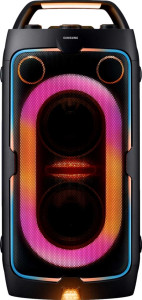
Samsung Sound Tower ST40F
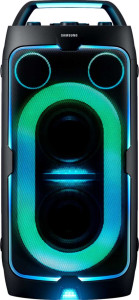
Samsung Sound Tower ST50F

Samsung Sound Tower ST40F Samsung Sound Tower ST50F

Overview

Choosing between the Samsung Sound Tower ST40F and the Samsung Sound Tower ST50F is a decision that hinges on more than a simple size upgrade. Both party speakers share a remarkably consistent feature set, yet they diverge in notable ways when it comes to battery endurance, physical dimensions, and audio driver configuration. Dive into the full spec breakdown below to discover which tower truly matches your lifestyle and listening needs.

Common Features

  • Both products have an IPX4 ingress protection rating.
  • Both products feature a control panel placed on the device.
  • Both products offer sweat resistance.
  • Neither product includes a travel bag.
  • Neither product has a touch screen.
  • Both products feature RGB lighting.
  • Both products have a detachable cable.
  • Neither product is a neckband speaker.
  • Neither product has a passive radiator.
  • Both products have zero microphones.
  • Neither product has a noise-canceling microphone.
  • Neither product has magnetic shielding.
  • Both products have a battery level indicator.
  • Both products have a rechargeable battery.
  • Neither product supports wireless charging.
  • Both products support multipoint connection for up to 2 devices.
  • Both products use Bluetooth version 5.4.
  • Neither product supports Bluetooth pairing using NFC.
  • Neither product has a 3.5 mm audio jack socket or AUX input.
  • Neither product supports aptX Lossless, LDAC, or aptX Adaptive.
  • Both products can be used wirelessly.
  • Both products support remote smartphone control.
  • Neither product supports fast pairing.
  • Neither product supports voice commands.
  • Neither product has a radio.
  • Both products have voice prompts.
  • Neither product has a mute function.
  • Neither product works as a power bank.
  • Both products support pairing for stereo sound.

Main Differences

  • Volume is 58236.6 cm³ on Samsung Sound Tower ST40F and 94829.92 cm³ on Samsung Sound Tower ST50F.
  • Weight is 8000 g on Samsung Sound Tower ST40F and 11900 g on Samsung Sound Tower ST50F.
  • Height is 620 mm on Samsung Sound Tower ST40F and 736 mm on Samsung Sound Tower ST50F.
  • Width is 303 mm on Samsung Sound Tower ST40F and 353 mm on Samsung Sound Tower ST50F.
  • Thickness is 310 mm on Samsung Sound Tower ST40F and 365 mm on Samsung Sound Tower ST50F.
  • Audio output power is 2 x 80W on Samsung Sound Tower ST40F and 4 x 60W on Samsung Sound Tower ST50F.
  • Battery life is 12 hours on Samsung Sound Tower ST40F and 18 hours on Samsung Sound Tower ST50F.
  • A removable battery is available on Samsung Sound Tower ST40F but not available on Samsung Sound Tower ST50F.
Specs Comparison
Samsung Sound Tower ST40F

Samsung Sound Tower ST40F

Samsung Sound Tower ST50F

Samsung Sound Tower ST50F

Design:
Ingress Protection (IP) rating IPX4 IPX4
volume 58236.6 cm³ 94829.92 cm³
control panel placed on a device
water resistance Sweat resistant Sweat resistant
travel bag is included
has a touch screen
has RGB lighting
has a detachable cable
is a neckband speaker
has a remote control
weight 8000 g 11900 g
height 620 mm 736 mm
width 303 mm 353 mm
thickness 310 mm 365 mm

Both the ST40F and ST50F share an identical design DNA: IPX4 water resistance, on-device controls, RGB lighting, and a detachable cable — meaning neither product has a feature-set advantage in terms of connectivity or protection. For practical purposes, IPX4 covers splashes and sweat but not submersion, so both are equally suited for outdoor or party use in light rain.

Where the two diverge significantly is physical scale. The ST50F is a noticeably larger unit, measuring 736 × 353 × 365 mm against the ST40F's 620 × 303 × 310 mm, resulting in a total volume of 94,829 cm³ versus 58,237 cm³ — roughly 63% more cabinet volume. That extra enclosure size directly implies more room for larger drivers and greater air displacement, which typically translates to deeper bass and higher maximum output. The weight gap reinforces this: the ST50F comes in at 11,900 g compared to the ST40F's 8,000 g, a nearly 4 kg difference that makes the ST40F meaningfully easier to move and reposition.

From a pure design standpoint, the ST50F holds the edge for users who prioritize presence and room-filling scale, while the ST40F is the more portable and manageable option without sacrificing any of the shared design features. The choice here essentially comes down to venue size and how often you need to transport the speaker.

Sound quality:
audio output power 2 x 80W 4 x 60W
Has a passive radiator
number of microphones 0 0
has a noise-canceling microphone
has a magnetic shielding

The most telling difference here lies in how each speaker distributes its amplification. The ST40F delivers 2 × 80W for a total of 160W, while the ST50F runs a 4 × 60W configuration totaling 240W. That 80W gap in total output means the ST50F can move significantly more air — relevant for larger spaces where sheer loudness and dynamic headroom matter. But the channel count difference is equally important: four discrete amplifier channels allow the ST50F to drive more individual drivers independently, which generally supports a more layered and spatially separated sound compared to a two-channel setup.

Neither unit includes a passive radiator, which is a common technique for extending bass response in compact enclosures without adding powered subwoofers. Both products are also entirely microphone-free, so hands-free calling or voice assistant interaction is off the table for either model — a consistent limitation across the lineup rather than a differentiator.

On sound quality specs alone, the ST50F has a clear edge: more total wattage and a four-channel amplifier architecture together suggest greater output capability and driver flexibility. The ST40F's 160W is still substantial for home or mid-sized outdoor use, but users who need to fill larger venues or want more headroom for dynamic audio will find the ST50F's configuration more capable.

Power:
Battery life 12 hours 18 hours
has a battery level indicator
has a rechargeable battery
has a removable battery
has wireless charging

Battery life is where these two models diverge most practically. The ST50F offers 18 hours of runtime versus the ST40F's 12 hours — a 50% increase that makes a tangible difference for all-day outdoor events or extended use without access to a power outlet. For context, 12 hours comfortably covers a full day party or beach outing, but the ST50F's extra six hours provides a meaningful buffer if charging opportunities are limited.

The more nuanced distinction is in battery serviceability. The ST40F features a removable battery, meaning a depleted pack can be swapped out for a fresh one on the spot — effectively extending runtime indefinitely if a spare is on hand. The ST50F, despite its longer baseline life, has a non-removable battery, so once it's drained, you're waiting for a recharge. Neither model supports wireless charging, and both include a battery level indicator, so monitoring remaining power is straightforward on either unit.

There's a genuine trade-off here rather than a clean winner. The ST50F leads on raw endurance for typical use, but the ST40F's removable battery gives it a flexibility advantage for users who plan ahead with spare packs. For most users prioritizing convenience without carrying extras, the ST50F's longer runtime tips the balance in its favor.

Connectivity:
multipoint count 2 2
Bluetooth version 5.4 5.4
supports Bluetooth pairing using NFC
has a socket for a 3.5 mm audio jack
has an AUX input
has aptX Lossless
has LDAC
has aptX Adaptive
has aptX HD
has aptX
has aptX Low Latency
has AAC
has AirPlay
has Chromecast built-in
has Auracast
has Bluetooth LE Audio
maximum Bluetooth range 10 m 10 m
supports Wi-Fi
USB ports 1 1
Has USB Type-C
has a 3.5mm male connector
has an external memory slot
is DLNA-certified
supports Ethernet
has a microphone input

Connectivity is a complete dead heat between these two models — every single spec in this group is identical. Both run Bluetooth 5.4 with a 10-meter range and support multipoint pairing for up to two devices simultaneously, meaning you can keep a phone and a tablet connected at once and switch between sources without re-pairing. Bluetooth 5.4 is a current-generation standard that brings improved connection stability and efficiency over older versions.

Two features worth highlighting for what they enable: both units support AAC audio codec and Auracast. AAC ensures higher-quality wireless audio for Apple device users specifically, where the codec performs at its best. Auracast is a broadcast audio standard that allows one speaker to stream to multiple listening devices or other compatible speakers simultaneously — a notable capability for synchronized multi-room or multi-speaker setups. Neither model supports higher-fidelity codecs like aptX HD or LDAC, nor Wi-Fi or wired audio inputs, which keeps the feature set straightforward but limits audiophile-grade streaming options.

Since the specs are perfectly matched, connectivity is a tie. Neither the ST40F nor the ST50F holds any advantage here — the decision between them should rest entirely on the differences found in other spec groups.

Features:
release date September 2025 September 2025
Can be used wirelessly
supports a remote smartphone
has fast pairing
has voice commands
Has a radio
Has voice prompts
has a mute function
works as a power bank
has a sleep timer

Much like connectivity, the features category presents no separation between these two models whatsoever — every attribute is identical across the ST40F and ST50F. Both support wireless operation and remote smartphone control, which together mean you're never tethered to the speaker for playback management. The inclusion of voice prompts adds a layer of usability, providing audible feedback for actions like powering on, pairing, or battery status without needing to look at the unit.

A few notable absences apply equally to both: neither supports fast pairing, voice commands, or a mute function. The lack of fast pairing is a minor friction point for first-time connections, though it won't affect daily use once devices are remembered. Both do include a sleep timer, a practical touch for bedroom or overnight use where you want audio to stop automatically without manual intervention.

With no differentiating specs anywhere in this group, features is another complete tie. Buyers comparing these two models on functionality alone will find nothing here to tip the decision — the meaningful distinctions between the ST40F and ST50F lie strictly in design, sound output, and battery life.

Miscellaneous:
supports pairing for stereo sound

This group contains a single spec, and both models share it equally: stereo pairing is supported on the ST40F and ST50F alike. This means two units of the same model can be wirelessly linked to create a dedicated left/right stereo configuration — a meaningful capability for users who want true spatial separation rather than the blended mono or pseudo-stereo output of a single tower speaker.

In practice, stereo pairing is most impactful in larger rooms or open outdoor settings where physical separation between the two speakers can be maximized. The wider the placement, the more pronounced the stereo image. For anyone already considering purchasing two units, this feature confirms that both models are built to support that use case natively.

With one spec and no divergence, this category is an unambiguous tie. The ST40F and ST50F are evenly matched here, and this shared capability should factor into the buying decision only if you are planning a dual-speaker setup — in which case, either model will serve that purpose equally well.

Comparison Summary & Verdict

Having examined every specification, both towers prove to be closely matched in connectivity and core functionality, sharing Bluetooth 5.4, dual multipoint support, IPX4 water resistance, and RGB lighting. The key differentiators lie in portability and endurance. The Samsung Sound Tower ST40F is the more compact and lighter option at 8 kg, and its removable battery adds a practical edge for users who need easy field-swapping. However, its battery life tops out at 12 hours. The Samsung Sound Tower ST50F trades that flexibility for greater stamina, offering 18 hours of playback and a four-driver 4 x 60W setup within a larger, heavier cabinet. Choose the ST40F for portability and battery versatility; choose the ST50F when runtime and a bigger audio footprint matter most.

Samsung Sound Tower ST40F
Buy Samsung Sound Tower ST40F if...

Buy the Samsung Sound Tower ST40F if you want a lighter, more compact tower with the added convenience of a removable battery that can be swapped out on the go.

Samsung Sound Tower ST50F
Buy Samsung Sound Tower ST50F if...

Buy the Samsung Sound Tower ST50F if you prioritize a longer 18-hour battery life and a four-driver audio configuration suited for larger spaces and extended sessions.