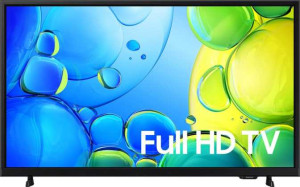
Samsung UN32F6000FFXZA 32"
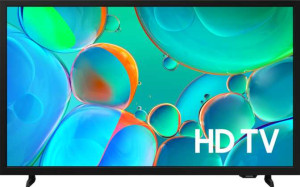
Samsung UN32H5000FF 32"

Samsung UN32F6000FFXZA 32" Samsung UN32H5000FF 32"

Overview

Welcome to our head-to-head spec breakdown of the Samsung UN32F6000FFXZA 32″ and the Samsung UN32H5000FF 32″ — two 32-inch Samsung LED-backlit LCD TVs that share a surprisingly similar feature set while diverging in some meaningful areas. Both models offer smart TV functionality, HDR10 and HDR10+ support, and identical audio and connectivity specs, but key questions around display resolution and picture quality make this comparison worth a closer look before you decide.

Common Features

  • Both TVs use an LED-backlit LCD display type.
  • Both TVs display 1670 million colors.
  • Both TVs have an 8-bit color bit depth.
  • Both TVs have a 60Hz refresh rate.
  • HDR10 support is available on both products.
  • HDR10+ support is available on both products.
  • Dolby Vision support is not available on either product.
  • Neither TV has adaptive synchronization.
  • Bluetooth is available on both products.
  • Both TVs have 2 HDMI ports.
  • Wi-Fi support is available on both products, with Wi-Fi 4 (802.11n) and Wi-Fi 5 (802.11ac).
  • Both TVs have 1 USB port and 1 RJ45 port.
  • Miracast support is available on both products.
  • Neither TV has a 3.5mm audio jack socket.
  • Both TVs support Dolby Digital audio.
  • Both TVs have stereo speakers with an audio output power of 2 x 5W.
  • Dolby Audio is available on both products.
  • Neither TV has a subwoofer.
  • Both TVs support VESA mounting.
  • AirPlay, built-in smart TV, Google Assistant compatibility, Alexa support, and USB recording are all available on both products.

Main Differences

  • Display resolution is 1080p (Full HD) on Samsung UN32F6000FFXZA 32″ and 720p (HD) on Samsung UN32H5000FF 32″.
  • Screen size is 32″ on Samsung UN32F6000FFXZA 32″ and 31.5″ on Samsung UN32H5000FF 32″.
  • Resolution is 1920 x 1080 px on Samsung UN32F6000FFXZA 32″ and 1366 x 768 px on Samsung UN32H5000FF 32″.
  • Pixel density is 69 ppi on Samsung UN32F6000FFXZA 32″ and 50 ppi on Samsung UN32H5000FF 32″.
  • HLG support is present on Samsung UN32H5000FF 32″ but not available on Samsung UN32F6000FFXZA 32″.
  • An ambient light sensor is present on Samsung UN32H5000FF 32″ but not available on Samsung UN32F6000FFXZA 32″.
  • Width is 734.1 mm on Samsung UN32F6000FFXZA 32″ and 733.2 mm on Samsung UN32H5000FF 32″.
  • Weight is 3856 g on Samsung UN32F6000FFXZA 32″ and 3800 g on Samsung UN32H5000FF 32″.
  • Thickness is 73.7 mm on Samsung UN32F6000FFXZA 32″ and 72.2 mm on Samsung UN32H5000FF 32″.
  • Height is 439.4 mm on Samsung UN32F6000FFXZA 32″ and 438.9 mm on Samsung UN32H5000FF 32″.
  • Volume is 23772.932898 cm³ on Samsung UN32F6000FFXZA 32″ and 23234.066856 cm³ on Samsung UN32H5000FF 32″.
  • Operating power consumption is 45W on Samsung UN32F6000FFXZA 32″ and 38W on Samsung UN32H5000FF 32″.
Specs Comparison
Samsung UN32F6000FFXZA 32"

Samsung UN32F6000FFXZA 32"

Samsung UN32H5000FF 32"

Samsung UN32H5000FF 32"

Display:
display resolution 1080p (Full HD) 720p (HD)
Display type LED-backlit, LCD LED-backlit, LCD
screen size 32" 31.5"
resolution 1920 x 1080 px 1366 x 768 px
pixel density 69 ppi 50 ppi
display colors 1670 million 1670 million
bit depth 8-bit 8-bit
refresh rate 60Hz 60Hz
supports HDR10
supports HDR10+
supports Dolby Vision
supports HLG
Adaptive synchronization None None
has anti-reflection coating
has an ambient light sensor
maximum horizontal viewing angle 178º 178º
maximum vertical viewing angle 178º 178º

The single most important differentiator in this group is resolution. The Samsung UN32F6000FFXZA delivers 1080p (1920 x 1080 px) at a pixel density of 69 ppi, while the UN32H5000FF tops out at 720p (1366 x 768 px) with only 50 ppi. On a 32-inch screen viewed from a typical living-room distance, that gap is noticeable: the F6000 renders sharper text, finer detail in native HD content, and a cleaner image overall. The H5000's lower pixel density can produce a slightly softer, more pixelated look — especially visible in static UI elements or slow-panning scenes.

HDR support is largely a wash between the two: both carry HDR10 and HDR10+ but lack Dolby Vision. The H5000 uniquely adds HLG (Hybrid Log-Gamma) support, which is the broadcast standard used by some cable and satellite providers for live HDR content — a minor but real-world relevant edge for antenna or cable users. The H5000 also includes an ambient light sensor for automatic brightness adjustment, a convenience feature absent on the F6000. Everything else — LED-backlit LCD panel type, 8-bit color depth, 1670 million display colors, 60 Hz refresh rate, 178° viewing angles in both axes, anti-reflection coating, and no adaptive sync — is identical.

Overall, the UN32F6000FFXZA holds a clear display advantage driven entirely by its full HD resolution. Unless HLG broadcast support or automatic brightness adjustment are priorities, the sharper, denser panel on the F6000 is the stronger choice for picture quality on this screen size.
Connectivity:
Has Bluetooth
HDMI ports 2 2
supports Wi-Fi
Wi-Fi version Wi-Fi 4 (802.11n), Wi-Fi 5 (802.11ac) Wi-Fi 4 (802.11n), Wi-Fi 5 (802.11ac)
USB ports 1 1
RJ45 ports 1 1
supports Miracast
has a socket for a 3.5 mm audio jack
has an external memory slot
has a VGA connector
has a DVI connector

Connectivity is a complete dead heat between these two models — every single spec in this group is identical. Both carry 2 HDMI ports, 1 USB port, an RJ45 ethernet jack, Bluetooth, Wi-Fi 4 and Wi-Fi 5 (802.11ac), and Miracast wireless display mirroring. In practical terms, this means either TV can handle a typical living-room setup — one HDMI for a cable box or streaming stick, a second for a gaming console or Blu-ray player, and flexible options for both wired and wireless networking.

Worth noting for prospective buyers: neither model includes a 3.5 mm headphone jack or an external memory slot, which limits direct audio output options and rules out playing media directly from a USB drive beyond the single USB port. Legacy connectors like VGA and DVI are absent on both, which is expected for televisions of this era but worth confirming if older source devices are in play.

This category is a tie — there is no connectivity advantage on either side. A buyer choosing between the F6000 and the H5000 can set this spec group aside entirely and base their decision on the differences found elsewhere.

Audio:
supports Dolby Digital
audio output power 2 x 5W 2 x 5W
supports Digital Out
has SRS TheaterSound HD
has stereo speakers
has Dolby Audio
supports Dolby Virtual
has a subwoofer
HDMI ARC / eARC HDMI ARC, HDMI eARC HDMI ARC, HDMI eARC

Audio is another area where these two televisions are indistinguishable on paper. Both deliver 2 x 5W stereo output with Dolby Digital and Dolby Audio support — a modest but adequate setup for casual TV watching in a small to medium-sized room. At 10W total, neither set will fill a large space with room-filling sound, and the absence of a subwoofer on both means bass response will be limited.

For users who plan to pair the TV with an external sound system, both models support HDMI ARC and eARC, which allows a soundbar or AV receiver to be controlled through the TV remote over a single HDMI cable — a genuinely useful feature that simplifies cabling and setup. Neither unit offers a Digital Optical Out, so users with older audio equipment relying on that connection will need an alternative solution regardless of which model they choose.

As with connectivity, this group is a complete tie. Audio capability plays no role in differentiating the F6000 from the H5000 — buyers who prioritize sound quality should plan on an external audio solution with either model.

Design:
width 734.1 mm 733.2 mm
weight 3856 g 3800 g
thickness 73.7 mm 72.2 mm
height 439.4 mm 438.9 mm
volume 23772.932898 cm³ 23234.066856 cm³
Supports VESA mount

Physically, these two televisions are near-clones. Width, height, and thickness differ by less than 2 mm across every dimension, and the 56 g weight difference (3856 g vs. 3800 g for the H5000) is imperceptible in any real handling or mounting scenario. For most buyers, the footprint and installation requirements will be functionally identical — the same shelf space, the same wall mount cutout, and the same general aesthetic.

Both models support VESA mounting, which is the practical detail that matters most for wall-installation planning. Buyers should verify the specific VESA hole pattern before purchasing a mount, as that detail is not included in the provided specs. The marginally smaller overall volume of the H5000 (~23,234 cm³ vs. ~23,772 cm³) is a mathematical consequence of its slightly smaller screen size noted in the Display group, not a meaningful design distinction.

This group is effectively a tie. The dimensional differences between the F6000 and the H5000 are so negligible that design and form factor should carry zero weight in a buying decision between these two models.

Features:
release date March 2025 April 2025
has AirPlay
has built-in smart TV
compatible with Google Assistant
works with Alexa
works with Siri/Apple HomeKit
supports a remote smartphone
has a rechargeable remote control
supports USB recording
operating power consumption 45W 38W
standby power consumption 0.5W 0.5W
has a search browser
has a sleep timer
has a child lock
has voice commands

Smart feature parity between these two models is essentially total. Both run a built-in smart TV platform with a browser, support AirPlay, respond to Google Assistant and Alexa voice commands, allow smartphone remote control, and enable USB recording — a handy feature that lets users record live broadcasts directly to a connected USB drive. Neither supports Apple HomeKit/Siri or ships with a rechargeable remote, and both share the same quality-of-life additions like sleep timer and child lock.

The one measurable difference in this group is power consumption. The UN32F6000FFXZA draws 45W during operation versus 38W for the H5000 — a 7W gap that likely reflects the additional processing demands of driving a higher-resolution panel. Over a year of average use, that difference translates to a modest but non-trivial gap in electricity costs. Standby consumption is identical at 0.5W on both.

From a features standpoint, the H5000 holds a minor edge purely on energy efficiency. However, the margin is small enough that it is unlikely to drive a purchasing decision on its own — buyers who already favor the F6000 for its display resolution should not be swayed by this gap alone.

Comparison Summary & Verdict

After examining every specification, the choice between these two Samsung TVs comes down primarily to display resolution and a few smart extras. The Samsung UN32F6000FFXZA 32″ delivers a sharper 1080p Full HD picture at 69 ppi, making it the stronger pick for those who want crisper detail in a compact screen. The Samsung UN32H5000FF 32″, on the other hand, counters with HLG support and a built-in ambient light sensor for automatic brightness adjustment, while also drawing less power at 38W versus 45W. Both sets are nearly identical in design, audio output, and smart platform support — including AirPlay, Google Assistant, and Alexa. If sharpness is your priority, the F6000 wins; if energy efficiency and adaptive viewing features matter more to you, the H5000 is the smarter everyday choice.

Samsung UN32F6000FFXZA 32
Buy Samsung UN32F6000FFXZA 32" if...

Buy the Samsung UN32F6000FFXZA 32″ if you want the sharpest possible picture from a compact TV, as its 1080p Full HD resolution and 69 ppi pixel density offer a noticeably clearer image than its rival.

Samsung UN32H5000FF 32
Buy Samsung UN32H5000FF 32" if...

Buy the Samsung UN32H5000FF 32″ if you value energy efficiency and adaptive convenience, thanks to its lower 38W power consumption, HLG support, and built-in ambient light sensor for automatic brightness adjustment.