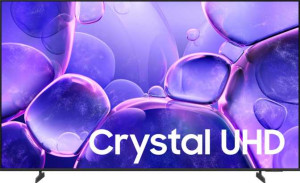
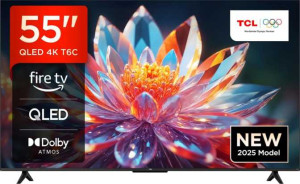
Both TVs share the same 4K UHD (3840 x 2160) resolution, virtually identical pixel density (~80–81 ppi), 10-bit color depth, and 1,070 million display colors, meaning neither holds an advantage in raw image detail or color palette on paper. However, the TCL 55T6C-UK uses a QLED panel technology on top of its LED-backlit LCD base, which typically delivers higher peak brightness and more saturated colors compared to the Samsung UN55U8000FF's conventional LED-backlit LCD — a meaningful real-world difference in vibrant, well-lit scenes.
The single most impactful differentiator here is the refresh rate. The TCL runs at 120Hz versus the Samsung's 60Hz, which directly translates to smoother motion in fast-paced sports, action films, and gaming — the Samsung will exhibit more motion blur by comparison. On the HDR front, the two products split the field: the Samsung supports HDR10+ (a dynamic metadata format used widely by Amazon and Samsung's own ecosystem) but lacks Dolby Vision, while the TCL supports Dolby Vision (the premium HDR format favored by Netflix, Apple TV+, and Disney+) but omits HDR10+. Both cover HDR10 and HLG as a baseline. Your streaming service preferences should weigh heavily in this decision.
All remaining display specs — viewing angles (178° horizontal and vertical), anti-reflection coating, and ambient light sensor — are identical, so neither TV has an edge in those areas. Overall, the TCL 55T6C-UK holds a clear display advantage due to its 120Hz refresh rate and QLED technology, while the Samsung's HDR10+ support is a meaningful counterpoint only if you are invested in that specific content ecosystem.