Sapphire Nitro+ Radeon RX 9060 XT 16GB
Sapphire Pure Radeon RX 9060 XT 16GB

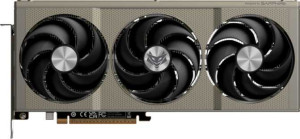
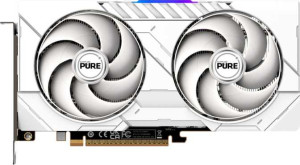
Sapphire Nitro+ Radeon RX 9060 XT 16GB Sapphire Pure Radeon RX 9060 XT 16GB

Overview

Welcome to our in-depth spec comparison between the Sapphire Nitro+ Radeon RX 9060 XT 16GB and the Sapphire Pure Radeon RX 9060 XT 16GB — two RDNA 4.0-based cards sharing the same memory configuration but diverging in areas like clock speeds, power consumption, and physical footprint. Read on to see how these two variants stack up across performance, features, and design.

Common Features

  • GPU memory speed is 2518 MHz on both products.
  • Both products feature 2048 shading units.
  • Both products have 128 texture mapping units (TMUs).
  • Both products have 64 render output units (ROPs).
  • Double Precision Floating Point (DPFP) is supported on both products.
  • Effective memory speed is 20000 MHz on both products.
  • Maximum memory bandwidth is 322.3 GB/s on both products.
  • Both products feature 16GB of VRAM.
  • Both products use GDDR6 memory.
  • Memory bus width is 128-bit on both products.
  • ECC memory is supported on both products.
  • Both products support DirectX 12 Ultimate.
  • OpenGL version 4.6 is supported on both products.
  • OpenCL version 2.2 is supported on both products.
  • Multi-display technology is supported on both products.
  • Ray tracing is supported on both products.
  • 3D support is available on both products.
  • DLSS is not supported on either product.
  • FSR4 is available on both products.
  • Both products have one HDMI port with HDMI 2.1b.
  • Both products feature 2 DisplayPort outputs.
  • Neither product has USB-C or DVI outputs.
  • Both products are based on the RDNA 4.0 GPU architecture.
  • Both products use PCIe version 5.
  • Both products are manufactured on a 4 nm semiconductor process.
  • Both products have 29700 million transistors.
  • Air-water cooling is not available on either product.

Main Differences

  • GPU base clock speed is 1900 MHz on Sapphire Nitro+ Radeon RX 9060 XT 16GB and 1700 MHz on Sapphire Pure Radeon RX 9060 XT 16GB.
  • GPU turbo clock speed is 3320 MHz on Sapphire Nitro+ Radeon RX 9060 XT 16GB and 3290 MHz on Sapphire Pure Radeon RX 9060 XT 16GB.
  • Pixel rate is 212.5 GPixel/s on Sapphire Nitro+ Radeon RX 9060 XT 16GB and 210.6 GPixel/s on Sapphire Pure Radeon RX 9060 XT 16GB.
  • Floating-point performance is 27.2 TFLOPS on Sapphire Nitro+ Radeon RX 9060 XT 16GB and 26.95 TFLOPS on Sapphire Pure Radeon RX 9060 XT 16GB.
  • Texture rate is 425 GTexels/s on Sapphire Nitro+ Radeon RX 9060 XT 16GB and 421.1 GTexels/s on Sapphire Pure Radeon RX 9060 XT 16GB.
  • RGB lighting is present on Sapphire Nitro+ Radeon RX 9060 XT 16GB but not available on Sapphire Pure Radeon RX 9060 XT 16GB.
  • Thermal Design Power (TDP) is 182W on Sapphire Nitro+ Radeon RX 9060 XT 16GB and 170W on Sapphire Pure Radeon RX 9060 XT 16GB.
  • Card width is 300 mm on Sapphire Nitro+ Radeon RX 9060 XT 16GB and 240 mm on Sapphire Pure Radeon RX 9060 XT 16GB.
  • Card height is 131 mm on Sapphire Nitro+ Radeon RX 9060 XT 16GB and 124 mm on Sapphire Pure Radeon RX 9060 XT 16GB.
Specs Comparison
Sapphire Nitro+ Radeon RX 9060 XT 16GB

Sapphire Nitro+ Radeon RX 9060 XT 16GB

Sapphire Pure Radeon RX 9060 XT 16GB

Sapphire Pure Radeon RX 9060 XT 16GB

Performance:
GPU clock speed 1900 MHz 1700 MHz
GPU turbo 3320 MHz 3290 MHz
pixel rate 212.5 GPixel/s 210.6 GPixel/s
floating-point performance 27.2 TFLOPS 26.95 TFLOPS
texture rate 425 GTexels/s 421.1 GTexels/s
GPU memory speed 2518 MHz 2518 MHz
shading units 2048 2048
texture mapping units (TMUs) 128 128
render output units (ROPs) 64 64
Has Double Precision Floating Point (DPFP)

Both cards share identical underlying silicon: the same 2048 shading units, 128 TMUs, and 64 ROPs, meaning their theoretical performance ceiling is shaped by clock speeds alone. This is where the two diverge. The Sapphire Nitro+ RX 9060 XT runs a significantly higher base clock of 1900 MHz versus the Pure's 1700 MHz — a 200 MHz gap that represents roughly an 11% advantage at the foundational level. At peak boost, the gap narrows considerably: 3320 MHz on the Nitro+ versus 3290 MHz on the Pure, a difference of just 30 MHz.

Those clock speed deltas flow directly into the derived throughput figures. The Nitro+ edges ahead with 27.2 TFLOPS of floating-point performance and a texture rate of 425 GTexels/s, compared to 26.95 TFLOPS and 421.1 GTexels/s on the Pure. In practice, this translates to a roughly 0.9–1% advantage in sustained compute and texture throughput — meaningful on paper, but unlikely to produce a perceptible framerate difference in real gaming scenarios. Memory bandwidth is a non-factor here, as both cards use the exact same 2518 MHz memory speed.

The Nitro+ holds a clear but narrow performance edge, driven entirely by its higher factory clock configuration rather than any architectural difference. The base clock gap is the more impactful figure: it determines sustained performance under prolonged load, where the Pure may throttle sooner or stabilize at a lower frequency. For users prioritizing raw peak output, the Nitro+ is the stronger choice here; however, the real-world gaming delta between the two is slim enough that other factors — cooling, noise, and price — will likely matter more in the final decision.
Memory:
effective memory speed 20000 MHz 20000 MHz
maximum memory bandwidth 322.3 GB/s 322.3 GB/s
VRAM 16GB 16GB
GDDR version GDDR6 GDDR6
memory bus width 128-bit 128-bit
Supports ECC memory

On memory, these two cards are completely identical. Both carry 16GB of GDDR6 running at an effective 20000 MHz across a 128-bit bus, yielding the same 322.3 GB/s of maximum bandwidth. There is no differentiator to be found here — not in capacity, not in speed, not in bus width.

The 16GB frame buffer is a genuine strength for both cards at this tier, offering headroom for high-resolution texture packs and modern titles that increasingly push past 8–10GB under demanding settings. The 128-bit bus is on the narrower side, but the high GDDR6 clock rate compensates effectively, keeping bandwidth competitive. ECC memory support is also shared, which adds a layer of data integrity useful in workstation or compute-adjacent workloads — though it is rarely a deciding factor for gaming buyers.

This group is an unambiguous tie. Whatever memory-related performance either card delivers, the other will match it exactly. Buyers should look to other specification groups — particularly thermal design and clock speeds — to differentiate between the Nitro+ and the Pure.

Features:
DirectX version DirectX 12 Ultimate DirectX 12 Ultimate
OpenGL version 4.6 4.6
OpenCL version 2.2 2.2
Supports multi-display technology
supports ray tracing
Supports 3D
supports DLSS
has FSR4
has XeSS (XMX)
AMD SAM / Intel Resizable BAR AMD SAM AMD SAM
has LHR
has RGB lighting
supported displays 3 3

Functionally, these two cards are essentially identical in feature set. Both support DirectX 12 Ultimate and ray tracing, placing them on equal footing for modern rendering pipelines. Critically, both include FSR4 — AMD's latest upscaling generation — which is a meaningful asset for boosting framerates in supported titles with minimal visual compromise. Neither card supports DLSS, which is expected given their AMD architecture, and XeSS (XMX) is also absent on both.

AMD SAM (Smart Access Memory) is present on both, enabling a compatible AMD CPU to access the full VRAM pool rather than a limited slice — a feature that can yield measurable performance gains in select titles when paired with the right platform. Support for up to 3 simultaneous displays is shared as well, making either card a capable choice for multi-monitor setups.

The sole differentiator in this group is RGB lighting, which the Nitro+ includes and the Pure does not. This is purely aesthetic — it has no bearing on gaming or compute performance. For buyers who value a visually cohesive build with addressable lighting, the Nitro+ holds a minor edge; for those indifferent to aesthetics or preferring a cleaner look, the Pure's omission of RGB is not a drawback. On substantive features, this group is a tie.

Ports:
has an HDMI output
HDMI ports 1 1
HDMI version HDMI 2.1b HDMI 2.1b
DisplayPort outputs 2 2
USB-C ports 0 0
DVI outputs 0 0
mini DisplayPort outputs 0 0

Port selection is identical across both cards: one HDMI 2.1b output and two DisplayPort outputs, totaling three physical connections — which aligns with the three-display limit noted in their feature specifications. There are no USB-C, DVI, or mini DisplayPort outputs on either card.

The inclusion of HDMI 2.1b is worth noting as a shared strength. This version supports high refresh rates at 4K and above, as well as features relevant to modern display ecosystems, making both cards well-suited for contemporary monitors and TVs without requiring an adapter. The dual DisplayPort outputs round out a clean, practical layout for multi-monitor desktop users.

This group is a complete tie — there is zero differentiation between the Nitro+ and the Pure in connectivity. Buyers with specific port requirements, such as the need for USB-C display output, will find neither card accommodates that natively and should factor in adapter solutions accordingly.

General info:
GPU architecture RDNA 4.0 RDNA 4.0
release date June 2025 June 2025
Thermal Design Power (TDP) 182W 170W
PCI Express (PCIe) version 5 5
semiconductor size 4 nm 4 nm
number of transistors 29700 million 29700 million
Has air-water cooling
width 300 mm 240 mm
height 131 mm 124 mm

At their core, these cards are built from the same foundation: the RDNA 4.0 architecture, a 4nm process node, and an identical 29,700 million transistors. PCIe 5.0 support is shared as well, ensuring neither card will face bandwidth constraints on current or near-future platforms. The architectural parity here confirms that any performance difference between them comes purely from how Sapphire has tuned and cooled the same underlying chip.

The two meaningful divergences in this group are TDP and physical size. The Nitro+ draws 182W versus the Pure's 170W — a 12W gap that directly reflects the Nitro+'s more aggressive factory clock configuration. That additional power draw demands more from the system's PSU and case airflow, though 12W is unlikely to be a dealbreaker for most builds. More striking is the size difference: the Nitro+ measures 300mm in length, while the Pure comes in at a notably more compact 240mm — a 60mm difference that is significant in practice. The Pure's smaller footprint makes it a far more viable option for mid-tower or compact builds with tight GPU clearance.

Which card has the edge here depends squarely on the buyer's priorities. The Nitro+ trades higher power consumption and a larger chassis footprint for its factory overclock headroom. The Pure offers a more case-friendly form factor and lower TDP, making it the stronger choice for smaller or thermally constrained builds — without sacrificing the same core silicon. Neither is strictly superior; it comes down to the target system.

Comparison Summary & Verdict

Both cards share a strong foundation: 16GB of GDDR6 memory, a 128-bit bus, 322.3 GB/s bandwidth, and full support for ray tracing, FSR4, and DirectX 12 Ultimate. Where they diverge is in execution. The Sapphire Nitro+ Radeon RX 9060 XT 16GB edges ahead with higher base and turbo clocks, slightly better pixel and texture rates, and RGB lighting — but at the cost of a higher 182W TDP and a noticeably larger physical size (300 x 131 mm). The Sapphire Pure Radeon RX 9060 XT 16GB operates at a more modest 170W TDP with a compact 240 x 124 mm footprint, making it the smarter fit for smaller builds or power-conscious users. The performance gap is slim, so your choice should hinge on case compatibility, power budget, and whether RGB aesthetics matter to you.

Sapphire Nitro+ Radeon RX 9060 XT 16GB
Buy Sapphire Nitro+ Radeon RX 9060 XT 16GB if...

Buy the Sapphire Nitro+ Radeon RX 9060 XT 16GB if you want the highest clock speeds and turbo performance available in this lineup, and your case and power supply can accommodate a larger, 182W card with RGB lighting.

Sapphire Pure Radeon RX 9060 XT 16GB
Buy Sapphire Pure Radeon RX 9060 XT 16GB if...

Buy the Sapphire Pure Radeon RX 9060 XT 16GB if you have a compact build or a tighter power budget, as its smaller footprint and lower 170W TDP make it the more practical choice without sacrificing meaningful performance.