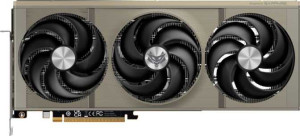
Sapphire Nitro+ Radeon RX 9070 XT
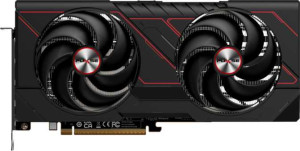
Sapphire Pulse Radeon RX 9070

Sapphire Nitro+ Radeon RX 9070 XT Sapphire Pulse Radeon RX 9070

Overview

Welcome to our in-depth spec comparison between the Sapphire Nitro+ Radeon RX 9070 XT and the Sapphire Pulse Radeon RX 9070 — two RDNA 4.0-based graphics cards sharing the same memory foundation yet diverging sharply in raw compute power and physical design. Whether you are drawn to peak floating-point performance or a more power-efficient footprint, this comparison breaks down every key specification to help you make the right choice.

Common Features

  • GPU memory speed is 2518 MHz on both products.
  • Both products have 128 render output units (ROPs).
  • Double Precision Floating Point (DPFP) is supported on both products.
  • Effective memory speed is 20000 MHz on both products.
  • Maximum memory bandwidth is 644.6 GB/s on both products.
  • Both products have 16GB of VRAM.
  • Both products use GDDR6 memory.
  • Memory bus width is 256-bit on both products.
  • ECC memory is supported on both products.
  • Both products support DirectX 12 Ultimate.
  • OpenGL version 4.6 is available on both products.
  • OpenCL version 2.2 is available on both products.
  • Multi-display technology is supported on both products.
  • Ray tracing is supported on both products.
  • 3D support is available on both products.
  • DLSS is not supported on either product.
  • FSR4 is available on both products.
  • Both products have an HDMI output with 2 HDMI 2.1b ports.
  • Both products have 2 DisplayPort outputs.
  • Neither product has USB-C, DVI, or mini DisplayPort outputs.
  • Both products are based on the RDNA 4.0 GPU architecture.
  • Both products use PCIe version 5.
  • Both products feature 53900 million transistors.
  • Neither product has air-water cooling.

Main Differences

  • GPU clock speed is 1660 MHz on Sapphire Nitro+ Radeon RX 9070 XT and 1330 MHz on Sapphire Pulse Radeon RX 9070.
  • GPU turbo speed is 3060 MHz on Sapphire Nitro+ Radeon RX 9070 XT and 2520 MHz on Sapphire Pulse Radeon RX 9070.
  • Pixel rate is 391.7 GPixel/s on Sapphire Nitro+ Radeon RX 9070 XT and 322.6 GPixel/s on Sapphire Pulse Radeon RX 9070.
  • Floating-point performance is 50.14 TFLOPS on Sapphire Nitro+ Radeon RX 9070 XT and 36.13 TFLOPS on Sapphire Pulse Radeon RX 9070.
  • Texture rate is 783.4 GTexels/s on Sapphire Nitro+ Radeon RX 9070 XT and 564.5 GTexels/s on Sapphire Pulse Radeon RX 9070.
  • Shading units number 4096 on Sapphire Nitro+ Radeon RX 9070 XT and 3584 on Sapphire Pulse Radeon RX 9070.
  • Texture mapping units (TMUs) total 256 on Sapphire Nitro+ Radeon RX 9070 XT and 224 on Sapphire Pulse Radeon RX 9070.
  • RGB lighting is present on Sapphire Nitro+ Radeon RX 9070 XT but not available on Sapphire Pulse Radeon RX 9070.
  • Thermal Design Power (TDP) is 330W on Sapphire Nitro+ Radeon RX 9070 XT and 220W on Sapphire Pulse Radeon RX 9070.
  • Semiconductor size is 4 nm on Sapphire Nitro+ Radeon RX 9070 XT and 5 nm on Sapphire Pulse Radeon RX 9070.
  • Card width is 330.8 mm on Sapphire Nitro+ Radeon RX 9070 XT and 280 mm on Sapphire Pulse Radeon RX 9070.
  • Card height is 128.5 mm on Sapphire Nitro+ Radeon RX 9070 XT and 120.3 mm on Sapphire Pulse Radeon RX 9070.
Specs Comparison
Sapphire Nitro+ Radeon RX 9070 XT

Sapphire Nitro+ Radeon RX 9070 XT

Sapphire Pulse Radeon RX 9070

Sapphire Pulse Radeon RX 9070

Performance:
GPU clock speed 1660 MHz 1330 MHz
GPU turbo 3060 MHz 2520 MHz
pixel rate 391.7 GPixel/s 322.6 GPixel/s
floating-point performance 50.14 TFLOPS 36.13 TFLOPS
texture rate 783.4 GTexels/s 564.5 GTexels/s
GPU memory speed 2518 MHz 2518 MHz
shading units 4096 3584
texture mapping units (TMUs) 256 224
render output units (ROPs) 128 128
Has Double Precision Floating Point (DPFP)

The Sapphire Nitro+ RX 9070 XT holds a commanding performance lead over the Pulse RX 9070 across virtually every compute metric in this group. Its 50.14 TFLOPS of floating-point performance represents a roughly 39% advantage over the Pulse's 36.13 TFLOPS, a gap large enough to translate into tangible frame rate headroom in GPU-bound scenarios, particularly at higher resolutions or with demanding graphical settings enabled. That lead is driven by both a higher shader count (4096 vs 3584) and a significantly higher GPU turbo clock (3060 MHz vs 2520 MHz), meaning the Nitro+ not only has more execution units but runs them faster.

The texture throughput gap tells a similar story: 783.4 GTexels/s on the Nitro+ versus 564.5 GTexels/s on the Pulse means the 9070 XT can process complex, high-resolution textures more efficiently, which matters in modern open-world titles and ray-traced environments where texture workloads are heavy. The pixel fill rate advantage (391.7 vs 322.6 GPixel/s) is less dramatic and is partially offset by the fact that both cards share an identical 128 ROPs configuration and the same 2518 MHz memory speed, suggesting the Pulse is not bottlenecked at the rasterization output stage. Both cards also support Double Precision Floating Point, which is relevant for compute workloads like scientific simulations or certain AI inference tasks.

In summary, the Nitro+ RX 9070 XT holds a clear and consistent performance edge in this group. The Pulse RX 9070 is not a slow card, but the 9070 XT outpaces it in every compute-facing metric by a meaningful margin. Users prioritizing peak GPU performance should favor the Nitro+; those willing to accept a performance trade-off may find the Pulse adequate, particularly at 1080p or light 1440p workloads where the gap narrows in practice.

Memory:
effective memory speed 20000 MHz 20000 MHz
maximum memory bandwidth 644.6 GB/s 644.6 GB/s
VRAM 16GB 16GB
GDDR version GDDR6 GDDR6
memory bus width 256-bit 256-bit
Supports ECC memory

When it comes to memory, these two cards are completely identical across every measurable dimension. Both feature 16GB of GDDR6 running on a 256-bit bus at an effective speed of 20,000 MHz, delivering a maximum bandwidth of 644.6 GB/s. That bandwidth figure is substantial — it ensures neither card will be memory-starved when handling high-resolution textures, large frame buffers at 4K, or VRAM-heavy workloads like AI inference and content creation pipelines.

The shared 16GB VRAM capacity is particularly noteworthy at this market tier. It provides a comfortable buffer for modern titles that frequently push beyond 8GB at 1440p with high texture settings, and offers genuine headroom for 4K gaming. ECC memory support is also present on both, which reduces the risk of data corruption in compute-sensitive tasks — a minor but meaningful inclusion for users running the card in professional or semi-professional workflows.

This group is an unambiguous dead heat. Every spec is shared identically between the Nitro+ RX 9070 XT and the Pulse RX 9070, meaning memory configuration will play no role in differentiating these two cards. Buyers should look entirely to other specification groups — such as performance or cooling — to separate them.

Features:
DirectX version DirectX 12 Ultimate DirectX 12 Ultimate
OpenGL version 4.6 4.6
OpenCL version 2.2 2.2
Supports multi-display technology
supports ray tracing
Supports 3D
supports DLSS
has FSR4
has XeSS (XMX)
AMD SAM / Intel Resizable BAR AMD SAM AMD SAM
has LHR
has RGB lighting
supported displays 4 4

Functionally, these two cards are essentially identical in features. Both support DirectX 12 Ultimate and ray tracing, placing them fully in line with modern rendering standards. Equally important, both include FSR4 — AMD's latest upscaling technology — which allows games to render at a lower internal resolution and reconstruct a higher-quality image, delivering meaningful frame rate gains with minimal visual penalty. Neither card supports DLSS or XeSS, which is expected given their AMD heritage. AMD SAM (Smart Access Memory) is present on both, enabling a compatible AMD CPU to access the full VRAM pool directly, a feature that can yield performance uplift in supported titles.

Multi-display support is identical as well, with both cards capable of driving up to 4 displays simultaneously — a practical ceiling for enthusiast and productivity multi-monitor setups alike. OpenGL 4.6 and OpenCL 2.2 support ensure compatibility with professional and compute workloads on both units without distinction.

The sole differentiator in this group is RGB lighting, which is present on the Nitro+ but absent on the Pulse. This has no bearing on gaming or compute performance but is a genuine consideration for users building aesthetically themed systems. For feature parity in any meaningful technical sense, this group is essentially a tie — the Nitro+ edges ahead only for those who place value on RGB aesthetics.

Ports:
has an HDMI output
HDMI ports 2 2
HDMI version HDMI 2.1b HDMI 2.1b
DisplayPort outputs 2 2
USB-C ports 0 0
DVI outputs 0 0
mini DisplayPort outputs 0 0

Port configurations are a mirror image across both cards. Each offers 2 HDMI 2.1b outputs and 2 DisplayPort outputs, totaling four physical connections — consistent with the four-display limit noted in the Features group. The dual HDMI arrangement is a practical touch: it allows two HDMI-native devices, such as a gaming monitor and a TV or capture device, to be connected simultaneously without adapters.

HDMI 2.1b is the headline spec here, supporting the bandwidth required for 4K at high refresh rates and 8K output, which future-proofs both cards for next-generation displays. The absence of USB-C, DVI, and mini DisplayPort is unremarkable at this tier — those interfaces have largely been phased out of modern discrete GPU designs, and neither card is disadvantaged by their omission.

This group is a complete tie. Every port type, count, and version is identical between the Nitro+ RX 9070 XT and the Pulse RX 9070. Display connectivity will not be a deciding factor between these two cards under any usage scenario.

General info:
GPU architecture RDNA 4.0 RDNA 4.0
release date March 2025 March 2025
Thermal Design Power (TDP) 330W 220W
PCI Express (PCIe) version 5 5
semiconductor size 4 nm 5 nm
number of transistors 53900 million 53900 million
Has air-water cooling
width 330.8 mm 280 mm
height 128.5 mm 120.3 mm

Both cards are built on AMD's RDNA 4.0 architecture and connect via PCIe 5.0, placing them on identical generational footing. Interestingly, they share the exact same transistor count of 53,900 million, yet the Nitro+ is manufactured on a 4 nm process while the Pulse uses a 5 nm node. The same transistor count on a smaller process node for the Nitro+ suggests a denser, potentially more efficient die — which makes the power consumption gap all the more striking.

That gap is significant: the Nitro+ RX 9070 XT carries a 330W TDP versus the Pulse RX 9070's 220W, a difference of 110W. In practical terms, this means the Nitro+ demands a more robust power supply, generates more heat requiring better case airflow, and will draw meaningfully higher electricity over long gaming sessions. Users in thermally constrained builds or those running modest PSUs should weigh this carefully. Neither card uses liquid cooling, so both rely entirely on their air cooler solutions to manage their respective thermal loads.

Physical size is also a real consideration: the Nitro+ measures 330.8 × 128.5 mm compared to the Pulse's more compact 280 × 120.3 mm. The Nitro+ is over 50 mm longer, which could cause fitment issues in mid-tower or smaller cases. For this group, the Pulse RX 9070 holds a practical advantage — its lower TDP and smaller footprint make it the more flexible and system-friendly option, while the Nitro+ demands more from the build around it in exchange for its higher performance ceiling.
Comparison Summary & Verdict

After examining all available specifications, both cards share a strong common base: 16GB of GDDR6 memory, a 256-bit bus, 644.6 GB/s bandwidth, and full support for ray tracing, FSR4, and DirectX 12 Ultimate. However, the Sapphire Nitro+ Radeon RX 9070 XT pulls ahead decisively in raw compute, delivering 50.14 TFLOPS versus 36.13 TFLOPS, backed by a higher turbo clock of 3060 MHz, more shading units, and a finer 4 nm process node — making it the stronger pick for demanding workloads and high-refresh gaming. In contrast, the Sapphire Pulse Radeon RX 9070 keeps its TDP at just 220W and comes in a more compact 280 mm form factor, making it better suited for builds where power consumption and case clearance matter. The Nitro+ also adds RGB lighting for those who value aesthetics, while the Pulse keeps things minimal.

Sapphire Nitro+ Radeon RX 9070 XT
Buy Sapphire Nitro+ Radeon RX 9070 XT if...

Buy the Sapphire Nitro+ Radeon RX 9070 XT if you want maximum GPU performance, with higher clock speeds, more shading units, and significantly greater floating-point throughput for demanding games and GPU-intensive workloads.

Sapphire Pulse Radeon RX 9070
Buy Sapphire Pulse Radeon RX 9070 if...

Buy the Sapphire Pulse Radeon RX 9070 if you need a power-efficient card with a compact form factor, since its 220W TDP and 280 mm width make it ideal for smaller builds or systems with tighter power budgets.