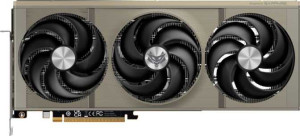
Sapphire Nitro+ Radeon RX 9070 XT
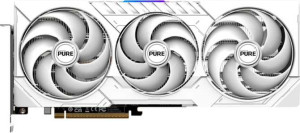
Sapphire Pure Radeon RX 9070 XT

Sapphire Nitro+ Radeon RX 9070 XT Sapphire Pure Radeon RX 9070 XT

Overview

When choosing between the Sapphire Nitro+ Radeon RX 9070 XT and the Sapphire Pure Radeon RX 9070 XT, both cards share the same RDNA 4.0 architecture, 16GB GDDR6 memory, and a rich feature set including ray tracing and FSR4 support. The key battlegrounds come down to GPU turbo clock speeds, floating-point performance, power consumption, and physical dimensions — subtle but meaningful differences that could influence your next build.

Common Features

  • Both cards share the same base GPU clock speed of 1660 MHz.
  • Both cards have a GPU memory speed of 2518 MHz.
  • Both cards feature 4096 shading units.
  • Both cards include 256 texture mapping units (TMUs).
  • Both cards have 128 render output units (ROPs).
  • Double Precision Floating Point (DPFP) is supported on both cards.
  • Both cards have an effective memory speed of 20000 MHz.
  • Both cards offer a maximum memory bandwidth of 644.6 GB/s.
  • Both cards come with 16GB of VRAM.
  • Both cards use GDDR6 memory.
  • Both cards feature a 256-bit memory bus width.
  • ECC memory is supported on both cards.
  • Both cards support DirectX 12 Ultimate.
  • Both cards support OpenGL version 4.6.
  • Both cards support OpenCL version 2.2.
  • Multi-display technology is supported on both cards.
  • Ray tracing is supported on both cards.
  • 3D support is available on both cards.
  • DLSS is not supported on either card.
  • FSR4 is available on both cards.
  • Both cards include 2 HDMI ports with HDMI 2.1b.
  • Both cards feature 2 DisplayPort outputs.
  • Neither card includes USB-C or DVI outputs.
  • Both cards are built on the RDNA 4.0 GPU architecture.
  • Both cards use PCIe version 5.
  • Both cards are manufactured on a 4 nm semiconductor process.
  • Both cards contain 53900 million transistors.
  • Air-water cooling is not available on either card.

Main Differences

  • GPU turbo clock speed is 3060 MHz on the Sapphire Nitro+ Radeon RX 9070 XT and 3010 MHz on the Sapphire Pure Radeon RX 9070 XT.
  • Pixel rate is 391.7 GPixel/s on the Sapphire Nitro+ Radeon RX 9070 XT and 385.3 GPixel/s on the Sapphire Pure Radeon RX 9070 XT.
  • Floating-point performance is 50.14 TFLOPS on the Sapphire Nitro+ Radeon RX 9070 XT and 49.32 TFLOPS on the Sapphire Pure Radeon RX 9070 XT.
  • Texture rate is 783.4 GTexels/s on the Sapphire Nitro+ Radeon RX 9070 XT and 770.6 GTexels/s on the Sapphire Pure Radeon RX 9070 XT.
  • Thermal Design Power (TDP) is 330W on the Sapphire Nitro+ Radeon RX 9070 XT and 317W on the Sapphire Pure Radeon RX 9070 XT.
  • Card width is 330.8 mm on the Sapphire Nitro+ Radeon RX 9070 XT and 320 mm on the Sapphire Pure Radeon RX 9070 XT.
  • Card height is 128.5 mm on the Sapphire Nitro+ Radeon RX 9070 XT and 120.3 mm on the Sapphire Pure Radeon RX 9070 XT.
Specs Comparison
Sapphire Nitro+ Radeon RX 9070 XT

Sapphire Nitro+ Radeon RX 9070 XT

Sapphire Pure Radeon RX 9070 XT

Sapphire Pure Radeon RX 9070 XT

Performance:
GPU clock speed 1660 MHz 1660 MHz
GPU turbo 3060 MHz 3010 MHz
pixel rate 391.7 GPixel/s 385.3 GPixel/s
floating-point performance 50.14 TFLOPS 49.32 TFLOPS
texture rate 783.4 GTexels/s 770.6 GTexels/s
GPU memory speed 2518 MHz 2518 MHz
shading units 4096 4096
texture mapping units (TMUs) 256 256
render output units (ROPs) 128 128
Has Double Precision Floating Point (DPFP)

At their core, the Nitro+ and Pure variants of the Radeon RX 9070 XT share identical silicon configurations: 4096 shading units, 256 TMUs, 128 ROPs, and a 2518 MHz memory speed. This means both cards are built on the exact same GPU die with no hardware cuts, and the architectural ceiling — including Double Precision Floating Point support — is the same on both. The real story here is purely about clock speeds.

The sole but consistent differentiator is the GPU boost clock: the Nitro+ reaches 3060 MHz versus the Pure's 3010 MHz — a 50 MHz advantage. That gap cascades predictably across every throughput metric: the Nitro+ delivers 50.14 TFLOPS of floating-point performance against the Pure's 49.32 TFLOPS, a ~1.7% lead. Similarly, its pixel rate (391.7 GPixel/s vs 385.3 GPixel/s) and texture rate (783.4 GTexels/s vs 770.6 GTexels/s) follow the same proportional delta. These are not architectural wins — they are the direct arithmetic result of binning or cooling capacity allowing a higher sustained boost.

In real-world terms, a ~1.7% performance gap is unlikely to be perceptible in frame rates or rendering workloads under typical conditions. The Nitro+ holds a measurable, if modest, edge on paper, likely enabled by its more robust cooling solution sustaining that higher boost clock more consistently. Users prioritizing maximum out-of-the-box performance will find the Nitro+ technically superior in this group, but the margin is narrow enough that real-world results will depend heavily on sustained clock behavior under thermal load rather than these peak specifications alone.
Memory:
effective memory speed 20000 MHz 20000 MHz
maximum memory bandwidth 644.6 GB/s 644.6 GB/s
VRAM 16GB 16GB
GDDR version GDDR6 GDDR6
memory bus width 256-bit 256-bit
Supports ECC memory

Memory is the one group where this comparison ends before it begins: every single specification is identical between the Nitro+ and the Pure. Both cards feature 16GB of GDDR6 running at an effective 20000 MHz across a 256-bit bus, yielding a maximum bandwidth of 644.6 GB/s. There is no binning advantage, no SKU differentiation — the memory subsystem is a carbon copy.

What these shared numbers mean in practice is substantial, regardless of variant: 16GB is a generous allocation that comfortably handles 4K gaming textures, large AI inference workloads, and high-resolution creative applications without the VRAM pressure that plagues smaller configurations. The 256-bit bus paired with GDDR6 at this speed produces bandwidth competitive with cards in a higher tier, and ECC memory support adds a layer of reliability relevant to prosumer and compute use cases where data integrity matters.

This is a straightforward tie — neither the Nitro+ nor the Pure holds any memory advantage whatsoever. Buyers choosing between these two cards can treat memory performance as a non-factor in their decision.

Features:
DirectX version DirectX 12 Ultimate DirectX 12 Ultimate
OpenGL version 4.6 4.6
OpenCL version 2.2 2.2
Supports multi-display technology
supports ray tracing
Supports 3D
supports DLSS
has FSR4
has XeSS (XMX)
AMD SAM / Intel Resizable BAR AMD SAM AMD SAM
has LHR
has RGB lighting
supported displays 4 4

Feature parity is total here — the Nitro+ and Pure offer an identical software and API feature set with zero differentiation. Both support DirectX 12 Ultimate, which unlocks the full suite of modern rendering features including hardware-accelerated ray tracing, mesh shaders, and variable rate shading. On the compute side, OpenCL 2.2 and AMD SAM (Smart Access Memory) are present on both, the latter being relevant for users pairing either card with a compatible AMD platform to improve CPU-GPU data throughput.

The upscaling picture is consistent across both cards as well: FSR4 is supported while DLSS and XeSS (XMX) are not — an expected result for AMD hardware. FSR4 represents AMD's latest upscaling generation and is a meaningful inclusion for gamers looking to boost frame rates with minimal image quality loss. The absence of DLSS is simply an architectural reality of the platform, not a product-level choice. Both cards also drive up to 4 simultaneous displays, which is a practical win for multi-monitor productivity or sim-racing setups.

With RGB lighting present on both and no feature exclusive to either variant, this group is a complete tie. The feature set itself is competitive and well-rounded for an AMD RDNA 4 card, but it provides no basis for choosing one model over the other.

Ports:
has an HDMI output
HDMI ports 2 2
HDMI version HDMI 2.1b HDMI 2.1b
DisplayPort outputs 2 2
USB-C ports 0 0
DVI outputs 0 0
mini DisplayPort outputs 0 0

Port configuration is another area where the Nitro+ and Pure are indistinguishable — both cards carry an identical I/O layout of 2× HDMI 2.1b and 2× DisplayPort outputs, totaling four physical connections that align with the four-display limit established in the Features group. The dual-HDMI arrangement is a practical differentiator from many competing cards that offer only one, making these cards particularly convenient for users who own multiple HDMI monitors or TVs without needing adapters.

HDMI 2.1b is the headline spec worth noting: it supports bandwidth sufficient for 4K at high refresh rates and 8K output, covering essentially any consumer display available today or in the near future. The dual DisplayPort outputs complement this well for users in professional or enthusiast multi-monitor setups where DisplayPort daisy-chaining or high-refresh-rate panels are preferred. The absence of USB-C is worth flagging for users who rely on direct connection to USB-C monitors or VR headsets, as an adapter would be required.

No differentiation exists between these two cards on ports — this is a clean tie. The shared I/O layout is well-considered for mainstream and enthusiast use cases alike, and neither variant offers any connectivity advantage over the other.

General info:
GPU architecture RDNA 4.0 RDNA 4.0
release date March 2025 March 2025
Thermal Design Power (TDP) 330W 317W
PCI Express (PCIe) version 5 5
semiconductor size 4 nm 4 nm
number of transistors 53900 million 53900 million
Has air-water cooling
width 330.8 mm 320 mm
height 128.5 mm 120.3 mm

Underneath the cooler, both cards are built on the same foundation: RDNA 4.0 architecture, a 4nm process node, 53.9 billion transistors, and a PCIe 5.0 interface. None of these variables differ between the Nitro+ and the Pure, confirming once again that both are identical silicon products distinguished only by their board and cooling designs.

Where this group does reveal a meaningful split is in TDP and physical size. The Nitro+ carries a 330W thermal envelope versus the Pure's 317W — a 13W difference that directly reflects the Nitro+'s more aggressive power target in pursuit of its higher boost clock seen in the Performance group. That extra power draw is modest in absolute terms but does translate to marginally higher electricity consumption and greater heat output over long sessions. On dimensions, the Nitro+ is also the larger card at 330.8 × 128.5 mm compared to the Pure's 320 × 120.3 mm — roughly 10mm longer and 8mm taller. For most full-tower builds this is inconsequential, but compact or mid-tower cases with tight GPU clearance limits may accommodate the Pure more comfortably.

The Pure holds a practical edge in this group for users with space-constrained builds or those prioritizing lower power consumption. The Nitro+'s larger footprint and higher TDP are the direct cost of its marginally higher performance headroom — a trade-off that is deliberate by design, but one that matters in tighter installation scenarios.

Comparison Summary & Verdict

Both the Sapphire Nitro+ Radeon RX 9070 XT and the Sapphire Pure Radeon RX 9070 XT are built on the same RDNA 4.0 foundation, sharing identical memory configurations, display outputs, and feature support. The Nitro+ pulls ahead with a GPU turbo clock of 3060 MHz, 50.14 TFLOPS of floating-point performance, and a higher texture rate, making it the stronger pick for enthusiasts chasing peak output. That advantage, however, comes with a TDP of 330W and a larger physical footprint of 330.8 x 128.5 mm. The Pure, drawing just 317W and measuring a more compact 320 x 120.3 mm, delivers slightly lower but still very capable performance — an appealing option for users prioritizing power efficiency or working within tighter case clearances.

Sapphire Nitro+ Radeon RX 9070 XT
Buy Sapphire Nitro+ Radeon RX 9070 XT if...

Buy the Sapphire Nitro+ Radeon RX 9070 XT if you want the highest possible GPU turbo clock, floating-point performance, and texture rate from this GPU family and have adequate case space and power headroom.

Sapphire Pure Radeon RX 9070 XT
Buy Sapphire Pure Radeon RX 9070 XT if...

Buy the Sapphire Pure Radeon RX 9070 XT if you prefer a more compact card with lower power draw, and are happy to trade a small performance margin for better efficiency and easier system integration.