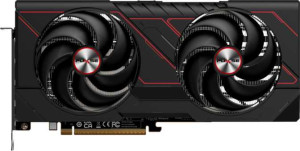
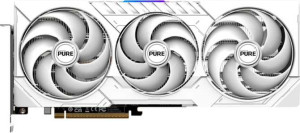
Both cards are built on the same RDNA 4.0 architecture and share an identical transistor count of 53,900 million, which confirms they are derived from the same fundamental GPU design. The key physical divergence is in process node: the RX 9070 uses a 5 nm process while the RX 9070 XT steps down to 4 nm. A smaller node generally allows for higher clock speeds or better power efficiency at equivalent performance — which aligns with the XT's higher turbo clocks seen in the Performance group, achieved on the same transistor budget.
The power draw gap is significant and worth careful consideration. The RX 9070's 220W TDP versus the XT's 317W represents a 97W difference — nearly 44% more power demanded by the XT. This has real system-level implications: the XT will require a more robust PSU, will generate considerably more heat, and will demand better case airflow to maintain stable thermals. Neither card offers liquid cooling in this configuration, so thermal management falls entirely on the air cooler. For users in compact cases or on tighter power budgets, the RX 9070's lower TDP is a meaningful practical advantage.
Physically, the XT is also 40 mm longer (320 mm vs 280 mm), which could be a fitment concern in smaller mid-tower or mini-ITX cases. Height is identical at 120.3 mm, so slot clearance is a non-issue. Both use PCIe 5.0, ensuring forward compatibility with current and near-future platforms. Overall, the RX 9070 holds a clear advantage in this group for system builders who prioritize power efficiency, thermal headroom, or case compatibility — while the XT's higher TDP and larger footprint are the direct cost of its performance gains.