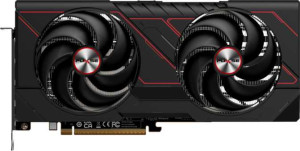
Sapphire Pulse Radeon RX 9070
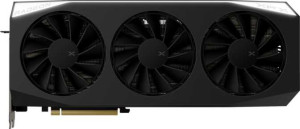
XFX Mercury Radeon RX 9070 XT Gaming Edition

Sapphire Pulse Radeon RX 9070 XFX Mercury Radeon RX 9070 XT Gaming Edition

Overview

Welcome to our in-depth spec comparison between the Sapphire Pulse Radeon RX 9070 and the XFX Mercury Radeon RX 9070 XT Gaming Edition. Both cards share AMD's RDNA 4.0 architecture and a generous 16GB of GDDR6 memory, but they diverge sharply when it comes to raw compute performance, thermal design, and physical dimensions. Read on to see how these two GPUs stack up across every major specification category.

Common Features

  • GPU memory speed is 2518 MHz on both products.
  • Both products have 128 render output units (ROPs).
  • Double Precision Floating Point (DPFP) is supported on both products.
  • Effective memory speed is 20000 MHz on both products.
  • Both products have 16GB of VRAM.
  • Both products use GDDR6 memory.
  • Memory bus width is 256-bit on both products.
  • ECC memory is supported on both products.
  • Both products support DirectX 12 Ultimate.
  • OpenGL version 4.6 is supported on both products.
  • OpenCL version 2.2 is supported on both products.
  • Multi-display technology is supported on both products.
  • Ray tracing is supported on both products.
  • 3D support is available on both products.
  • DLSS is not supported on either product.
  • FSR4 is available on both products.
  • Both products have an HDMI output with HDMI 2.1b.
  • Neither product has USB-C ports, DVI outputs, or mini DisplayPort outputs.
  • Both products are built on the RDNA 4.0 GPU architecture.
  • Both products use PCIe version 5 and feature 53900 million transistors.
  • Air-water cooling is not available on either product.

Main Differences

  • GPU base clock speed is 1330 MHz on Sapphire Pulse Radeon RX 9070 and 1660 MHz on XFX Mercury Radeon RX 9070 XT Gaming Edition.
  • GPU turbo clock is 2520 MHz on Sapphire Pulse Radeon RX 9070 and 2970 MHz on XFX Mercury Radeon RX 9070 XT Gaming Edition.
  • Pixel rate is 322.6 GPixel/s on Sapphire Pulse Radeon RX 9070 and 380.2 GPixel/s on XFX Mercury Radeon RX 9070 XT Gaming Edition.
  • Floating-point performance is 36.13 TFLOPS on Sapphire Pulse Radeon RX 9070 and 48.66 TFLOPS on XFX Mercury Radeon RX 9070 XT Gaming Edition.
  • Texture rate is 564.5 GTexels/s on Sapphire Pulse Radeon RX 9070 and 760.3 GTexels/s on XFX Mercury Radeon RX 9070 XT Gaming Edition.
  • Shading units total 3584 on Sapphire Pulse Radeon RX 9070 and 4096 on XFX Mercury Radeon RX 9070 XT Gaming Edition.
  • Texture mapping units (TMUs) number 224 on Sapphire Pulse Radeon RX 9070 and 256 on XFX Mercury Radeon RX 9070 XT Gaming Edition.
  • Maximum memory bandwidth is 644.6 GB/s on Sapphire Pulse Radeon RX 9070 and 640 GB/s on XFX Mercury Radeon RX 9070 XT Gaming Edition.
  • RGB lighting is present on XFX Mercury Radeon RX 9070 XT Gaming Edition but not available on Sapphire Pulse Radeon RX 9070.
  • HDMI port count is 2 on Sapphire Pulse Radeon RX 9070 and 1 on XFX Mercury Radeon RX 9070 XT Gaming Edition.
  • DisplayPort outputs total 2 on Sapphire Pulse Radeon RX 9070 and 3 on XFX Mercury Radeon RX 9070 XT Gaming Edition.
  • Thermal Design Power (TDP) is 220W on Sapphire Pulse Radeon RX 9070 and 304W on XFX Mercury Radeon RX 9070 XT Gaming Edition.
  • Semiconductor size is 5 nm on Sapphire Pulse Radeon RX 9070 and 4 nm on XFX Mercury Radeon RX 9070 XT Gaming Edition.
  • Card width is 280 mm on Sapphire Pulse Radeon RX 9070 and 360 mm on XFX Mercury Radeon RX 9070 XT Gaming Edition.
  • Card height is 120.3 mm on Sapphire Pulse Radeon RX 9070 and 155 mm on XFX Mercury Radeon RX 9070 XT Gaming Edition.
Specs Comparison
Sapphire Pulse Radeon RX 9070

Sapphire Pulse Radeon RX 9070

XFX Mercury Radeon RX 9070 XT Gaming Edition

XFX Mercury Radeon RX 9070 XT Gaming Edition

Performance:
GPU clock speed 1330 MHz 1660 MHz
GPU turbo 2520 MHz 2970 MHz
pixel rate 322.6 GPixel/s 380.2 GPixel/s
floating-point performance 36.13 TFLOPS 48.66 TFLOPS
texture rate 564.5 GTexels/s 760.3 GTexels/s
GPU memory speed 2518 MHz 2518 MHz
shading units 3584 4096
texture mapping units (TMUs) 224 256
render output units (ROPs) 128 128
Has Double Precision Floating Point (DPFP)

The core performance gap between these two cards comes down to shader and compute resources. The XFX Mercury RX 9070 XT carries 4096 shading units and 256 TMUs versus the Sapphire Pulse RX 9070's 3584 shading units and 224 TMUs — a roughly 14% advantage in raw parallel processing and texturing capacity. That difference is amplified by a significantly higher boost clock: 2970 MHz on the XT versus 2520 MHz on the non-XT, a gap of nearly 450 MHz. Together, these factors produce a substantially higher floating-point throughput of 48.66 TFLOPS on the XT compared to 36.13 TFLOPS on the Pulse — a 35% lead that directly translates to faster frame rates and better headroom at higher resolutions or with ray tracing enabled.

The texture and pixel output rates reinforce this picture. The XT delivers 760.3 GTexels/s versus 564.5 GTexels/s, meaning richer, more detailed surfaces in complex scenes with less performance cost. Pixel fill rate follows the same pattern: 380.2 GPixel/s on the XT versus 322.6 GPixel/s, which matters most in high-resolution rendering where the GPU must push more pixels per frame. Notably, both cards share the same 128 ROPs and identical 2518 MHz memory speed, so the advantage is entirely on the compute and clock side rather than memory bandwidth or output pipeline width.

Both GPUs support Double Precision Floating Point, which is relevant for compute workloads and certain professional applications, putting them on equal footing there. Overall, the XFX Mercury RX 9070 XT holds a clear and meaningful performance advantage in this group across nearly every metric — the only tie is in ROP count and memory clock. For users prioritizing raw rendering throughput, the XT is the stronger card by a significant margin.

Memory:
effective memory speed 20000 MHz 20000 MHz
maximum memory bandwidth 644.6 GB/s 640 GB/s
VRAM 16GB 16GB
GDDR version GDDR6 GDDR6
memory bus width 256-bit 256-bit
Supports ECC memory

On paper, the memory configurations of these two cards are remarkably close. Both carry 16GB of GDDR6 across a 256-bit bus at an effective speed of 20000 MHz — meaning neither card has an architectural advantage in terms of how much data can be held in frame or how quickly it can be accessed per cycle. For modern gaming at 1440p or 4K, 16GB is a comfortable buffer that handles high-resolution textures and large open-world assets without pressure.

The only measurable difference in this group is maximum memory bandwidth: 644.6 GB/s for the Sapphire Pulse RX 9070 versus 640 GB/s for the XFX Mercury RX 9070 XT. That 4.6 GB/s gap is less than 1% and falls well within the range of rounding differences in how bandwidth is calculated from clock and bus specs. In practice, this distinction is imperceptible in any real-world workload. Both cards also support ECC memory, which adds a layer of data integrity useful in compute or professional scenarios, and is an equal feature here.

This group is effectively a tie. Memory capacity, bus width, speed, type, and error correction are identical or functionally equivalent across both products. A buyer choosing between these two cards should look elsewhere — particularly at compute performance — to find meaningful differentiation, as memory alone offers no basis for preference.

Features:
DirectX version DirectX 12 Ultimate DirectX 12 Ultimate
OpenGL version 4.6 4.6
OpenCL version 2.2 2.2
Supports multi-display technology
supports ray tracing
Supports 3D
supports DLSS
has FSR4
has XeSS (XMX)
AMD SAM / Intel Resizable BAR AMD SAM AMD SAM
has LHR
has RGB lighting
supported displays 4 4

From a software and API standpoint, these two cards are functionally identical. Both support DirectX 12 Ultimate, OpenGL 4.6, and OpenCL 2.2, ensuring full compatibility with the latest games and compute workloads. Ray tracing, 3D support, and multi-display output up to 4 screens are shared across both. Critically, both include FSR4 — AMD's latest upscaling technology — while neither supports DLSS or XeSS, which is expected given their AMD architecture. AMD SAM (Smart Access Memory) is present on both, enabling compatible Ryzen systems to access the full GPU frame buffer for a modest but real performance uplift in supported titles.

The only differentiator in this group is aesthetic: the XFX Mercury RX 9070 XT includes RGB lighting, while the Sapphire Pulse RX 9070 does not. For builders who care about case aesthetics or themed builds, this is a genuine distinction — but it carries no impact on gaming performance, compute capability, or compatibility.

In terms of features, this is essentially a tie on substance. Every meaningful capability — API support, upscaling, ray tracing, SAM, display output — is matched across both cards. The XFX XT edges ahead only on RGB, which is a matter of personal preference rather than technical merit. Buyers deciding between these two should weight this category equally and focus their decision on performance and thermals instead.

Ports:
has an HDMI output
HDMI ports 2 1
HDMI version HDMI 2.1b HDMI 2.1b
DisplayPort outputs 2 3
USB-C ports 0 0
DVI outputs 0 0
mini DisplayPort outputs 0 0

Both cards top out at four total display outputs and share the same HDMI 2.1b standard, which supports 4K at high refresh rates and 8K output — so the quality of each connection is equal. Where they differ is in how that total is distributed. The Sapphire Pulse RX 9070 offers 2 HDMI + 2 DisplayPort, while the XFX Mercury RX 9070 XT goes 1 HDMI + 3 DisplayPort. Neither configuration is objectively superior — it depends entirely on the user's monitor setup.

The Sapphire Pulse's dual-HDMI layout is a practical advantage for users who rely on HDMI-primary displays, such as TVs used as gaming monitors or older screens without DisplayPort inputs, since it allows two such devices to be connected simultaneously without adapters. The XFX XT's three-DisplayPort arrangement, on the other hand, better suits a typical multi-monitor desk setup where DisplayPort is the dominant connection — a common scenario for productivity users or sim racers running three identical monitors.

This group is a draw on capability — same total outputs, same HDMI version, same maximum display count. The edge goes to whichever card matches the user's existing hardware: the Sapphire Pulse for HDMI-heavy setups, the XFX Mercury XT for DisplayPort-dominant configurations.

General info:
GPU architecture RDNA 4.0 RDNA 4.0
release date March 2025 March 2025
Thermal Design Power (TDP) 220W 304W
PCI Express (PCIe) version 5 5
semiconductor size 5 nm 4 nm
number of transistors 53900 million 53900 million
Has air-water cooling
width 280 mm 360 mm
height 120.3 mm 155 mm

Sharing the same RDNA 4.0 architecture, identical transistor count of 53.9 billion, and PCIe 5.0 interface, these two cards are built from the same generational foundation. The meaningful divergence lies in how each is physically implemented and at what power cost. The XFX Mercury RX 9070 XT is fabbed on a 4 nm process versus 5 nm for the Sapphire Pulse RX 9070 — a smaller node that generally enables higher clock speeds or better power efficiency at the same transistor count, which aligns with the XT's significantly higher boost clocks seen in the performance group.

Power consumption tells a pointed story. The XT's 304W TDP versus the Pulse's 220W represents a 38% increase in thermal load — a real consideration for system builders. A higher TDP demands a more robust PSU, better case airflow, and can meaningfully raise ambient temperatures inside a chassis. For small form factor builds or systems with modest power supplies, the Pulse's lower draw is a genuine practical advantage. Physical size compounds this: the XFX XT measures 360 mm × 155 mm compared to the Pulse's 280 mm × 120.3 mm, an 80 mm length difference that can be the deciding factor in mid-tower or ITX cases with limited GPU clearance.

Neither card uses liquid cooling, so thermal management falls entirely to their respective air cooler designs. In this group, the Sapphire Pulse RX 9070 holds a clear practical edge for compact builds and power-conscious systems — it is shorter, slimmer, and draws 84W less. The XFX XT's larger footprint and higher TDP are the direct cost of its performance uplift, making case compatibility and PSU headroom essential checkpoints before purchase.

Comparison Summary & Verdict

After examining every specification, a clear picture emerges for each card. The Sapphire Pulse Radeon RX 9070 is the more restrained option, drawing only 220W TDP while delivering solid performance with a higher memory bandwidth of 644.6 GB/s and a compact 280 mm length — making it an excellent fit for builders working with smaller cases or tighter power budgets. The XFX Mercury Radeon RX 9070 XT Gaming Edition, on the other hand, is built for enthusiasts who demand maximum throughput: its 48.66 TFLOPS of floating-point performance, 2970 MHz turbo clock, and 4096 shading units make it a noticeably faster card, albeit at the cost of a 304W power draw and a larger 360 mm footprint. It also adds RGB lighting and an extra DisplayPort output for those who value aesthetics and multi-monitor flexibility. Choose the Sapphire for efficiency; choose the XFX for outright power.

Sapphire Pulse Radeon RX 9070
Buy Sapphire Pulse Radeon RX 9070 if...

Buy the Sapphire Pulse Radeon RX 9070 if you want a power-efficient card with a compact form factor and a lower 220W TDP that fits comfortably in smaller builds without sacrificing 16GB of GDDR6 memory.

XFX Mercury Radeon RX 9070 XT Gaming Edition
Buy XFX Mercury Radeon RX 9070 XT Gaming Edition if...

Buy the XFX Mercury Radeon RX 9070 XT Gaming Edition if you want maximum raw performance, with higher clock speeds, more shading units, and greater floating-point throughput, and you have the case space and power headroom to support its 304W TDP.