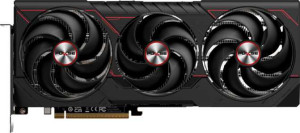
Sapphire Pulse Radeon RX 9070 XT
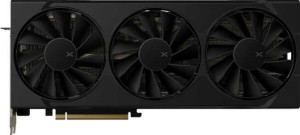
XFX Swift Radeon RX 9070 OC Triple Fan Gaming Edition

Sapphire Pulse Radeon RX 9070 XT XFX Swift Radeon RX 9070 OC Triple Fan Gaming Edition

Overview

Welcome to our detailed spec comparison between the Sapphire Pulse Radeon RX 9070 XT and the XFX Swift Radeon RX 9070 OC Triple Fan Gaming Edition. Both cards share AMD’s RDNA 4.0 architecture and 16GB of GDDR6 memory, but they diverge meaningfully in raw compute performance, power consumption, display connectivity, and physical design. Read on to find out which card best fits your specific needs and setup.

Common Features

  • Both products have a GPU memory speed of 2518 MHz.
  • Both products have 128 render output units (ROPs).
  • Double Precision Floating Point (DPFP) is supported on both products.
  • Both products have an effective memory speed of 20000 MHz.
  • Both products feature 16GB of VRAM.
  • Both products use GDDR6 memory.
  • Both products have a 256-bit memory bus width.
  • ECC memory is supported on both products.
  • Both products support DirectX 12 Ultimate.
  • Both products support OpenGL version 4.6.
  • Both products support OpenCL version 2.2.
  • Multi-display technology is supported on both products.
  • Ray tracing is supported on both products.
  • 3D support is available on both products.
  • DLSS is not supported on either product.
  • FSR4 is available on both products.
  • Both products have an HDMI output running version HDMI 2.1b.
  • Neither product has USB-C ports, DVI outputs, or mini DisplayPort outputs.
  • Both products are built on the RDNA 4.0 GPU architecture.
  • Both products use PCIe version 5.
  • Both products feature 53,900 million transistors.
  • Neither product has air-water cooling.

Main Differences

  • GPU clock speed is 1660 MHz on Sapphire Pulse Radeon RX 9070 XT and 1440 MHz on XFX Swift Radeon RX 9070 OC Triple Fan Gaming Edition.
  • GPU turbo speed is 2970 MHz on Sapphire Pulse Radeon RX 9070 XT and 2700 MHz on XFX Swift Radeon RX 9070 OC Triple Fan Gaming Edition.
  • Pixel rate is 380.2 GPixel/s on Sapphire Pulse Radeon RX 9070 XT and 345.6 GPixel/s on XFX Swift Radeon RX 9070 OC Triple Fan Gaming Edition.
  • Floating-point performance is 48.66 TFLOPS on Sapphire Pulse Radeon RX 9070 XT and 38.71 TFLOPS on XFX Swift Radeon RX 9070 OC Triple Fan Gaming Edition.
  • Texture rate is 760.3 GTexels/s on Sapphire Pulse Radeon RX 9070 XT and 604.8 GTexels/s on XFX Swift Radeon RX 9070 OC Triple Fan Gaming Edition.
  • Shading units number 4096 on Sapphire Pulse Radeon RX 9070 XT and 3584 on XFX Swift Radeon RX 9070 OC Triple Fan Gaming Edition.
  • Texture mapping units (TMUs) total 256 on Sapphire Pulse Radeon RX 9070 XT and 224 on XFX Swift Radeon RX 9070 OC Triple Fan Gaming Edition.
  • Maximum memory bandwidth is 644.6 GB/s on Sapphire Pulse Radeon RX 9070 XT and 640 GB/s on XFX Swift Radeon RX 9070 OC Triple Fan Gaming Edition.
  • RGB lighting is present on XFX Swift Radeon RX 9070 OC Triple Fan Gaming Edition but not available on Sapphire Pulse Radeon RX 9070 XT.
  • HDMI port count is 2 on Sapphire Pulse Radeon RX 9070 XT and 1 on XFX Swift Radeon RX 9070 OC Triple Fan Gaming Edition.
  • DisplayPort outputs number 2 on Sapphire Pulse Radeon RX 9070 XT and 3 on XFX Swift Radeon RX 9070 OC Triple Fan Gaming Edition.
  • Thermal Design Power (TDP) is 304W on Sapphire Pulse Radeon RX 9070 XT and 220W on XFX Swift Radeon RX 9070 OC Triple Fan Gaming Edition.
  • Semiconductor size is 4 nm on Sapphire Pulse Radeon RX 9070 XT and 5 nm on XFX Swift Radeon RX 9070 OC Triple Fan Gaming Edition.
  • Width is 320 mm on Sapphire Pulse Radeon RX 9070 XT and 325 mm on XFX Swift Radeon RX 9070 OC Triple Fan Gaming Edition.
  • Height is 120.3 mm on Sapphire Pulse Radeon RX 9070 XT and 150 mm on XFX Swift Radeon RX 9070 OC Triple Fan Gaming Edition.
Specs Comparison
Sapphire Pulse Radeon RX 9070 XT

Sapphire Pulse Radeon RX 9070 XT

XFX Swift Radeon RX 9070 OC Triple Fan Gaming Edition

XFX Swift Radeon RX 9070 OC Triple Fan Gaming Edition

Performance:
GPU clock speed 1660 MHz 1440 MHz
GPU turbo 2970 MHz 2700 MHz
pixel rate 380.2 GPixel/s 345.6 GPixel/s
floating-point performance 48.66 TFLOPS 38.71 TFLOPS
texture rate 760.3 GTexels/s 604.8 GTexels/s
GPU memory speed 2518 MHz 2518 MHz
shading units 4096 3584
texture mapping units (TMUs) 256 224
render output units (ROPs) 128 128
Has Double Precision Floating Point (DPFP)

The performance gap between these two cards is substantial and consistent across every compute metric. The Sapphire Pulse RX 9070 XT leads with a boost clock of 2970 MHz versus 2700 MHz on the XFX Swift RX 9070 OC — a 270 MHz advantage that compounds across a wider shader array of 4096 shading units compared to 3584. The result is a floating-point throughput of 48.66 TFLOPS on the Sapphire versus 38.71 TFLOPS on the XFX — roughly a 25% compute advantage that directly translates to higher sustained frame rates and better headroom at demanding resolutions like 4K.

The texture processing story follows the same pattern. The Sapphire's 760.3 GTexels/s texture rate versus the XFX's 604.8 GTexels/s means the 9070 XT can fill scenes with finer surface detail faster — a real-world difference most visible in open-world titles with dense, high-resolution assets. The pixel fill rate gap (380.2 vs 345.6 GPixel/s) is more modest since both cards share 128 ROPs, meaning the Sapphire's edge here comes purely from its higher clock speed rather than additional output hardware. Memory bandwidth is identical, with both cards running at 2518 MHz, so neither has a bus-level advantage. Both also support Double Precision Floating Point, relevant for compute workloads beyond gaming.

The Sapphire Pulse RX 9070 XT holds a clear and meaningful performance advantage in this group. The XFX Swift RX 9070 OC is not a close competitor on raw throughput — the difference in shading units and boost clocks places these two cards in distinct performance tiers. Users prioritizing maximum rendering horsepower should favor the Sapphire; the XFX represents a lower-performance option that would need to justify itself through pricing, power efficiency, or other non-performance factors.

Memory:
effective memory speed 20000 MHz 20000 MHz
maximum memory bandwidth 644.6 GB/s 640 GB/s
VRAM 16GB 16GB
GDDR version GDDR6 GDDR6
memory bus width 256-bit 256-bit
Supports ECC memory

On paper and in practice, these two cards are essentially identical in memory configuration. Both feature 16GB of GDDR6 across a 256-bit bus, running at the same effective speed of 20000 MHz. That 16GB allocation is generous for current-generation gaming, providing comfortable headroom for high-resolution texture packs, 4K assets, and memory-intensive workloads without hitting the VRAM ceiling that plagues narrower configurations.

The only measurable difference is a marginal bandwidth gap — 644.6 GB/s on the Sapphire Pulse RX 9070 XT versus 640 GB/s on the XFX Swift RX 9070 OC. That 4.6 GB/s delta is less than 1% and almost certainly stems from a minor clock reporting difference rather than any architectural distinction. In real-world usage, no application or game would expose a performance difference at this margin. Both cards also support ECC memory, which adds error-correction capability useful in professional compute scenarios, though it is rarely a deciding factor for gaming-focused buyers.

This group is effectively a dead heat. Memory configuration offers no meaningful basis for choosing between these two cards — buyers should look entirely to other spec groups, such as performance or thermals, to differentiate them.

Features:
DirectX version DirectX 12 Ultimate DirectX 12 Ultimate
OpenGL version 4.6 4.6
OpenCL version 2.2 2.2
Supports multi-display technology
supports ray tracing
Supports 3D
supports DLSS
has FSR4
has XeSS (XMX)
AMD SAM / Intel Resizable BAR AMD SAM AMD SAM
has LHR
has RGB lighting
supported displays 4 4

From a software and API standpoint, these two cards are mirror images of each other. Both support DirectX 12 Ultimate, ray tracing, and FSR4 — the full modern AMD feature stack. DirectX 12 Ultimate ensures compatibility with the latest rendering techniques including mesh shaders and variable rate shading, while FSR4 provides AI-assisted upscaling that can meaningfully boost frame rates at higher resolutions with minimal visual cost. Neither card supports DLSS, which is expected given both are AMD products, and XeSS (XMX) is also absent on both.

The only differentiating spec in this entire group is RGB lighting — present on the XFX Swift RX 9070 OC, absent on the Sapphire Pulse RX 9070 XT. For users building visually themed rigs with windowed cases, this is a genuine, if purely aesthetic, distinction. Those who prefer a cleaner look or simply do not care about lighting will find the Sapphire's omission a non-issue. Both cards support up to 4 simultaneous displays and include AMD SAM (Smart Access Memory), which can deliver modest frame rate gains when paired with a compatible AMD CPU.

Functionally, this group is a tie — the feature sets are identical where it counts. The XFX holds a minor edge for aesthetics-conscious buyers due to its RGB implementation, but this carries no performance or compatibility implications whatsoever.

Ports:
has an HDMI output
HDMI ports 2 1
HDMI version HDMI 2.1b HDMI 2.1b
DisplayPort outputs 2 3
USB-C ports 0 0
DVI outputs 0 0
mini DisplayPort outputs 0 0

Both cards top out at four total display outputs and share the same HDMI 2.1b standard — capable of driving 4K at high refresh rates or even 8K output — but they divide those ports differently. The Sapphire Pulse RX 9070 XT goes with 2 HDMI + 2 DisplayPort, while the XFX Swift RX 9070 OC flips the balance to 1 HDMI + 3 DisplayPort. Neither configuration is objectively superior; the right choice depends entirely on the user's monitor setup.

The Sapphire's dual HDMI layout is the more practical choice for users who mix monitors with TVs, projectors, or other consumer displays that rely on HDMI. Having two HDMI ports means no adapter is needed to run two such devices simultaneously. The XFX's three DisplayPort outputs, on the other hand, better serve dedicated multi-monitor gaming setups or professional workstation arrangements where DisplayPort is the dominant connection standard — particularly relevant given DisplayPort's traditionally higher ceiling for refresh rate and daisy-chaining support.

This group has no clear overall winner — the decision is purely use-case driven. HDMI-heavy environments favor the Sapphire Pulse RX 9070 XT; DisplayPort-dominant setups favor the XFX Swift RX 9070 OC. Buyers should map their current and planned display connections before treating this as a tiebreaker.

General info:
GPU architecture RDNA 4.0 RDNA 4.0
release date March 2025 March 2025
Thermal Design Power (TDP) 304W 220W
PCI Express (PCIe) version 5 5
semiconductor size 4 nm 5 nm
number of transistors 53900 million 53900 million
Has air-water cooling
width 320 mm 325 mm
height 120.3 mm 150 mm

Sharing the same RDNA 4.0 architecture and identical transistor count of 53,900 million, these two cards are built from the same foundational silicon family — yet they diverge in meaningful ways at the implementation level. The most striking difference is the manufacturing node: the Sapphire Pulse RX 9070 XT is fabbed on a 4nm process while the XFX Swift RX 9070 OC uses a 5nm node. A smaller node generally enables greater transistor density and power efficiency, which makes the next data point particularly noteworthy.

Despite its more advanced process node, the Sapphire carries a 304W TDP versus just 220W for the XFX — an 84W gap that reflects the Sapphire's significantly higher-clocked, wider GPU configuration established in the performance group. That 84W demands a more capable PSU, produces more heat under load, and will result in higher sustained fan noise in thermally constrained cases. The XFX's lower thermal envelope makes it a friendlier fit for builds where power budget or case airflow is a concern. Both cards are air-cooled only, so neither offers a hybrid cooling option.

On physical footprint, the two cards are close but not identical — the XFX is slightly wider (325mm vs 320mm) and notably taller (150mm vs 120.3mm), which could matter in tighter mid-tower cases. Overall, the XFX holds a practical edge here for power-conscious and space-aware builders, while the Sapphire's higher TDP is the direct cost of its performance lead.

Comparison Summary & Verdict

After examining every specification, a clear picture emerges for each card. The Sapphire Pulse Radeon RX 9070 XT is the stronger performer, offering a higher GPU turbo of 2970 MHz, 4096 shading units, and 48.66 TFLOPS of floating-point performance, making it the better choice for users who demand maximum compute throughput and rasterization speed. It also features a more compact 120.3 mm height and two HDMI 2.1b ports for flexible multi-display setups. The XFX Swift Radeon RX 9070 OC Triple Fan Gaming Edition, meanwhile, counters with a significantly lower TDP of just 220W, RGB lighting for aesthetics-focused builds, and three DisplayPort outputs ideal for triple-monitor configurations. Both cards support ray tracing, FSR4, and DirectX 12 Ultimate equally. Choose the Sapphire for outright power; choose the XFX Swift if efficiency, RGB, and more DisplayPort outputs matter most to you.

Sapphire Pulse Radeon RX 9070 XT
Buy Sapphire Pulse Radeon RX 9070 XT if...

Buy the Sapphire Pulse Radeon RX 9070 XT if you want the highest possible GPU performance, with a faster turbo clock, more shading units, and greater floating-point throughput for demanding workloads and gaming.

XFX Swift Radeon RX 9070 OC Triple Fan Gaming Edition
Buy XFX Swift Radeon RX 9070 OC Triple Fan Gaming Edition if...

Buy the XFX Swift Radeon RX 9070 OC Triple Fan Gaming Edition if you prioritize lower power consumption at just 220W, RGB lighting for your build aesthetics, and three DisplayPort outputs for a triple-monitor setup.