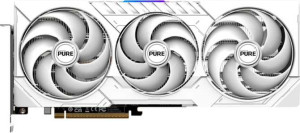
Sapphire Pure Radeon RX 9070 XT
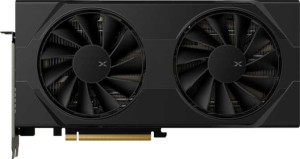
XFX Swift Radeon RX 9060 XT OC Gaming Edition 16GB

Sapphire Pure Radeon RX 9070 XT XFX Swift Radeon RX 9060 XT OC Gaming Edition 16GB

Overview

Choosing between the Sapphire Pure Radeon RX 9070 XT and the XFX Swift Radeon RX 9060 XT OC Gaming Edition 16GB is a fascinating exercise in trade-offs. Both cards are built on the same RDNA 4.0 architecture, share 16GB of GDDR6 memory, and support modern staples like ray tracing and FSR4. Where things get interesting is in their diverging approaches to raw compute power and power efficiency — two factors that will define which card belongs in your next build.

Common Features

  • Both cards share a GPU memory speed of 2518 MHz.
  • Both cards support Double Precision Floating Point (DPFP).
  • Both cards have an effective memory speed of 20000 MHz.
  • Both cards come with 16GB of VRAM.
  • Both cards use GDDR6 memory.
  • Both cards support ECC memory.
  • Both cards support DirectX 12 Ultimate.
  • Both cards support OpenGL version 4.6.
  • Both cards support OpenCL version 2.2.
  • Both cards support multi-display technology.
  • Both cards support ray tracing.
  • Both cards support 3D.
  • DLSS support is not available on either card.
  • Both cards feature FSR4 support.
  • Both cards have an HDMI output using HDMI version 2.1b.
  • Both cards include 2 DisplayPort outputs.
  • Neither card has USB-C ports.
  • Neither card has DVI outputs.
  • Both cards are built on the RDNA 4.0 GPU architecture.
  • Both cards use PCIe version 5.
  • Both cards are manufactured on a 4 nm semiconductor process.
  • Neither card features air-water cooling.

Main Differences

  • GPU base clock speed is 1660 MHz on Sapphire Pure Radeon RX 9070 XT and 1900 MHz on XFX Swift Radeon RX 9060 XT OC Gaming Edition 16GB.
  • GPU turbo clock speed is 3010 MHz on Sapphire Pure Radeon RX 9070 XT and 3320 MHz on XFX Swift Radeon RX 9060 XT OC Gaming Edition 16GB.
  • Pixel rate is 385.3 GPixel/s on Sapphire Pure Radeon RX 9070 XT and 212.5 GPixel/s on XFX Swift Radeon RX 9060 XT OC Gaming Edition 16GB.
  • Floating-point performance is 49.32 TFLOPS on Sapphire Pure Radeon RX 9070 XT and 27.2 TFLOPS on XFX Swift Radeon RX 9060 XT OC Gaming Edition 16GB.
  • Texture rate is 770.6 GTexels/s on Sapphire Pure Radeon RX 9070 XT and 425 GTexels/s on XFX Swift Radeon RX 9060 XT OC Gaming Edition 16GB.
  • Shading units number 4096 on Sapphire Pure Radeon RX 9070 XT and 2048 on XFX Swift Radeon RX 9060 XT OC Gaming Edition 16GB.
  • Texture mapping units (TMUs) total 256 on Sapphire Pure Radeon RX 9070 XT and 128 on XFX Swift Radeon RX 9060 XT OC Gaming Edition 16GB.
  • Render output units (ROPs) total 128 on Sapphire Pure Radeon RX 9070 XT and 64 on XFX Swift Radeon RX 9060 XT OC Gaming Edition 16GB.
  • Maximum memory bandwidth is 644.6 GB/s on Sapphire Pure Radeon RX 9070 XT and 340 GB/s on XFX Swift Radeon RX 9060 XT OC Gaming Edition 16GB.
  • Memory bus width is 256-bit on Sapphire Pure Radeon RX 9070 XT and 128-bit on XFX Swift Radeon RX 9060 XT OC Gaming Edition 16GB.
  • Supported displays number 4 on Sapphire Pure Radeon RX 9070 XT and 3 on XFX Swift Radeon RX 9060 XT OC Gaming Edition 16GB.
  • HDMI port count is 2 on Sapphire Pure Radeon RX 9070 XT and 1 on XFX Swift Radeon RX 9060 XT OC Gaming Edition 16GB.
  • Thermal Design Power (TDP) is 317W on Sapphire Pure Radeon RX 9070 XT and 160W on XFX Swift Radeon RX 9060 XT OC Gaming Edition 16GB.
  • Transistor count is 53900 million on Sapphire Pure Radeon RX 9070 XT and 29700 million on XFX Swift Radeon RX 9060 XT OC Gaming Edition 16GB.
  • Card width is 320 mm on Sapphire Pure Radeon RX 9070 XT and 270 mm on XFX Swift Radeon RX 9060 XT OC Gaming Edition 16GB.
  • Card height is 120.3 mm on Sapphire Pure Radeon RX 9070 XT and 124 mm on XFX Swift Radeon RX 9060 XT OC Gaming Edition 16GB.
Specs Comparison
Sapphire Pure Radeon RX 9070 XT

Sapphire Pure Radeon RX 9070 XT

XFX Swift Radeon RX 9060 XT OC Gaming Edition 16GB

XFX Swift Radeon RX 9060 XT OC Gaming Edition 16GB

Performance:
GPU clock speed 1660 MHz 1900 MHz
GPU turbo 3010 MHz 3320 MHz
pixel rate 385.3 GPixel/s 212.5 GPixel/s
floating-point performance 49.32 TFLOPS 27.2 TFLOPS
texture rate 770.6 GTexels/s 425 GTexels/s
GPU memory speed 2518 MHz 2518 MHz
shading units 4096 2048
texture mapping units (TMUs) 256 128
render output units (ROPs) 128 64
Has Double Precision Floating Point (DPFP)

At first glance, the XFX Swift RX 9060 XT OC appears competitive on clock speeds, boasting a higher base of 1900 MHz and a turbo of 3320 MHz versus the Sapphire Pure RX 9070 XT's 1660 MHz base and 3010 MHz turbo. However, raw clock speed is only one part of the performance equation — the number of execution resources matters just as much. The 9070 XT deploys exactly twice the shading units (4096 vs. 2048), TMUs (256 vs. 128), and ROPs (128 vs. 64), meaning it can process far more work in parallel each clock cycle, even at a lower frequency.

This architectural gap translates directly into the throughput numbers: the 9070 XT delivers 49.32 TFLOPS of floating-point performance against the 9060 XT OC's 27.2 TFLOPS — an 81% lead. Similarly, its texture rate of 770.6 GTexels/s and pixel rate of 385.3 GPixel/s are roughly 81% and 81% higher respectively. In real-world terms, this means noticeably higher frame rates at demanding resolutions, better handling of complex geometry and shading, and considerably more headroom for ray tracing and compute-heavy workloads. The shared GPU memory speed of 2518 MHz and identical DPFP support are the only areas where the two cards stand equal.

The Sapphire Pure RX 9070 XT holds a decisive and unambiguous performance advantage in this group. The 9060 XT OC's higher clock speeds partially offset the deficit but cannot bridge an 81% gap in compute resources — a difference that will be felt in any GPU-bound scenario, from high-refresh gaming to content creation workloads.

Memory:
effective memory speed 20000 MHz 20000 MHz
maximum memory bandwidth 644.6 GB/s 340 GB/s
VRAM 16GB 16GB
GDDR version GDDR6 GDDR6
memory bus width 256-bit 128-bit
Supports ECC memory

Both cards arrive with an identical 16GB of GDDR6 VRAM and the same 20000 MHz effective memory speed, which on the surface makes them look evenly matched. The critical divergence, however, lies in the memory bus width: the Sapphire Pure RX 9070 XT uses a 256-bit interface while the XFX Swift RX 9060 XT OC is equipped with a narrower 128-bit bus. That difference cuts directly into how much data each card can move per second.

The consequence is stark: the 9070 XT achieves a maximum memory bandwidth of 644.6 GB/s, nearly double the 9060 XT OC's 340 GB/s. Bandwidth is the pipeline that feeds the GPU's execution units — when it is constrained, even a large VRAM pool cannot prevent bottlenecks in texture-heavy scenes, high-resolution rendering, or workloads that stream large datasets. In practical terms, the 9060 XT OC's 16GB capacity is generous, but the narrower bus means that data sitting in that memory takes longer to reach the GPU, which can limit real-world performance gains in bandwidth-sensitive tasks like 4K gaming or professional compute work. Both cards support ECC memory, a feature relevant to users requiring data integrity in professional or mixed-use environments.

The Sapphire Pure RX 9070 XT holds a clear and meaningful advantage here. Sharing the same VRAM amount and speed only highlights how significant the bus-width gap is — the 9070 XT's doubled bandwidth is a structural edge that will matter most as resolution, texture quality, and workload complexity increase.

Features:
DirectX version DirectX 12 Ultimate DirectX 12 Ultimate
OpenGL version 4.6 4.6
OpenCL version 2.2 2.2
Supports multi-display technology
supports ray tracing
Supports 3D
supports DLSS
has FSR4
has XeSS (XMX)
AMD SAM / Intel Resizable BAR AMD SAM AMD SAM
has LHR
has RGB lighting
supported displays 4 3

Across the feature set, these two cards are remarkably well-matched. Both support DirectX 12 Ultimate, ray tracing, FSR4, and AMD SAM, meaning users of either card access the same generation of AMD's software ecosystem — including the latest upscaling technology and hardware-accelerated ray tracing pipelines. Neither card supports DLSS or XeSS, which is expected given their AMD architecture, and neither carries a mining limiter (LHR), relevant for those considering compute use cases.

The sole functional differentiator in this group is display output capacity: the Sapphire Pure RX 9070 XT supports up to 4 displays, while the XFX Swift RX 9060 XT OC tops out at 3. For the vast majority of gamers, three outputs is entirely sufficient. However, users building dense multi-monitor setups — such as trading workstations, sim racing rigs, or productivity-heavy configurations — will find the 9070 XT's extra output a tangible practical benefit without needing a display hub or adapter.

For features, this is essentially a near-tie with a narrow edge to the Sapphire Pure RX 9070 XT solely due to its additional display output. Anyone content with a three-monitor maximum will find no meaningful feature difference between the two cards in this category.

Ports:
has an HDMI output
HDMI ports 2 1
HDMI version HDMI 2.1b HDMI 2.1b
DisplayPort outputs 2 2
USB-C ports 0 0
DVI outputs 0 0
mini DisplayPort outputs 0 0

The port layouts of these two cards share a common foundation — both offer 2 DisplayPort outputs and use the same HDMI 2.1b standard, which supports 4K at high refresh rates and 8K output. Neither card includes USB-C, DVI, or mini DisplayPort, keeping the bracket clean and focused on modern display standards.

The single differentiator is HDMI quantity: the Sapphire Pure RX 9070 XT carries 2 HDMI ports versus 1 on the XFX Swift RX 9060 XT OC. Combined with its 2 DisplayPorts, the 9070 XT offers a total of 4 physical outputs — consistent with its 4-display support noted in the features group. The 9060 XT OC's 3 total ports (1 HDMI + 2 DisplayPort) align exactly with its 3-display ceiling, meaning there is no unused connectivity overhead on either card.

For most single or dual-monitor users, this distinction is irrelevant. Where it matters is for anyone who relies on multiple HDMI connections specifically — such as connecting both a TV and a monitor without using an adapter — in which case the Sapphire Pure RX 9070 XT holds a modest but practical edge.

General info:
GPU architecture RDNA 4.0 RDNA 4.0
release date March 2025 June 2025
Thermal Design Power (TDP) 317W 160W
PCI Express (PCIe) version 5 5
semiconductor size 4 nm 4 nm
number of transistors 53900 million 29700 million
Has air-water cooling
width 320 mm 270 mm
height 120.3 mm 124 mm

Sharing the same RDNA 4.0 architecture, 4nm process node, and PCIe 5.0 interface, these two cards are built from the same technological generation — the differences here are about scale and power budget rather than generational gaps. The 9070 XT is the significantly larger die, packing 53,900 million transistors versus 29,700 million on the 9060 XT OC, which directly explains the doubled execution resources seen in the performance group.

The power consumption gap is equally pronounced: the Sapphire Pure RX 9070 XT carries a 317W TDP, nearly double the XFX Swift RX 9060 XT OC's 160W. In practical terms, this means the 9070 XT demands a more robust PSU, generates more heat requiring better case airflow, and will draw noticeably more from your electricity bill over time. The 9060 XT OC's lower TDP also makes it a friendlier fit for compact or thermally constrained builds. Physical size reinforces this divide — the 9070 XT is 320mm long compared to the 9060 XT OC's 270mm, a 50mm difference that can be decisive in smaller mid-tower or ITX cases.

Neither card holds an outright advantage here — the ″winner″ depends entirely on the user's priorities. The RX 9060 XT OC is the clear choice for power efficiency, lower heat output, and smaller-form-factor compatibility. The RX 9070 XT accepts a higher power and size cost in exchange for the substantially greater compute resources its larger die enables.

Comparison Summary & Verdict

With all specifications laid out, the two cards serve distinctly different audiences. The Sapphire Pure Radeon RX 9070 XT is the outright performance champion here, offering 49.32 TFLOPS of floating-point performance, a wider 256-bit memory bus delivering 644.6 GB/s of bandwidth, and double the shading units, TMUs, and ROPs — all of which translate to considerably higher throughput in demanding scenarios. However, that power comes at a cost of 317W TDP and a larger physical footprint. The XFX Swift Radeon RX 9060 XT OC Gaming Edition 16GB, by contrast, runs at a very efficient 160W TDP with a more compact form factor, while still offering the same 16GB GDDR6 pool and identical feature support including ray tracing, FSR4, and DirectX 12 Ultimate. Neither card sacrifices modern capability; the choice ultimately comes down to how much performance headroom your workload demands versus how tight your power and space constraints are.

Sapphire Pure Radeon RX 9070 XT
Buy Sapphire Pure Radeon RX 9070 XT if...

Buy the Sapphire Pure Radeon RX 9070 XT if you want maximum GPU compute performance, higher memory bandwidth, and support for up to four simultaneous displays in a high-end build where power draw is not a concern.

XFX Swift Radeon RX 9060 XT OC Gaming Edition 16GB
Buy XFX Swift Radeon RX 9060 XT OC Gaming Edition 16GB if...

Buy the XFX Swift Radeon RX 9060 XT OC Gaming Edition 16GB if you prioritize a lower 160W power draw and a more compact card, while still enjoying 16GB of GDDR6 memory and a full modern feature set.