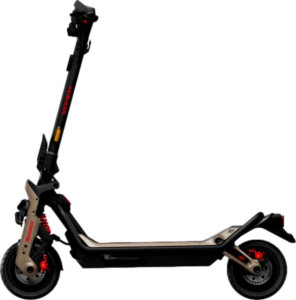
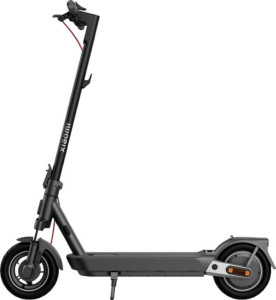
The most striking design difference between these two scooters is weight. The Segway SuperScooter GT3 Pro weighs 53,100 g — more than twice the 22,300 g of the Xiaomi Electric Scooter 5 Max. In practice, this is the difference between a machine you can realistically carry up a flight of stairs and one that demands a lift or ramp. While both scooters fold, the GT3 Pro's bulk means that folding serves more as a parking convenience than a genuine portability feature, whereas the Xiaomi's lighter frame makes it far more manageable for last-mile, multi-modal commutes.
On dimensions, the GT3 Pro is also notably larger — 1388 mm tall and 1360 mm wide versus 1271 mm and 1192 mm for the Xiaomi — consistent with its heftier build. Its slightly larger 11″ wheels (versus 10″) can translate to marginally better roll-over of road imperfections, though both scooters share pneumatic tires and suspension systems, meaning neither sacrifices ride comfort fundamentally. Both also come equipped with front and rear lighting and a dedicated smartphone app, so the baseline feature set for visibility and connectivity is equivalent.
Where the GT3 Pro does reclaim ground is weather resistance: its IPX6 rating means it can withstand powerful water jets, a meaningful step up from the Xiaomi's IPX5, which covers only low-pressure water streams. For riders who commute in heavy rain, this distinction matters. Overall, though, the Xiaomi Electric Scooter 5 Max holds a clear design edge for everyday usability — its dramatically lower weight and more compact footprint make it substantially easier to live with, and it concedes only a minor point on water resistance.