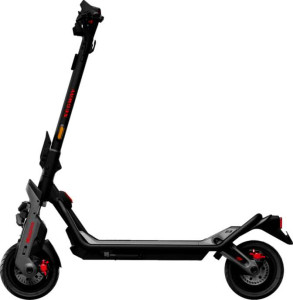
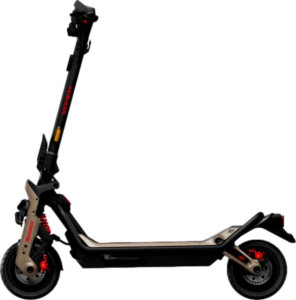
Segway SuperScooter GT3
Segway SuperScooter GT3 Pro

Segway SuperScooter GT3 Segway SuperScooter GT3 Pro

Overview

When choosing between the Segway SuperScooter GT3 and the Segway SuperScooter GT3 Pro, riders face a fascinating decision that goes well beyond brand loyalty. Both scooters share a foldable design, pneumatic 11″ tires, and a companion smartphone app, yet they diverge sharply when it comes to motor power, top speed, and battery capacity. In this comparison we examine the key battlegrounds — performance, range, and weight — to help you find the model that best fits your riding ambitions.

Common Features

  • Both the Segway SuperScooter GT3 and Segway SuperScooter GT3 Pro feature suspension.
  • A dedicated smartphone app is available on both the Segway SuperScooter GT3 and Segway SuperScooter GT3 Pro.
  • Both the Segway SuperScooter GT3 and Segway SuperScooter GT3 Pro use pneumatic tires.
  • Both the Segway SuperScooter GT3 and Segway SuperScooter GT3 Pro have an 11″ wheel diameter.
  • Neither the Segway SuperScooter GT3 nor the Segway SuperScooter GT3 Pro includes a seat.
  • Both the Segway SuperScooter GT3 and Segway SuperScooter GT3 Pro can be folded.
  • Neither the Segway SuperScooter GT3 nor the Segway SuperScooter GT3 Pro is designed for kids.
  • Both the Segway SuperScooter GT3 and Segway SuperScooter GT3 Pro share the same height of 1388 mm.
  • Both the Segway SuperScooter GT3 and Segway SuperScooter GT3 Pro have a rear brake.
  • Both the Segway SuperScooter GT3 and Segway SuperScooter GT3 Pro have a front brake.
  • Both the Segway SuperScooter GT3 and Segway SuperScooter GT3 Pro support a maximum weight capacity of 150 kg.
  • A battery level indicator is present on both the Segway SuperScooter GT3 and Segway SuperScooter GT3 Pro.
  • The battery is not removable on either the Segway SuperScooter GT3 or the Segway SuperScooter GT3 Pro.

Main Differences

  • Weight is 39500 g on the Segway SuperScooter GT3 and 53100 g on the Segway SuperScooter GT3 Pro.
  • Motor power is 2400W on the Segway SuperScooter GT3 and 7000W on the Segway SuperScooter GT3 Pro.
  • Top speed is 50 km/h on the Segway SuperScooter GT3 and 80 km/h on the Segway SuperScooter GT3 Pro.
  • Dual motors are present on the Segway SuperScooter GT3 Pro but not available on the Segway SuperScooter GT3.
  • Climbing angle is 30° on the Segway SuperScooter GT3 and 38° on the Segway SuperScooter GT3 Pro.
  • Charge time is 6.5 hours on the Segway SuperScooter GT3 and 8 hours on the Segway SuperScooter GT3 Pro.
  • Maximum distance per charge is 72 km on the Segway SuperScooter GT3 and 138 km on the Segway SuperScooter GT3 Pro.
  • Battery size is 899 Wh on the Segway SuperScooter GT3 and 2160 Wh on the Segway SuperScooter GT3 Pro.
Specs Comparison
Segway SuperScooter GT3

Segway SuperScooter GT3

Segway SuperScooter GT3 Pro

Segway SuperScooter GT3 Pro

Design:
weight 39500 g 53100 g
has suspension
Has a dedicated smartphone app
has pneumatic tires
wheel diameter 11" 11"
has a seat
can be folded
is designed for kids
height 1388 mm 1388 mm
width 1360 mm 1360 mm
has front light(s)
has rear light(s)
Ingress Protection (IP) rating IPX6 IPX6
release date January 2025 January 2025

From a design standpoint, the Segway SuperScooter GT3 and GT3 Pro are nearly identical twins in terms of form factor. Both share the exact same 1388 mm height and 1360 mm width, fold for storage, ride on 11″ pneumatic tires, feature front and rear lighting, carry an IPX6 water-resistance rating, and include suspension — meaning the physical riding experience and build philosophy are aligned across both models.

The one significant design-level divergence is weight. The GT3 tips the scales at 39,500 g (~39.5 kg), while the GT3 Pro is considerably heavier at 53,100 g (~53.1 kg) — a difference of roughly 13.6 kg. On a scooter that folds, weight is not merely a number: it directly affects how manageable the scooter is when lifting it into a car trunk, carrying it up stairs, or maneuvering it in tight spaces. That extra mass on the Pro almost certainly reflects a larger battery or more powerful drivetrain components packed into the same chassis.

For the Design category specifically, the GT3 holds a clear practical edge due to its substantially lower weight. Users who need to physically handle or transport their scooter regularly will find the GT3 meaningfully easier to manage, despite both models offering an otherwise identical physical footprint and feature set.

Performance:
motor power 2400W 7000W
top speed 50 km/h 80 km/h
has dual motors
climbing angle 30° 38°
has a rear brake
has a front brake
maximum weight capacity 150kg 150kg

The performance gap between these two scooters is dramatic. The GT3 Pro packs a 7000W dual-motor setup — nearly three times the output of the GT3's single 2400W motor — and that difference manifests most visibly in top speed: 80 km/h versus 50 km/h. At 80 km/h, the Pro is pushing into territory typically associated with low-speed motor vehicles, not personal electric scooters, which places it firmly in the performance/enthusiast segment.

The climbing angle tells a similarly compelling story. The GT3 handles inclines up to 30°, which is already respectable for an e-scooter and capable of tackling steep urban hills. The GT3 Pro extends that to 38° — a notably more aggressive grade that approaches near-vertical terrain in practical terms. This is a direct consequence of the dual-motor torque advantage, and for riders in hilly environments, it translates to sustained, confident climbs rather than labored ones. Both models share identical 150 kg maximum load capacity and front-and-rear braking, so neither has an edge in those areas.

The GT3 Pro wins this category decisively. Unless a rider has no need for extreme speed or steep hill capability — and prefers a lighter, less powerful machine — the Pro's performance credentials are in a different league. The GT3 is no slouch, but it is clearly positioned as the more measured, everyday-oriented option of the two.

Battery:
charge time 6.5 hours 8 hours
maximum distance per charge 72 km 138 km
has a battery level indicator
has a removable battery
battery size 899 Wh 2160 Wh

Battery capacity is where the GT3 Pro justifies much of its added bulk. Its 2160 Wh pack is more than double the GT3's 899 Wh — and that ratio maps almost directly onto the range figures: 138 km for the Pro versus 72 km for the GT3. For context, 138 km on a single charge is enough to cover a serious intercity commute or a full day of urban riding without any range anxiety. The GT3's 72 km is still practical for most daily use cases, but it leaves considerably less margin for riders who push hard or face hilly terrain.

The trade-off comes at the charging end. Replenishing the Pro's larger pack takes 8 hours — a full overnight session — compared to 6.5 hours for the GT3. Neither scooter supports fast charging or a removable battery, so both require a dedicated downtime window. The 1.5-hour difference in charge time is relatively minor given the scale of the capacity gap, but it does mean the Pro is even more dependent on overnight charging as a routine.

Taken together, the GT3 Pro holds a clear advantage here. The near-doubling of usable range with only a modest penalty in charge time is a favorable trade for any rider who covers significant distances. The GT3's battery is adequate, but for high-demand use, the Pro's energy reserves are in a different class.

Comparison Summary & Verdict

After examining every specification, it is clear that the Segway SuperScooter GT3 and its Pro sibling are built for meaningfully different riders. The GT3 keeps things manageable with a 39,500 g frame, a 2400W single motor, and a 6.5-hour charge time, making it an approachable yet capable machine for daily commuters or enthusiasts who value a lighter, quicker-charging scooter. The Segway SuperScooter GT3 Pro, on the other hand, is an entirely different proposition: its 7000W dual-motor system launches riders to an 80 km/h top speed, its 2160 Wh battery delivers up to 138 km per charge, and its 38° climbing angle conquers steeper terrain — all at the cost of a considerably heavier 53,100 g body and an 8-hour recharge window. Neither scooter is objectively superior; the right choice hinges entirely on whether you prioritise everyday practicality or maximum high-performance range.

Segway SuperScooter GT3
Buy Segway SuperScooter GT3 if...

Buy the Segway SuperScooter GT3 if you want a lighter scooter with faster charging times and a more manageable weight for everyday commuting.

Segway SuperScooter GT3 Pro
Buy Segway SuperScooter GT3 Pro if...

Buy the Segway SuperScooter GT3 Pro if you need maximum performance, with a dual-motor setup, an 80 km/h top speed, and nearly double the range per charge.