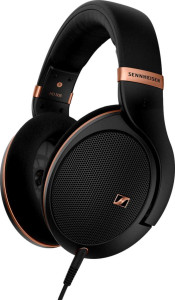
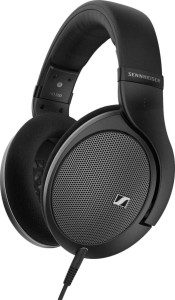
The frequency response figures are where these two headphones diverge most meaningfully. The HD 550 reaches down to 6 Hz on the low end and up to 40,000 Hz at the top, versus the HD 505's 12 Hz and 38,500 Hz. That extra sub-bass extension on the HD 550 is particularly relevant for open-back listening, where deep rumble and low-frequency air movement contribute significantly to a sense of physicality and scale in music. The marginal gain at the high end is less impactful since both exceed the limits of human hearing, but the sub-bass difference is audible on the right content.
Flipping the script, the HD 505 counters with two advantages: a slightly higher sound pressure level of 107.9 dB/mW (versus 106.7 dB/mW on the HD 550) and support for spatial audio, which the HD 550 lacks entirely. The SPL gap of roughly 1.2 dB is too small to be a deciding factor in practice, but spatial audio support is a meaningful differentiator for users who consume games, films, or immersive audio content that leverages that feature.
On balance, neither headphone dominates outright — the choice hinges on use case. The HD 550 has the edge for pure music listening thanks to its broader frequency extension, particularly in the low end. The HD 505, however, is the stronger pick for multimedia and spatial audio content. Neither offers ANC or passive noise reduction, so both are equally exposed to ambient sound — an expected trait for open-back headphones.