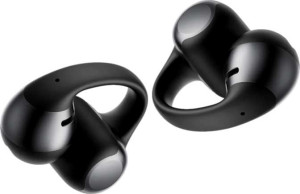
Shokz OpenDots One
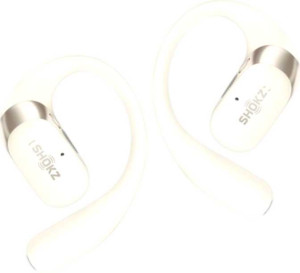
Shokz OpenFit 2

Shokz OpenDots One Shokz OpenFit 2

Overview

Welcome to our in-depth specification comparison between the Shokz OpenDots One and the Shokz OpenFit 2, two open-ear true wireless earbuds from the same brand competing for a similar audience. While they share a cable-free design and many core features, key battlegrounds emerge around weight and portability, audio frequency range, water resistance, and charging capabilities. Read on to see how every spec stacks up before making your decision.

Common Features

  • Both products have an open-ear fit design.
  • Neither product has wires or cables.
  • Neither product is a neckband earbud style.
  • Neither product has RGB lighting.
  • Both products have stereo speakers.
  • Neither product has a UV light.
  • Neither product has a display.
  • Neither product has active noise cancellation (ANC).
  • Neither product has passive noise reduction.
  • Neither product supports spatial audio.
  • Neither product has Dolby Atmos.
  • Neither product has a neodymium magnet.
  • Both products have a charge time of 1 hour.
  • Neither product has a solar power battery.
  • Both products have a battery level indicator.
  • Both products have a rechargeable battery.
  • Neither product supports fast pairing.
  • Both products have a USB Type-C port.
  • Neither product has LDAC, LDHC, Bluetooth LE Audio, aptX Adaptive, aptX Low Latency, or aptX HD.
  • Neither product has an ambient sound mode.
  • Neither product has in/on-ear detection.
  • Both products have a find device feature.
  • Both products support fast charging.
  • Both products support multipoint connection with up to 2 devices.
  • Neither product can read notifications.
  • Both products have a mute function.
  • Both products can be used as a headset.
  • Both products have 4 microphones.
  • Both products have a noise-canceling microphone.

Main Differences

  • The IP rating is IP54 on Shokz OpenDots One and IP55 on Shokz OpenFit 2.
  • Water resistance is sweat resistant on Shokz OpenDots One and water resistant on Shokz OpenFit 2.
  • Weight is 13 g on Shokz OpenDots One and 18.8 g on Shokz OpenFit 2.
  • Wingtips are included with Shokz OpenFit 2 but not with Shokz OpenDots One.
  • The lowest frequency is 20 Hz on Shokz OpenDots One and 50 Hz on Shokz OpenFit 2.
  • The highest frequency is 20000 Hz on Shokz OpenDots One and 16000 Hz on Shokz OpenFit 2.
  • Battery life is 10 hours on Shokz OpenDots One and 11 hours on Shokz OpenFit 2.
  • Battery life of the charging case is 30 hours on Shokz OpenDots One and 37 hours on Shokz OpenFit 2.
  • Wireless charging is supported on Shokz OpenDots One but not available on Shokz OpenFit 2.
  • AAC support is present on Shokz OpenFit 2 but not available on Shokz OpenDots One.
Specs Comparison
Shokz OpenDots One

Shokz OpenDots One

Shokz OpenFit 2

Shokz OpenFit 2

Design:
Fit Open-ear Open-ear
Ingress Protection (IP) rating IP54 IP55
water resistance Sweat resistant Water resistant
weight 13 g 18.8 g
has no wires or cables
are neckband earbuds
wingtips included
has RGB lighting
has stereo speakers
has UV light
Has a display

Both the Shokz OpenDots One and the Shokz OpenFit 2 share the same open-ear, fully wireless form factor with stereo speakers and no neckband — making them functionally similar in terms of overall design philosophy. Neither includes RGB lighting or a display, keeping both products focused purely on audio utility rather than aesthetics or smart features.

The most meaningful differentiators within this group are weight, water resistance, and fit security. At just 13 g, the OpenDots One is noticeably lighter than the OpenFit 2's 18.8 g — a nearly 45% weight difference that translates to a more featherlight feel during extended wear. However, the OpenFit 2 counters with two advantages: a higher IP55 rating versus the OpenDots One's IP54, meaning it can handle low-pressure water jets rather than just splash resistance, making it better suited for intense workouts or light rain. Additionally, the OpenFit 2 includes wingtips, which improve in-ear stability during physical activity — a significant practical edge for sport-focused users.

In summary, the OpenDots One has the edge in raw wearability comfort due to its lighter weight, while the OpenFit 2 holds a clear advantage in durability and secure fit, thanks to its superior IP rating and included wingtips. The better choice depends on whether the user prioritizes minimal weight or enhanced protection and stability during active use.

Sound quality:
has active noise cancellation (ANC)
has passive noise reduction
lowest frequency 20 Hz 50 Hz
highest frequency 20000 Hz 16000 Hz
supports spatial audio
has Dolby Atmos
has Dirac Virtuo
has a neodymium magnet

Neither the Shokz OpenDots One nor the Shokz OpenFit 2 offers active noise cancellation, passive noise reduction, spatial audio, or any premium audio processing like Dolby Atmos. For open-ear earbuds, this is expected — the design is inherently ambient-aware by nature, so noise isolation is not a realistic goal. The more telling differentiator in this group is the frequency response range.

The OpenDots One covers 20 Hz to 20,000 Hz, which matches the full theoretical range of human hearing. This means it can reproduce deep bass and crisp high-frequency detail across the entire audible spectrum. The OpenFit 2, by contrast, is rated at 50 Hz to 16,000 Hz — cutting off the lowest bass frequencies and rolling off the upper treble earlier. In practice, the missing low end means sub-bass rumble (think deep electronic music or cinematic scores) will be less pronounced, and the narrower treble ceiling can slightly dull the shimmer in cymbals, strings, or vocal sibilance.

On paper, the OpenDots One holds a clear edge in frequency coverage, offering broader sonic reach at both extremes. That said, real-world sound quality depends heavily on driver tuning and acoustics beyond what spec sheets capture. Still, based strictly on the provided data, the OpenDots One's wider frequency response gives it a meaningful advantage for users who prioritize audio fidelity across diverse music genres.

Power:
Battery life 10 hours 11 hours
Battery life of charging case 30 hours 37 hours
charge time 1 hours 1 hours
has wireless charging
Has a solar power battery
has a battery level indicator
has a rechargeable battery

Total battery endurance is where these two products diverge most clearly. The Shokz OpenFit 2 edges ahead with 11 hours of earbud playback and a combined case capacity of 37 hours, compared to the OpenDots One's 10 hours and 30 hours total. The gap is modest per session, but the case difference — 7 additional hours — is meaningful for multi-day travel or users who charge infrequently. Both share an identical 1-hour charge time, so neither has an advantage in how quickly they recover from a dead battery.

The most practically significant differentiator in this group is charging convenience. The OpenDots One supports wireless charging, while the OpenFit 2 does not. For users already in a wireless charging ecosystem — a bedside pad, a desk charger, or a car mount — this removes the need to locate a cable, which is a genuine quality-of-life advantage in daily use. The OpenFit 2 requires a wired connection every time, which is a step backward in convenience despite its larger total battery.

This group presents a genuine trade-off rather than a clear-cut winner. The OpenFit 2 offers more total listening time, making it the stronger pick for endurance-focused users. The OpenDots One counters with wireless charging, which appeals to users who prioritize seamless, cable-free convenience. The deciding factor comes down to whether raw battery capacity or charging flexibility matters more to the individual user.

Connectivity:
has fast pairing
Has USB Type-C
has LDAC
has LDHC
has Bluetooth LE Audio
has aptX Adaptive
has aptX Low Latency
has aptX HD
has aptX
has aptX Lossless
has aptX Voice
has Auracast
maximum Bluetooth range 10 m 10 m
supports Bluetooth pairing using NFC
Can be used wirelessly
has AAC

Across most connectivity specs, these two earbuds are virtually identical — both are fully wireless, share the same 10 m Bluetooth range, use USB-C for wired charging, and lack advanced codecs like LDAC, aptX, or Bluetooth LE Audio. For the vast majority of users, this means a comparable day-to-day wireless experience with no meaningful difference in connection stability or range.

The one area where they part ways is audio codec support. The Shokz OpenFit 2 supports AAC, while the OpenDots One does not. AAC is Apple's preferred Bluetooth audio codec and is also widely supported on Android. When streaming from an iPhone or an AAC-capable source, the OpenFit 2 can transmit audio with lower compression artifacts compared to falling back on the baseline SBC codec — which is what the OpenDots One is limited to. The real-world audible difference may be subtle, but for Apple users in particular, AAC support ensures the connection pipeline is optimized rather than bottlenecked at the codec level.

The OpenFit 2 takes a narrow but clear edge in this group solely due to AAC support. It is not a dramatic advantage, but it is the only meaningful differentiator here, and it specifically benefits the large segment of users on iOS or AAC-enabled Android devices who want the most efficient audio transmission their source device can offer.

Features:
release date March 2025 January 2025
has ambient sound mode
has in/on-ear detection
has find device feature
Supports fast charging
multipoint count 2 2
can read notifications
has a mute function
can be used as a headset
control panel placed on a device
Has voice prompts
travel bag is included
Has an in-line control panel
Has a temperature sensor
Has a built-in camera remote control function

Across every single feature spec in this group, the Shokz OpenDots One and Shokz OpenFit 2 are a perfect match. Both support fast charging, multipoint connection to two devices simultaneously, on-device controls, voice prompts, a mute function, and headset use for calls. Both also include a travel bag and a find-device feature — practical additions that reflect a similar accessory philosophy.

The multipoint support is worth highlighting as a shared strength: being able to stay connected to two sources at once — a laptop and a phone, for instance — without manually re-pairing is a genuinely useful feature for hybrid work or multitasking scenarios. Fast charging is similarly valuable in daily use, complementing the solid battery life both earbuds offer. Neither product adds ambient sound mode or in-ear detection, which keeps the feature set pragmatic rather than premium.

This group is a clear tie. Based strictly on the provided specs, there is no feature present in one product that is absent in the other. A user choosing between these two earbuds will find no differentiating factor here — the decision will hinge entirely on the distinctions uncovered in other spec groups.

Microphone:
number of microphones 4 4
has a noise-canceling microphone

The microphone hardware on these two earbuds is identical by the numbers: both the Shokz OpenDots One and the Shokz OpenFit 2 deploy 4 microphones with noise-canceling capability. A quad-mic setup is a solid configuration for open-ear earbuds, as the array allows the device to use beamforming techniques — isolating the user's voice while suppressing surrounding noise — which is particularly valuable in outdoor or busy environments where the open design offers no passive isolation to block ambient sound.

Noise-canceling microphone technology in this context applies to call and voice transmission quality, not to the listening experience. For users who frequently take calls while commuting, working out, or in noisy settings, this is a meaningful shared strength. The fact that both earbuds match on mic count and noise-canceling support means neither has a structural advantage in voice pickup or call clarity based on the available specs.

This group is a tie. The microphone specifications are identical across both products, and there is no data in this group to differentiate them. Users prioritizing call performance can expect a comparable experience from either earbud.

Comparison Summary & Verdict

Both the Shokz OpenDots One and the Shokz OpenFit 2 deliver a solid open-ear experience with shared strengths like fast charging, multipoint connectivity, a find-device feature, and a four-microphone noise-canceling setup. However, their differences point each toward a distinct type of user. The Shokz OpenDots One stands out with its lighter 13 g build, a wider frequency range down to 20 Hz, and wireless charging support, making it the better pick for minimalists and those who value effortless charging convenience. The Shokz OpenFit 2, on the other hand, offers a slightly longer battery life of 11 hours, a higher-capacity charging case at 37 hours, stronger IP55 water resistance, included wingtips for a more secure fit, and AAC audio codec support, making it more appealing to active users and Apple device owners who need reliability during intense workouts.

Shokz OpenDots One
Buy Shokz OpenDots One if...

Buy the Shokz OpenDots One if you want a lighter earbud with a wider frequency range and the convenience of wireless charging for your case.

Shokz OpenFit 2
Buy Shokz OpenFit 2 if...

Buy the Shokz OpenFit 2 if you need stronger water resistance, longer total battery life, a secure wingtip fit for workouts, and AAC codec support for Apple devices.