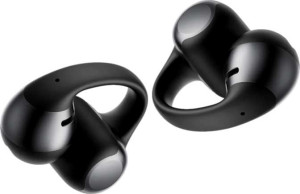
Shokz OpenDots One
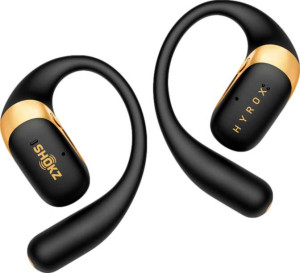
Shokz OpenFit 2 Plus

Shokz OpenDots One Shokz OpenFit 2 Plus

Overview

Welcome to our detailed spec comparison between the Shokz OpenDots One and the Shokz OpenFit 2 Plus, two open-ear true wireless earbuds from the same brand. While both models share a cable-free design and a strong set of core features, they differ in key areas such as weight and water resistance, battery life, and charging speed. Read on to see how these two earbuds stack up across every specification.

Common Features

  • Both products have an open-ear fit design.
  • Neither product has wires or cables.
  • Neither product is a neckband earbud design.
  • Neither product has RGB lighting.
  • Both products have stereo speakers.
  • Neither product has a UV light.
  • Neither product has a display.
  • Neither product has active noise cancellation (ANC).
  • Neither product has passive noise reduction.
  • Both products share a lowest frequency of 20 Hz and a highest frequency of 20000 Hz.
  • Neither product supports spatial audio.
  • Neither product has Dolby Atmos.
  • Neither product has a neodymium magnet.
  • Both products support wireless charging.
  • Neither product has a solar power battery.
  • Both products have a battery level indicator.
  • Both products have a rechargeable battery.
  • Neither product has fast pairing.
  • Both products have a USB Type-C connection.
  • Neither product has LDAC, LDHC, Bluetooth LE Audio, aptX Adaptive, aptX Low Latency, or aptX HD.
  • Neither product has an ambient sound mode.
  • Neither product has in/on-ear detection.
  • Both products have a find device feature.
  • Both products support fast charging.
  • Both products support two simultaneous Bluetooth connections (multipoint count of 2).
  • Neither product can read notifications.
  • Both products have a mute function.
  • Both products can be used as a headset.
  • Both products have a noise-canceling microphone.
  • Both products support Dolby Audio.

Main Differences

  • IP rating is IP54 on Shokz OpenDots One and IP55 on Shokz OpenFit 2 Plus.
  • Water resistance is sweat resistant on Shokz OpenDots One, while Shokz OpenFit 2 Plus is water resistant.
  • Weight is 13 g on Shokz OpenDots One and 18.8 g on Shokz OpenFit 2 Plus.
  • Wingtips are included with Shokz OpenFit 2 Plus but are not included with Shokz OpenDots One.
  • Battery life is 10 hours on Shokz OpenDots One and 11 hours on Shokz OpenFit 2 Plus.
  • Battery life of the charging case is 30 hours on Shokz OpenDots One and 37 hours on Shokz OpenFit 2 Plus.
  • Charge time is 1 hour on Shokz OpenDots One and 2 hours on Shokz OpenFit 2 Plus.
Specs Comparison
Shokz OpenDots One

Shokz OpenDots One

Shokz OpenFit 2 Plus

Shokz OpenFit 2 Plus

Design:
Fit Open-ear Open-ear
Ingress Protection (IP) rating IP54 IP55
water resistance Sweat resistant Water resistant
weight 13 g 18.8 g
has no wires or cables
are neckband earbuds
wingtips included
has RGB lighting
has stereo speakers
has UV light
Has a display

Both the Shokz OpenDots One and the Shokz OpenFit 2 Plus share the same open-ear, fully wireless form factor with no neckband — a design philosophy centered on situational awareness and all-day wearability. Neither includes RGB lighting or a display, keeping both focused on clean, minimal aesthetics rather than flashy features.

The most meaningful divergence in this group comes down to three practical factors. First, protection: the OpenFit 2 Plus carries an IP55 rating versus the OpenDots One's IP54, which translates to resistance against low-pressure water jets rather than just splash and sweat — a tangible advantage for outdoor runners or humid environments. Second, weight: at just 13 g, the OpenDots One is significantly lighter than the OpenFit 2 Plus at 18.8 g, a difference of nearly 45% that can matter considerably during extended wear. Third, the OpenFit 2 Plus bundles wingtips in the box, offering an additional fit-security option that the OpenDots One does not provide.

The edge here depends on use case. If lightweight comfort and minimalism are the priority, the OpenDots One wins outright. But if secure fit and better water resistance matter more — particularly for active or outdoor use — the OpenFit 2 Plus holds the clear advantage in this design category.

Sound quality:
has active noise cancellation (ANC)
has passive noise reduction
lowest frequency 20 Hz 20 Hz
highest frequency 20000 Hz 20000 Hz
supports spatial audio
has Dolby Atmos
has Dirac Virtuo
has a neodymium magnet

On paper, the sound quality specs for the Shokz OpenDots One and the Shokz OpenFit 2 Plus are identical across every measured dimension. Both cover the standard 20 Hz – 20,000 Hz frequency range — the full span of human hearing — and neither product offers ANC, passive noise reduction, spatial audio, Dolby Atmos, Dirac Virtuo, or a neodymium magnet driver.

The absence of noise isolation features is worth contextualizing: as open-ear designs, these earbuds are engineered to let ambient sound in by default, so the lack of ANC or passive noise reduction is an intentional trade-off rather than an oversight. Users prioritizing immersive, isolated listening should look elsewhere; those who need environmental awareness — runners, cyclists, office workers — will find this approach fits the product philosophy.

With zero differentiating specs in this group, the sound quality category is a complete tie. Neither product holds any measurable advantage over the other based on the available data.

Power:
Battery life 10 hours 11 hours
Battery life of charging case 30 hours 37 hours
charge time 1 hours 2 hours
has wireless charging
Has a solar power battery
has a battery level indicator
has a rechargeable battery

Battery endurance tells an interesting story here. The Shokz OpenFit 2 Plus edges ahead with 11 hours of earbud runtime versus 10 hours for the OpenDots One — a modest but real difference for heavy daily users. More significantly, the case advantage compounds: the OpenFit 2 Plus delivers a total combined battery life of 37 hours compared to 30 hours for the OpenDots One, meaning notably fewer trips to a wall outlet across a typical work week.

The trade-off comes at charge time. The OpenDots One replenishes in just 1 hour, whereas the OpenFit 2 Plus requires 2 hours — double the wait. For users who frequently top up on short breaks, that faster turnaround on the OpenDots One is a genuine convenience advantage. Both products support wireless charging and include a battery level indicator, so the day-to-day charging experience is otherwise equivalent.

Overall, the OpenFit 2 Plus holds the edge in this category for users who prioritize longevity and want to go longer between charges, particularly during travel or multi-day use. The OpenDots One counters with its faster charge time, making it the smarter pick for those who prefer quick top-ups over maximum runtime.

Connectivity:
has fast pairing
Has USB Type-C
has LDAC
has LDHC
has Bluetooth LE Audio
has aptX Adaptive
has aptX Low Latency
has aptX HD
has aptX
has aptX Lossless
has aptX Voice
has Auracast
maximum Bluetooth range 10 m 10 m
supports Bluetooth pairing using NFC
Can be used wirelessly
has AAC

Connectivity is where both products reveal a shared set of limitations. Neither the Shokz OpenDots One nor the Shokz OpenFit 2 Plus supports any advanced audio codec — no LDAC, no aptX in any of its variants, and no AAC. In practice, this means audio is transmitted over standard Bluetooth SBC, which is adequate for everyday listening but falls short for audiophiles seeking higher-fidelity wireless streaming.

The 10 m maximum Bluetooth range is identical on both, and neither supports fast pairing, NFC pairing, or Bluetooth LE Audio — the latter being a notable absence given its growing relevance for efficient streaming and Auracast broadcast audio. Both do charge via USB Type-C, which is a practical convenience in a world where that connector has become the standard.

There is nothing to separate these two products in this category — every connectivity spec is a mirror image. This is a complete tie, and prospective buyers with strong codec preferences or a need for extended range should weigh that equally against both options.

Features:
release date March 2025 October 2025
has ambient sound mode
has in/on-ear detection
has find device feature
Supports fast charging
multipoint count 2 2
can read notifications
has a mute function
can be used as a headset
control panel placed on a device
Has voice prompts
travel bag is included
Has an in-line control panel
Has a temperature sensor
Has a built-in camera remote control function

Feature parity is total here. The Shokz OpenDots One and the Shokz OpenFit 2 Plus share an identical feature set across every data point in this group — from multipoint connectivity supporting two simultaneous device connections, to fast charging, on-device controls, voice prompts, a mute function, and even an included travel bag.

A few of these shared features are worth highlighting for their practical value. Multipoint pairing at two devices is increasingly essential for users who switch between a phone and a laptop throughout the day, eliminating the need to manually re-pair. Fast charging adds convenience given the battery runtimes discussed earlier, and the inclusion of a travel bag on both models reflects a thoughtful accessory package. Both can also function as a headset for calls, which aligns well with their open-ear design for office and hybrid work environments.

With no differentiating specs present, this category is an unambiguous tie. Buyers will find no feature-based reason to choose one over the other here — the decision will rest on the distinctions uncovered in other spec groups.

Microphone:
has a noise-canceling microphone

Both the Shokz OpenDots One and the Shokz OpenFit 2 Plus include a noise-canceling microphone — a meaningful inclusion given their open-ear design. Since ambient sound flows in freely during wear, having microphone-side noise cancellation helps ensure that call recipients hear the speaker clearly rather than the surrounding environment.

This is a tie. The available data contains a single shared spec, leaving no basis for differentiation between the two products on microphone capability.

Miscellaneous:
has Dolby Audio

The sole data point in this group shows both the Shokz OpenDots One and the Shokz OpenFit 2 Plus supporting Dolby Audio — a signal processing feature aimed at enhancing perceived soundstage and clarity during playback. For open-ear earbuds that already forgo noise isolation, this is a welcome addition that can help compensate for the inherently less immersive listening environment.

Since both products share this feature equally, the Miscellaneous category is a tie with no differentiating factor to weigh between them.

Comparison Summary & Verdict

Both the Shokz OpenDots One and the Shokz OpenFit 2 Plus are capable open-ear earbuds that share a solid foundation: wireless connectivity, fast charging, a noise-canceling microphone, and Dolby Audio support. However, the differences between them help define their ideal audiences. The Shokz OpenDots One is the lighter option at just 13 g and charges in only 1 hour, making it a strong pick for users who value a barely-there feel and quick top-ups. The Shokz OpenFit 2 Plus counters with a higher IP55 water resistance rating, longer battery life of 11 hours, a 37-hour charging case, and included wingtips for a more secure fit — advantages that suit active users and longer listening sessions. Choose accordingly based on your lifestyle priorities.

Shokz OpenDots One
Buy Shokz OpenDots One if...

Buy the Shokz OpenDots One if you prefer a lighter earbud and need a faster one-hour charge time to get back to your music quickly.

Shokz OpenFit 2 Plus
Buy Shokz OpenFit 2 Plus if...

Buy the Shokz OpenFit 2 Plus if you need stronger water resistance, longer battery life, and a more secure fit with included wingtips for active use.