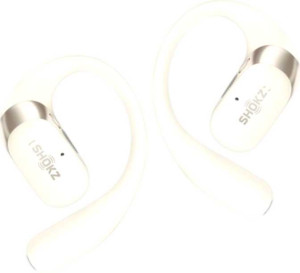
Shokz OpenFit 2
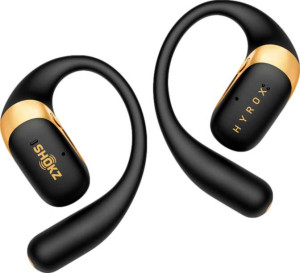
Shokz OpenFit 2 Plus

Shokz OpenFit 2 Shokz OpenFit 2 Plus

Overview

Welcome to our in-depth spec comparison of the Shokz OpenFit 2 and the Shokz OpenFit 2 Plus. These two open-ear earbuds share a strong foundation of shared features, yet differ in meaningful ways across audio frequency range, charging capabilities, and codec support. Whether you are drawn to faster charging or a wider soundstage, this page breaks down every specification to help you decide which model truly fits your needs.

Common Features

  • Both products have an open-ear fit.
  • Both products have an IP55 ingress protection rating.
  • Both products are water resistant.
  • Both products weigh 18.8 g.
  • Neither product has wires or cables.
  • Neither product is a neckband earbud design.
  • Both products include wingtips.
  • Neither product has RGB lighting.
  • Neither product has active noise cancellation.
  • Neither product has passive noise reduction.
  • Both products have a 17.3 mm driver unit size.
  • Neither product supports spatial audio.
  • Both products have a battery life of 11 hours.
  • Both products have a charging case battery life of 37 hours.
  • Neither product has a solar power battery.
  • Both products have a battery level indicator.
  • Both products have a rechargeable battery.
  • Neither product has fast pairing.
  • Both products have a USB Type-C port.
  • Neither product has LDAC, LDHC, Bluetooth LE Audio, aptX Adaptive, aptX Low Latency, or aptX HD.
  • Neither product has an ambient sound mode.
  • Neither product has in/on-ear detection.
  • Both products have a find device feature.
  • Both products support fast charging.
  • Both products support multipoint connection with 2 devices.
  • Neither product can read notifications.
  • Both products have a mute function.
  • Both products can be used as a headset.
  • Both products have a noise-canceling microphone.

Main Differences

  • The lowest frequency is 50 Hz on Shokz OpenFit 2 and 20 Hz on Shokz OpenFit 2 Plus.
  • The highest frequency is 16000 Hz on Shokz OpenFit 2 and 20000 Hz on Shokz OpenFit 2 Plus.
  • Charge time is 1 hour on Shokz OpenFit 2 and 2 hours on Shokz OpenFit 2 Plus.
  • Wireless charging is present on Shokz OpenFit 2 Plus but not available on Shokz OpenFit 2.
  • AAC codec support is available on Shokz OpenFit 2 but not on Shokz OpenFit 2 Plus.
Specs Comparison
Shokz OpenFit 2

Shokz OpenFit 2

Shokz OpenFit 2 Plus

Shokz OpenFit 2 Plus

Design:
Fit Open-ear Open-ear
Ingress Protection (IP) rating IP55 IP55
water resistance Water resistant Water resistant
weight 18.8 g 18.8 g
has no wires or cables
are neckband earbuds
wingtips included
has RGB lighting
has stereo speakers
has UV light
Has a display

In terms of design, the Shokz OpenFit 2 and Shokz OpenFit 2 Plus are identical across every measured specification. Both share an open-ear fit, an IP55 ingress protection rating, a weight of 18.8 g, and the same set of physical features — including wingtips, stereo speakers, and a fully wireless form factor with no neckband.

The IP55 rating means both earbuds can handle sweat and light rain without issue, making them viable for outdoor workouts, though they are not suited for submersion. At 18.8 g, both models are light enough for extended wear without causing fatigue. The open-ear design, shared by both, prioritizes situational awareness by leaving the ear canal unobstructed — a deliberate trade-off that favors safety and comfort over passive noise isolation.

Based strictly on the provided design specs, these two products are in a complete tie. There is no differentiator in this category — a buyer choosing between them on design alone has no meaningful basis to prefer one over the other.

Sound quality:
has active noise cancellation (ANC)
has passive noise reduction
driver unit size 17.3 mm 17.3 mm
lowest frequency 50 Hz 20 Hz
highest frequency 16000 Hz 20000 Hz
supports spatial audio
has Dolby Atmos
has Dirac Virtuo
has a neodymium magnet

The most meaningful difference in this category comes down to frequency response. The OpenFit 2 reproduces audio from 50 Hz to 16,000 Hz, while the OpenFit 2 Plus extends that range to 20 Hz–20,000 Hz — effectively the full theoretical range of human hearing. In practice, this means the Plus can reproduce deeper bass and higher treble detail that the standard model simply cannot.

Both models share a 17.3 mm driver and notably lack active noise cancellation, passive noise reduction, and any spatial audio processing. For open-ear earbuds, the absence of ANC is expected by design, but the shared driver size makes the wider frequency range of the Plus all the more significant — it achieves broader audio reproduction from the same physical hardware.

The OpenFit 2 Plus holds a clear edge in sound quality based on these specs. A frequency floor of 20 Hz versus 50 Hz is a substantial improvement in low-end extension, and reaching 20,000 Hz versus 16,000 Hz adds meaningful headroom in the upper registers — benefiting listeners who value instrument clarity and vocal airiness.

Power:
Battery life 11 hours 11 hours
Battery life of charging case 37 hours 37 hours
charge time 1 hours 2 hours
has wireless charging
Has a solar power battery
has a battery level indicator
has a rechargeable battery

On paper, both earbuds deliver identical stamina — 11 hours of playback per charge and a combined 37 hours with the case — so neither holds an advantage in how long you can listen. The real divergence is in how you replenish that battery.

The OpenFit 2 Plus adds wireless charging, a convenience the standard OpenFit 2 lacks. For users who already own a Qi charging pad, this means dropping the case on a surface rather than hunting for a cable. The trade-off, however, is a longer wired charge time of 2 hours versus just 1 hour for the OpenFit 2 — meaning when you do plug in the Plus, you wait twice as long to top it up.

Which product wins here depends on usage habits. The OpenFit 2 has a practical edge for users who rely on fast wired charging, especially when time between uses is short. The OpenFit 2 Plus is the better fit for those embedded in a wireless charging ecosystem who prioritize cable-free convenience over charging speed. Neither product is strictly superior — they make opposite trade-offs within the same power envelope.

Connectivity:
has fast pairing
Has USB Type-C
has LDAC
has LDHC
has Bluetooth LE Audio
has aptX Adaptive
has aptX Low Latency
has aptX HD
has aptX
has aptX Lossless
has aptX Voice
has Auracast
maximum Bluetooth range 10 m 10 m
supports Bluetooth pairing using NFC
Can be used wirelessly
has AAC

Connectivity is largely a wash between these two models — both share a 10 m Bluetooth range, USB-C, and an identical absence of advanced codecs like LDAC, aptX, or LE Audio. The one notable split is codec support: the OpenFit 2 includes AAC, while the OpenFit 2 Plus does not.

AAC matters most to Apple device users. iPhones and iPads prioritize AAC as their high-quality wireless audio codec, so the OpenFit 2 will transmit richer, more efficient audio to those devices compared to falling back on the baseline SBC codec. For Android users the gap is narrower, since AAC implementation varies across Android hardware — but it still represents a meaningful advantage in the Apple ecosystem.

Counterintuitively, the OpenFit 2 holds the edge in connectivity despite being the base model. Losing AAC in the Plus is a step backward for a significant portion of the target audience, and no other connectivity upgrade compensates for it. Users who primarily pair with Apple devices should weigh this carefully.

Features:
release date January 2025 October 2025
has ambient sound mode
has in/on-ear detection
has find device feature
Supports fast charging
multipoint count 2 2
can read notifications
has a mute function
can be used as a headset
control panel placed on a device
Has voice prompts
travel bag is included
Has an in-line control panel
Has a temperature sensor
Has a built-in camera remote control function

Across every feature in this category, the Shokz OpenFit 2 and OpenFit 2 Plus are a perfect match. Both support multipoint pairing with up to 2 devices simultaneously, fast charging, a mute function, on-device controls, voice prompts, and even include a travel bag — a practical touch that signals both are positioned as lifestyle-oriented earbuds.

A few notable absences apply equally to both: neither offers ambient sound mode nor in/on-ear detection. For open-ear earbuds, the lack of ambient mode is largely moot since the design inherently lets in environmental sound. The absence of ear detection, however, means neither model will auto-pause playback when removed — a convenience gap that some users coming from mainstream earbuds may notice.

With no differentiators present, this category is a complete tie. Feature parity is total, and no advantage can be assigned to either model based solely on what is provided here.

Microphone:
has a noise-canceling microphone

Both the Shokz OpenFit 2 and OpenFit 2 Plus include a noise-canceling microphone, which is a meaningful inclusion for open-ear earbuds. Since the design leaves the ear canal open, call quality is particularly reliant on the microphone's ability to filter out ambient noise — making this feature more critical here than it would be on isolating in-ear models.

With only a single shared data point available for this category, no differentiation exists between the two products. This is a complete tie, and microphone capability alone provides no basis to prefer one model over the other.

Comparison Summary & Verdict

Both the Shokz OpenFit 2 and the Shokz OpenFit 2 Plus deliver the same open-ear comfort, IP55 water resistance, 18.8 g lightweight build, and an impressive 11-hour battery life with a 37-hour charging case. The key distinctions come down to a few targeted upgrades on the Plus model: a wider frequency range of 20 Hz to 20000 Hz for a fuller sound reproduction, plus the convenience of wireless charging. The standard Shokz OpenFit 2, however, charges in just 1 hour versus 2 hours for the Plus, and retains AAC codec support for higher-quality audio streaming on compatible devices. Choose the OpenFit 2 if speed of charging and AAC compatibility matter most to you; opt for the OpenFit 2 Plus if you value broader audio fidelity and the flexibility of wireless charging.

Shokz OpenFit 2
Buy Shokz OpenFit 2 if...

Buy the Shokz OpenFit 2 if you want faster charging at just 1 hour and prefer AAC codec support for higher-quality wireless audio streaming.

Shokz OpenFit 2 Plus
Buy Shokz OpenFit 2 Plus if...

Buy the Shokz OpenFit 2 Plus if you want a wider frequency range for fuller sound reproduction and the added convenience of wireless charging.