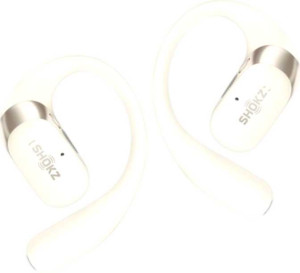
Shokz OpenFit 2
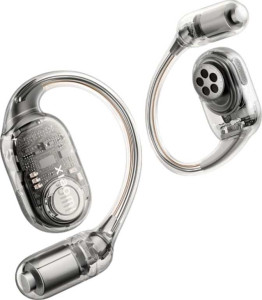
Xiaomi Open Earphones Pro

Shokz OpenFit 2 Xiaomi Open Earphones Pro

Overview

Welcome to our in-depth spec comparison between the Shokz OpenFit 2 and the Xiaomi Open Earphones Pro, two compelling open-ear wireless earphones competing for your attention. Both share a cable-free design and a solid Bluetooth 5.4 connection, but they take notably different approaches when it comes to sound frequency range, battery performance, and audio codec support. Read on to see how these two stack up across every key specification.

Common Features

  • Both products have an open-ear fit design.
  • Neither product has wires or cables.
  • Neither product is a neckband earbud design.
  • Neither product features RGB lighting.
  • Both products have stereo speakers.
  • Neither product has a UV light.
  • Neither product has a display.
  • Neither product has active noise cancellation (ANC).
  • Neither product supports Dolby Atmos.
  • Neither product supports Dirac Virtuo.
  • Neither product uses a neodymium magnet.
  • Neither product supports wireless charging.
  • Neither product has a solar power battery.
  • Both products have a battery level indicator.
  • Both products have a rechargeable battery.
  • Neither product supports fast pairing.
  • Both products have a USB Type-C connector.
  • Both products use Bluetooth version 5.4.
  • Neither product supports LDAC, Bluetooth LE Audio, aptX Adaptive, aptX Low Latency, or aptX HD.
  • Neither product has an ambient sound mode.
  • Neither product has in/on-ear detection.
  • Both products support fast charging.
  • Neither product can read notifications.
  • Both products have a mute function.
  • Both products can be used as a headset.
  • Both products have a control panel placed on the device.
  • Both products have voice prompts.
  • Both products have 4 microphones.
  • Both products have a noise-canceling microphone.

Main Differences

  • The Ingress Protection rating is IP55 on the Shokz OpenFit 2 and IP54 on the Xiaomi Open Earphones Pro.
  • The Shokz OpenFit 2 is water resistant, while the Xiaomi Open Earphones Pro is sweat resistant.
  • Wingtips are included with the Shokz OpenFit 2 but not included with the Xiaomi Open Earphones Pro.
  • Passive noise reduction is available on the Xiaomi Open Earphones Pro but not on the Shokz OpenFit 2.
  • The driver unit size is 17.3 mm on the Shokz OpenFit 2 and 15.3 mm on the Xiaomi Open Earphones Pro.
  • The lowest frequency is 50 Hz on the Shokz OpenFit 2 and 20 Hz on the Xiaomi Open Earphones Pro.
  • The highest frequency is 16000 Hz on the Shokz OpenFit 2 and 20000 Hz on the Xiaomi Open Earphones Pro.
  • Spatial audio support is present on the Xiaomi Open Earphones Pro but not available on the Shokz OpenFit 2.
  • Battery life is 11 hours on the Shokz OpenFit 2 and 8.5 hours on the Xiaomi Open Earphones Pro.
  • Battery life of the charging case is 37 hours on the Shokz OpenFit 2 and 36.5 hours on the Xiaomi Open Earphones Pro.
  • Charge time is 1 hour on the Shokz OpenFit 2 and 1.5 hours on the Xiaomi Open Earphones Pro.
  • LDHC support is present on the Xiaomi Open Earphones Pro but not available on the Shokz OpenFit 2.
Specs Comparison
Shokz OpenFit 2

Shokz OpenFit 2

Xiaomi Open Earphones Pro

Xiaomi Open Earphones Pro

Design:
Fit Open-ear Open-ear
Ingress Protection (IP) rating IP55 IP54
water resistance Water resistant Sweat resistant
has no wires or cables
are neckband earbuds
wingtips included
has RGB lighting
has stereo speakers
has UV light
Has a display

Both the Shokz OpenFit 2 and the Xiaomi Open Earphones Pro share the same fundamental design philosophy: open-ear, fully wireless, stereo earbuds with no neckband. For users, this means ambient awareness is preserved without sacrificing a cable-free experience — a meaningful shared advantage over more isolating in-ear designs.

The most consequential difference in this group lies in water resistance. The Shokz OpenFit 2 carries an IP55 rating, while the Xiaomi earphones are rated IP54. Both are dust-protected, but the Shokz edges ahead on water resistance: the second digit ″5″ on the Shokz means protection against low-pressure water jets from any direction, whereas the Xiaomi's ″4″ means only splash protection. In practical terms, the Shokz will hold up better in heavier rain or more intense sweating during workouts. The Shokz also includes wingtips for a more secure fit during physical activity, an accessory absent from the Xiaomi — a notable ergonomic advantage if stability during exercise is a priority.

Overall, the Shokz OpenFit 2 holds a clear edge in this design group. Its superior IP rating and included wingtips make it the more versatile and secure option for active use, while the Xiaomi Open Earphones Pro, though closely matched in overall form factor, is better suited to lighter, everyday wear.

Sound quality:
has active noise cancellation (ANC)
has passive noise reduction
driver unit size 17.3 mm 15.3 mm
lowest frequency 50 Hz 20 Hz
highest frequency 16000 Hz 20000 Hz
supports spatial audio
has Dolby Atmos
has Dirac Virtuo
has a neodymium magnet

Neither earphone offers active noise cancellation — expected for open-ear designs — but the Xiaomi Open Earphones Pro does include passive noise reduction, which provides a modest degree of physical sound blocking through earbud shape and fit. The Shokz OpenFit 2 has none, meaning external sound passes through almost entirely by design. For commuters or office users who want even slight attenuation of background noise, this gives the Xiaomi a functional edge in real-world listening environments.

The frequency range is where the gap widens most clearly. The Xiaomi stretches from 20 Hz to 20,000 Hz — the full theoretical range of human hearing — while the Shokz OpenFit 2 covers a narrower 50 Hz to 16,000 Hz. In practice, this means the Xiaomi is more capable of reproducing deep bass and the very top-end shimmer of cymbals and high hats, while the Shokz may sound comparatively thinner at the extremes. The Shokz does use a slightly larger 17.3 mm driver versus the Xiaomi's 15.3 mm, which can contribute to louder output and fuller mid-range presence, but driver size alone does not compensate for a narrower frequency ceiling and floor.

The Xiaomi also supports spatial audio, adding a simulated three-dimensional soundstage that can meaningfully enhance immersion for music and video content. The Shokz offers no equivalent. Taken together, the Xiaomi Open Earphones Pro holds a clear advantage in this group, delivering broader frequency reproduction, passive noise reduction, and spatial audio support — a stronger overall package for sound quality-focused listeners.

Power:
Battery life 11 hours 8.5 hours
Battery life of charging case 37 hours 36.5 hours
charge time 1 hours 1.5 hours
has wireless charging
Has a solar power battery
has a battery level indicator
has a rechargeable battery

On per-charge earbud battery life, the Shokz OpenFit 2 pulls ahead with 11 hours compared to the Xiaomi's 8.5 hours. That 2.5-hour difference is meaningful in practice — it separates a full workday of continuous listening from a session that may require a top-up before the day is done. For long-haul travelers, remote workers, or athletes who prefer not to interrupt their routine to recharge, the Shokz advantage here is tangible.

When the charging case is factored in, the total combined endurance figures are remarkably close: 37 hours for the Shokz versus 36.5 hours for the Xiaomi. This near-parity means that over multiple days of use, both products will keep pace roughly equally — the Shokz simply distributes that total into fewer, longer sessions. Charge time tips back in the Shokz's favor as well, reaching full charge in 1 hour versus the Xiaomi's 1.5 hours, a useful advantage when time between uses is short.

Neither earphone supports wireless charging, so both require a wired top-up. Overall, the Shokz OpenFit 2 holds a clear edge in this group: longer single-session battery life and faster charging make it the more convenient daily companion, even though total system endurance across both products is essentially equivalent.

Connectivity:
has fast pairing
Has USB Type-C
Bluetooth version 5.4 5.4
has LDAC
has LDHC
has Bluetooth LE Audio
has aptX Adaptive
has aptX Low Latency
has aptX HD
has aptX
has aptX Lossless
has aptX Voice
has Auracast
maximum Bluetooth range 10 m 10 m
supports Bluetooth pairing using NFC
Can be used wirelessly
has AAC

At the foundation, these two earphones are evenly matched: both run on Bluetooth 5.4, share an identical 10 m wireless range, support AAC for higher-quality audio streaming on compatible devices, and charge via USB-C. For the vast majority of users, this common ground translates to a stable, modern wireless experience with no meaningful difference in day-to-day connectivity.

The one differentiator in this group is codec support beyond AAC. The Xiaomi Open Earphones Pro adds LDHC — a high-resolution audio codec capable of transmitting at significantly higher bitrates than AAC, designed to reduce compression artifacts and deliver closer-to-lossless wireless audio. In practice, LDHC's advantage is only audible on compatible source devices and with high-quality audio files, but for listeners who specifically seek out hi-res streaming or own LDHC-capable Android devices, it represents a genuine step up. The Shokz OpenFit 2 offers no equivalent high-resolution codec.

For most listeners, the shared Bluetooth 5.4 and AAC foundation will be sufficient, and neither product offers extras like NFC pairing or LE Audio to further distinguish them. However, based strictly on the provided specs, the Xiaomi Open Earphones Pro holds a narrow edge in this group, with LDHC support giving it an audio transmission ceiling that the Shokz simply cannot match.

Features:
release date January 2025 July 2025
has ambient sound mode
has in/on-ear detection
Supports fast charging
can read notifications
has a mute function
can be used as a headset
control panel placed on a device
Has voice prompts
travel bag is included
Has an in-line control panel
Has a temperature sensor
Has a built-in camera remote control function

Across every single spec in this group, the Shokz OpenFit 2 and the Xiaomi Open Earphones Pro are identical. Both support fast charging, include on-device controls, offer voice prompts, ship with a travel bag, and can function as a headset with a mute function. This is a rare case of a complete feature-for-feature draw with no differentiators anywhere in the data.

The shared highlights are worth noting for what they mean in practice. Fast charging is a genuine convenience win for both — a short charging window can restore meaningful playback time without a full charge cycle. On-device controls keep interactions intuitive and cable-free, and headset capability with mute support makes both viable for calls and video conferencing, not just music listening. The included travel bag is a small but practical bonus for users who move between environments frequently.

This group is an unambiguous tie. Neither product offers a single feature advantage over the other based on the provided specs, and a buying decision between them cannot be informed by this category alone.

Microphone:
number of microphones 4 4
has a noise-canceling microphone

With only two data points in this group, the comparison is straightforward: the Shokz OpenFit 2 and the Xiaomi Open Earphones Pro are identical on paper, each equipped with 4 microphones and noise-canceling mic technology. A quad-mic array is a meaningful spec for call quality — multiple microphones allow the earphones to use beamforming techniques to isolate the user's voice and suppress surrounding noise, which translates to cleaner audio pickup in busy environments like offices, streets, or cafés.

Noise-canceling microphone support on both further reinforces their suitability as headsets, not just listening devices. For users who rely on these earphones for frequent calls or virtual meetings, the shared configuration offers comparable baseline capability from both products.

This group is a tie. The provided specs reveal no differentiator between the two — both products enter calls with the same microphone count and the same noise-reduction capability on record.

Comparison Summary & Verdict

After examining every specification, both earphones prove themselves capable open-ear options, but each suits a different type of user. The Shokz OpenFit 2 stands out with its longer 11-hour battery life, faster 1-hour charge time, higher IP55 water resistance rating, and included wingtips for a more secure fit, making it the better pick for outdoor and fitness use. The Xiaomi Open Earphones Pro, on the other hand, wins on audio range, covering 20 Hz to 20000 Hz, and adds spatial audio support, passive noise reduction, and LDHC codec compatibility, appealing more to listeners who prioritize sound quality and immersion. Both share fast charging, a 4-microphone noise-canceling setup, and nearly identical case battery life, so the decision truly comes down to durability versus audio performance.

Shokz OpenFit 2
Buy Shokz OpenFit 2 if...

Buy the Shokz OpenFit 2 if you want longer battery life, faster charging, and a higher water resistance rating for active outdoor use.

Xiaomi Open Earphones Pro
Buy Xiaomi Open Earphones Pro if...

Buy the Xiaomi Open Earphones Pro if you prioritize a wider frequency range, spatial audio support, and LDHC codec compatibility for a richer listening experience.