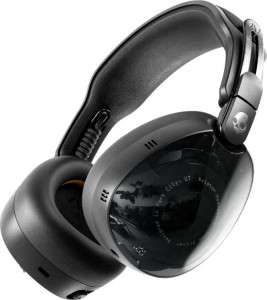
Skullcandy Aviator 900 ANC
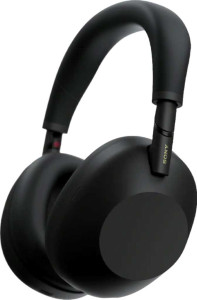
Sony WH-1000XM6

Skullcandy Aviator 900 ANC Sony WH-1000XM6

Common Features

  • Both products have over-ear fit.
  • Both products have detachable cables.
  • Both products can be folded.
  • Neither product is designed for kids.
  • Both products have tangle-free cables.
  • Both products include a travel bag.
  • Both products do not have an open-back design.
  • Both products have stereo speakers.
  • Both products have active noise cancellation (ANC).
  • Both products support spatial audio.
  • Both products have passive noise reduction.
  • Both products have USB Type-C charging.
  • Both products have a battery level indicator.
  • Both products have a rechargeable battery.
  • Neither product has a removable battery.
  • Both products are wireless and wired.
  • Both products support Bluetooth version 5.3.
  • Both products have Bluetooth LE Audio.
  • Both products can be used as a headset.

Main Differences

  • Skullcandy Aviator 900 ANC weighs 332 g, while Sony WH-1000XM6 weighs 254 g.
  • Skullcandy Aviator 900 ANC has a lowest frequency of 20 Hz, while Sony WH-1000XM6 has a lowest frequency of 4 Hz.
  • Skullcandy Aviator 900 ANC has a highest frequency of 20000 Hz, while Sony WH-1000XM6 has a highest frequency of 40000 Hz.
  • Skullcandy Aviator 900 ANC has a 40 mm driver unit, while Sony WH-1000XM6 has a 30 mm driver unit.
  • Skullcandy Aviator 900 ANC has an impedance of 36 Ohms, while Sony WH-1000XM6 has an impedance of 48 Ohms.
  • Skullcandy Aviator 900 ANC has a sound pressure level of 119.4 dB/mW, while Sony WH-1000XM6 has a sound pressure level of 103 dB/mW.
  • Skullcandy Aviator 900 ANC does not have a neodymium magnet, while Sony WH-1000XM6 has a neodymium magnet.
  • Skullcandy Aviator 900 ANC has a battery life of 60 hours, while Sony WH-1000XM6 has a battery life of 30 hours.
  • Skullcandy Aviator 900 ANC has a battery life of 50 hours with ANC, while Sony WH-1000XM6 has a battery life of 30 hours with ANC.
  • Skullcandy Aviator 900 ANC does not support LDAC, while Sony WH-1000XM6 supports LDAC.
  • Skullcandy Aviator 900 ANC does not support AAC, while Sony WH-1000XM6 supports AAC.
  • Skullcandy Aviator 900 ANC does not support Auracast, while Sony WH-1000XM6 supports Auracast.
  • Skullcandy Aviator 900 ANC has 6 microphones, while Sony WH-1000XM6 has 12 microphones.
  • Skullcandy Aviator 900 ANC has a 1-year warranty, while Sony WH-1000XM6 has a 3-year warranty.
  • Skullcandy Aviator 900 ANC does not have in/on-ear detection, while Sony WH-1000XM6 has in/on-ear detection.
Specs Comparison
Skullcandy Aviator 900 ANC

Skullcandy Aviator 900 ANC

Sony WH-1000XM6

Sony WH-1000XM6

Design:
Fit Over-ear Over-ear
weight 332 g 254 g
has a detachable cable
can be folded
is designed for kids
has a tangle free cable
travel bag is included
has an open-back design
has stereo speakers

Both the Skullcandy Aviator 900 ANC and Sony WH-1000XM6 feature an over-ear design, offering comfortable wear for extended listening sessions. The Skullcandy Aviator 900 ANC weighs 332 g, while the Sony WH-1000XM6 is lighter at 254 g, making the Sony model potentially more comfortable for longer use.

Both headphones include a detachable cable and are foldable for easy storage and portability. They also both come with a travel bag and feature a tangle-free cable, which enhances convenience while on the go. Neither model has an open-back design, and both are equipped with stereo speakers.

Neither product is specifically designed for kids, so they should be suitable for general adult use. The Skullcandy Aviator 900 ANC and Sony WH-1000XM6 share similar design features in terms of portability and functionality, with the main difference being the weight, with the Sony model being lighter by 78 g.

Sound quality:
has active noise cancellation (ANC)
lowest frequency 20 Hz 4 Hz
highest frequency 20000 Hz 40000 Hz
driver unit size 40 mm 30 mm
impedance 36 Ohms 48 Ohms
supports spatial audio
sound pressure level 119.4 dB/mW 103 dB/mW
has a neodymium magnet
has passive noise reduction

Both the Skullcandy Aviator 900 ANC and Sony WH-1000XM6 are equipped with active noise cancellation (ANC), which helps reduce unwanted ambient noise for an immersive listening experience. However, they differ in some key sound quality specifications. The Skullcandy Aviator 900 ANC has a frequency range from 20 Hz to 20,000 Hz, while the Sony WH-1000XM6 offers a much broader range from 4 Hz to 40,000 Hz, which may provide deeper bass and more detailed high-end frequencies.

In terms of driver size, the Skullcandy Aviator 900 ANC features a 40 mm driver, whereas the Sony WH-1000XM6 uses a smaller 30 mm driver. Despite the smaller driver, the Sony headphones may still provide a different sound experience due to other factors like impedance and magnet type. Speaking of impedance, the Skullcandy Aviator 900 ANC has a 36 Ohm impedance, while the Sony WH-1000XM6 has a higher 48 Ohm impedance, which might require more power to drive, but can affect the sound signature.

Both headphones support spatial audio and have passive noise reduction, ensuring an immersive experience in various listening environments. The Skullcandy Aviator 900 ANC reaches a sound pressure level of 119.4 dB/mW, compared to the Sony WH-1000XM6’s lower level of 103 dB/mW, which may indicate a difference in loudness potential. The Sony model also features a neodymium magnet, which is absent in the Skullcandy model, potentially contributing to different driver performance characteristics.

Power:
Battery life 60 hours 30 hours
Battery life (ANC) 50 hours 30 hours
Has USB Type-C
has a battery level indicator
has wireless charging
Has a solar power battery
has a rechargeable battery
has a removable battery

The Skullcandy Aviator 900 ANC offers significantly longer battery life compared to the Sony WH-1000XM6. The Skullcandy model provides up to 60 hours of playback time without ANC and 50 hours with ANC activated, while the Sony model offers 30 hours for both regular and ANC usage. This gives the Skullcandy model a notable advantage for extended listening sessions.

Both headphones feature a USB Type-C port for charging and include a battery level indicator, making it easy to monitor battery status. Neither model supports wireless charging or has a solar power battery, and both have rechargeable batteries. Additionally, neither model features a removable battery.

Overall, while both headphones offer similar charging features, the Skullcandy Aviator 900 ANC stands out with its longer battery life, especially for ANC use, which could be a deciding factor for users who prioritize longer use between charges.

Connectivity:
connectivity Wireless & wired Wireless & wired
Bluetooth version 5.3 5.3
has aptX Adaptive
has aptX
has LDAC
has LDHC
has Bluetooth LE Audio
has aptX Low Latency
has aptX HD
has aptX Lossless
has AAC
has Auracast
maximum Bluetooth range 10 m 10 m
has fast pairing
supports Bluetooth pairing using NFC

Both the Skullcandy Aviator 900 ANC and Sony WH-1000XM6 offer wireless and wired connectivity, with Bluetooth version 5.3 supported on both models. They also share the feature of Bluetooth LE Audio, which allows for improved efficiency and audio performance. Both headphones have a maximum Bluetooth range of 10 m and support fast pairing for quick and seamless connections.

The Skullcandy Aviator 900 ANC does not support aptX Adaptive, aptX, LDAC, or AAC, whereas the Sony WH-1000XM6 supports LDAC and AAC, providing potentially higher-quality audio for compatible devices. The Sony model also includes Auracast, a feature absent in the Skullcandy model, which enhances Bluetooth audio broadcasting capabilities.

Both models lack support for NFC Bluetooth pairing and the aptX Low Latency, aptX HD, and aptX Lossless codecs. Overall, while both headphones provide solid connectivity options, the Sony WH-1000XM6 stands out with its support for LDAC, AAC, and Auracast, which could be appealing for users seeking enhanced wireless audio performance.

Features:
release date June 2025 May 2025
has a noise-canceling microphone
has ambient sound mode
has in/on-ear detection
number of microphones 6 12
multipoint count 2 2
control panel placed on a device
can be used as a headset
Has an in-line control panel
warranty period 1 years 3 years

Both the Skullcandy Aviator 900 ANC and Sony WH-1000XM6 come with a noise-canceling microphone and an ambient sound mode, allowing for a more versatile listening experience. However, the two models differ in a few key features. The Sony WH-1000XM6 includes in/on-ear detection, a feature not available on the Skullcandy Aviator 900 ANC. This feature automatically pauses playback when the headphones are removed, providing additional convenience.

In terms of microphones, the Skullcandy Aviator 900 ANC has six microphones, while the Sony WH-1000XM6 has a higher count of 12 microphones, which may enhance voice clarity and noise cancellation performance. Both headphones support multipoint pairing, allowing them to connect to two devices simultaneously.

Both models have a control panel placed on the device and can be used as a headset. Neither has an in-line control panel. The Skullcandy Aviator 900 ANC comes with a 1-year warranty, while the Sony WH-1000XM6 offers a longer 3-year warranty, potentially indicating more extended support for the Sony model.

Comparison Summary

This is a specification comparison between Skullcandy Aviator 900 ANC and Sony WH-1000XM6. Both headphones feature over-ear fit, detachable cables, and active noise cancellation (ANC). They also share spatial audio support and USB Type-C charging. In terms of differences, the Skullcandy Aviator 900 ANC weighs 332 g while the Sony WH-1000XM6 is lighter at 254 g. The Skullcandy model offers a longer battery life of 60 hours compared to the Sony's 30 hours. Additionally, the Skullcandy model has a larger driver unit at 40 mm, while Sony uses a 30 mm driver. The Sony model supports LDAC and AAC, which are not supported by the Skullcandy Aviator 900 ANC.