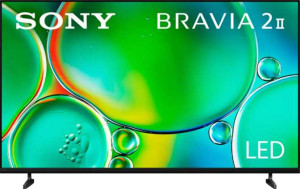
Sony Bravia K-65S20M2 65"
Sony Bravia K-65XR80M2 65"

Sony Bravia K-65S20M2 65" Sony Bravia K-65XR80M2 65"

Overview

Welcome to our detailed spec comparison between the Sony Bravia K-65S20M2 65″ and the Sony Bravia K-65XR80M2 65″. Both 65-inch 4K TVs share the same Sony ecosystem, but they take fundamentally different approaches to display technology and picture quality. From panel type and refresh rate to physical design and power efficiency, there is more separating these two sets than their shared branding might suggest. Read on to discover which model best fits your living room and viewing habits.

Common Features

  • Both TVs have a 4K (UHD) display resolution.
  • Both TVs have a screen size of 64.5″.
  • Both TVs have a resolution of 3840 x 2160 px.
  • Both TVs have a pixel density of 68 ppi.
  • Both TVs support 1070 million display colors.
  • Both TVs have a 10-bit color bit depth.
  • HDR10 support is available on both TVs.
  • HDR10+ support is not available on either TV.
  • Both TVs support Bluetooth, with Bluetooth version 5.3.
  • Both TVs have 4 HDMI ports with HDMI 2.1.
  • Both TVs support Wi-Fi, including Wi-Fi 4, Wi-Fi 5, Wi-Fi 6, and Wi-Fi 6E.
  • Both TVs have 2 USB ports and 1 RJ45 port.
  • Both TVs support DTS Surround, DTS-HD Master Audio, Dolby Atmos, and Dolby Audio.
  • Digital audio output is supported on both TVs.
  • Stereo speakers are present on both TVs.
  • Dolby Virtual support is not available on either TV.
  • SRS TheaterSound HD is not available on either TV.
  • Both TVs support VESA mounting.
  • Both TVs have Chromecast built-in and AirPlay support.
  • Both TVs are compatible with Google Assistant and work with Alexa.
  • Siri and Apple HomeKit compatibility is not available on either TV.
  • Both TVs support remote smartphone control and USB recording.

Main Differences

  • The display type is LED-backlit LCD on Sony Bravia K-65S20M2 65″ and OLED/AMOLED on Sony Bravia K-65XR80M2 65″.
  • The refresh rate is 60Hz on Sony Bravia K-65S20M2 65″ and 120Hz on Sony Bravia K-65XR80M2 65″.
  • Dolby Vision support is present on Sony Bravia K-65XR80M2 65″ but not available on Sony Bravia K-65S20M2 65″.
  • The width is 1447 mm on Sony Bravia K-65S20M2 65″ and 1443 mm on Sony Bravia K-65XR80M2 65″.
  • The weight is 19700 g on Sony Bravia K-65S20M2 65″ and 22900 g on Sony Bravia K-65XR80M2 65″.
  • The thickness is 83 mm on Sony Bravia K-65S20M2 65″ and 34 mm on Sony Bravia K-65XR80M2 65″.
  • The height is 846 mm on Sony Bravia K-65S20M2 65″ and 830 mm on Sony Bravia K-65XR80M2 65″.
  • The volume is 101605.446 cm³ on Sony Bravia K-65S20M2 65″ and 40721.46 cm³ on Sony Bravia K-65XR80M2 65″.
  • A rechargeable remote control is included with Sony Bravia K-65XR80M2 65″ but not with Sony Bravia K-65S20M2 65″.
  • The operating power consumption is 189W on Sony Bravia K-65S20M2 65″ and 397W on Sony Bravia K-65XR80M2 65″.
Specs Comparison
Sony Bravia K-65S20M2 65"

Sony Bravia K-65S20M2 65"

Sony Bravia K-65XR80M2 65"

Sony Bravia K-65XR80M2 65"

Display:
display resolution 4K (UHD) 4K (UHD)
Display type LED-backlit, LCD OLED/AMOLED
screen size 64.5" 64.5"
resolution 3840 x 2160 px 3840 x 2160 px
pixel density 68 ppi 68 ppi
display colors 1070 million 1070 million
bit depth 10-bit 10-bit
refresh rate 60Hz 120Hz
supports HDR10
supports HDR10+
supports Dolby Vision
supports HLG
has anti-reflection coating
has an ambient light sensor
maximum horizontal viewing angle 178º 178º
maximum vertical viewing angle 178º 178º

Both the Sony Bravia K-65S20M2 and the K-65XR80M2 share the same foundational display specifications: a 64.5″ 4K (3840 x 2160) panel at 68 ppi, 10-bit color depth rendering 1.07 billion colors, and identical 178° viewing angles in both directions. They also both feature anti-reflection coatings and ambient light sensors, and support HDR10 and HLG. On paper, this sounds like a near-identical starting point — but the underlying panel technology drives a substantial wedge between them.

The most decisive differentiator is the panel type itself. The K-65S20M2 uses a conventional LED-backlit LCD display, while the K-65XR80M2 employs an OLED/AMOLED panel. This matters enormously in practice: OLED pixels are self-emissive, meaning each pixel produces its own light and can switch off completely to achieve true, absolute black levels — something an LCD with a backlight physically cannot replicate. The result for the XR80M2 is near-infinite contrast, vastly superior shadow detail, and no blooming or halo artifacts around bright objects on dark scenes. Compounding this, the XR80M2 also doubles the refresh rate to 120Hz versus the S20M2′s 60Hz, translating to smoother motion in fast-paced content, sports, and gaming. It further adds Dolby Vision support — a dynamic, scene-by-scene HDR format — which the S20M2 lacks entirely.

The K-65XR80M2 holds a clear and significant advantage in this display group. Its OLED panel, 120Hz refresh rate, and Dolby Vision support collectively represent a higher tier of picture quality that goes well beyond what shared specifications like resolution or color bit depth can convey. The K-65S20M2 is a competent 4K LCD, but for users who prioritize contrast, motion clarity, and premium HDR ecosystem compatibility, the XR80M2 is the stronger choice based strictly on these specs.

Connectivity:
Has Bluetooth
HDMI version HDMI 2.1 HDMI 2.1
HDMI ports 4 4
supports Wi-Fi
Wi-Fi version Wi-Fi 4 (802.11n), Wi-Fi 5 (802.11ac), Wi-Fi 6 (802.11ax), Wi-Fi 6E (802.11ax) Wi-Fi 4 (802.11n), Wi-Fi 5 (802.11ac), Wi-Fi 6 (802.11ax), Wi-Fi 6E (802.11ax)
Bluetooth version 5.3 5.3
USB ports 2 2
RJ45 ports 1 1
supports Miracast
has a socket for a 3.5 mm audio jack
has an external memory slot
has a VGA connector
has a DVI connector

Across every connectivity specification in this group, the Sony Bravia K-65S20M2 and the K-65XR80M2 are a perfect match. Both televisions offer 4 HDMI 2.1 ports — the current gold standard for high-bandwidth connections, supporting 4K@120Hz and eARC — alongside 2 USB ports and a single RJ45 ethernet jack for wired network stability.

On the wireless side, the picture is equally identical. Both models support the same broad Wi-Fi stack spanning Wi-Fi 4 through Wi-Fi 6E, ensuring compatibility with both legacy and the latest 6 GHz band routers for reduced interference and higher throughput. Bluetooth 5.3 is shared across both as well, delivering reliable low-latency pairing for soundbars, headphones, and peripherals. Miracast screen mirroring is also present on both, rounding out a well-equipped wireless feature set.

This is a clear tie. There is not a single connectivity differentiator between these two televisions based on the provided specs — every port count, wireless standard, and version number is identical. Connectivity should play no role in choosing between the K-65S20M2 and the K-65XR80M2; the decision rests entirely on other specification groups.

Audio:
has DTS Surround
supports Digital Out
has SRS TheaterSound HD
has stereo speakers
has Dolby Atmos
has DTS-HD Master Audio
has Dolby Audio
supports Dolby Virtual
has a subwoofer
has a DTS-HD High Resolution
has DTS:X
HDMI ARC / eARC HDMI ARC, HDMI eARC HDMI ARC, HDMI eARC

The audio specifications for the K-65S20M2 and the K-65XR80M2 are completely identical across every data point provided. Both televisions come equipped with stereo speakers, a built-in subwoofer, and support the full spectrum of major audio formats — including Dolby Atmos, DTS:X, DTS-HD Master Audio, and DTS-HD High Resolution. This means both are capable of decoding the most demanding object-based surround formats found on streaming platforms and physical media alike.

For external audio setups, both models support HDMI ARC and eARC, which is the most important practical detail here. eARC in particular allows lossless, high-bandwidth audio passthrough to a compatible soundbar or AV receiver — enabling formats like Dolby Atmos and DTS:X to be transmitted in full quality rather than compressed. Both televisions also offer Digital Out, covering optical connections for older audio equipment.

Just as with connectivity, this group is a complete tie. Every audio capability — internal speaker configuration, format support, and external audio output options — is shared equally between the two models. Audio performance as defined by these specs offers no basis for preferring one over the other.

Design:
width 1447 mm 1443 mm
weight 19700 g 22900 g
thickness 83 mm 34 mm
height 846 mm 830 mm
volume 101605.446 cm³ 40721.46 cm³
Supports VESA mount

Width and height are virtually identical between the two televisions, so the footprint on a stand or wall is essentially the same. Where they diverge sharply is in thickness and volume. The K-65XR80M2 is dramatically slimmer at just 34 mm deep, compared to the K-65S20M2′s 83 mm — less than half the depth. This translates directly to a much more streamlined wall-mounted appearance, and explains why the XR80M2′s total volume is roughly 40,700 cm³ versus over 101,600 cm³ for the S20M2. The thinner profile of the XR80M2 is a direct consequence of its OLED panel technology, which requires no bulky backlight assembly.

Weight tells a different story, however. Despite its far slimmer chassis, the XR80M2 is notably heavier at 22,900 g compared to the S20M2′s 19,700 g — a difference of roughly 3.2 kg. In practice, this means wall mounting the XR80M2 demands closer attention to bracket load ratings and wall anchor quality, as the combination of greater mass and a thinner, potentially less rigid frame adds installation considerations.

The advantage here depends on the use case. For wall mounting where aesthetics and a flush, low-profile look are the priority, the K-65XR80M2 wins decisively with its 34 mm depth. For ease of physical handling and installation logistics, the lighter K-65S20M2 has a modest edge. Both support VESA mounting, so neither restricts bracket compatibility. Overall, the XR80M2 holds the stronger design advantage for most living room setups where visual minimalism on a wall is valued.

Features:
release date April 2025 April 2025
has Chromecast built-in
has AirPlay
has built-in smart TV
compatible with Google Assistant
works with Alexa
works with Siri/Apple HomeKit
supports a remote smartphone
has a rechargeable remote control
supports USB recording
operating power consumption 189W 397W
standby power consumption 0.5W 0.5W
has a search browser
has a sleep timer
has a child lock
has voice commands

The smart platform and ecosystem features are identical across both models — Chromecast built-in, AirPlay, Google Assistant, Alexa, smartphone remote support, USB recording, and a full suite of usability features like sleep timer, child lock, and voice commands are all present on both. Neither supports Siri or Apple HomeKit, which is equally a limitation for both. For the vast majority of smart TV use cases, these two televisions are functionally equivalent.

Two specs do diverge, however. The K-65XR80M2 includes a rechargeable remote control, while the S20M2 relies on conventional replaceable batteries — a small but genuinely convenient quality-of-life advantage for the XR80M2 over years of daily use. More significantly, operating power consumption is a stark contrast: the S20M2 draws 189W during use, while the XR80M2 consumes 397W — more than double. Both share an identical 0.5W standby draw, so the gap only materializes during active viewing, but for users who log long daily watch hours, the energy cost difference is meaningful over time.

This group results in a split. The K-65XR80M2 has the edge in remote convenience, but the K-65S20M2 holds a clear practical advantage in power efficiency. Neither difference is feature-related in the traditional sense, so for users focused purely on smart TV capabilities, this group is effectively a tie — the rechargeable remote is the only outright feature gain, and it sits firmly on the XR80M2′s side.

Comparison Summary & Verdict

After examining every spec, a clear picture emerges. The Sony Bravia K-65S20M2 65″ is the pragmatic choice: its LED-backlit LCD panel, lower 189W power consumption, and slimmer overall volume make it a budget-conscious, energy-efficient option for everyday viewing. The Sony Bravia K-65XR80M2 65″, on the other hand, is built for the discerning home-cinema enthusiast, delivering an OLED/AMOLED panel with a 120Hz refresh rate, Dolby Vision support, a significantly thinner 34mm profile, and a rechargeable remote. Both TVs share the same 4K resolution, connectivity suite, and audio feature set, so the decision ultimately comes down to picture performance versus cost and efficiency.

Sony Bravia K-65S20M2 65
Buy Sony Bravia K-65S20M2 65" if...

Buy the Sony Bravia K-65S20M2 65″ if you want a capable 4K TV with lower power consumption and do not require an OLED panel, a 120Hz refresh rate, or Dolby Vision support.

Sony Bravia K-65XR80M2 65
Buy Sony Bravia K-65XR80M2 65" if...

Buy the Sony Bravia K-65XR80M2 65″ if you demand the best possible picture quality with an OLED panel, 120Hz refresh rate, and Dolby Vision, and you value a dramatically slimmer 34mm design.