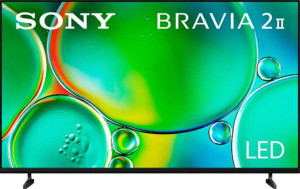
Sony Bravia K-75S20M2 75"
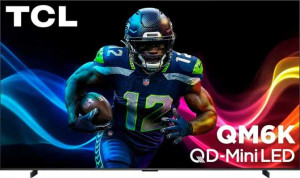
TCL 75QM6K 75"

Sony Bravia K-75S20M2 75" TCL 75QM6K 75"

Overview

Welcome to our in-depth specification comparison between the Sony Bravia K-75S20M2 75″ and the TCL 75QM6K 75″ — two 75-inch 4K televisions that share a surprising amount of common ground while diverging sharply in key areas. From display technology and refresh rate to smart platform features and physical design, this head-to-head breaks down exactly where these two large-screen TVs align and where they part ways, helping you make the most informed buying decision possible.

Common Features

  • Both TVs have a 4K UHD display resolution.
  • Both TVs have a screen size of 74.5″.
  • Both TVs have a resolution of 3840 x 2160 px.
  • Both TVs have a pixel density of 59 ppi.
  • Both TVs support 1070 million display colors.
  • Both TVs have a 10-bit bit depth.
  • Both TVs support HDR10.
  • Both TVs support HLG.
  • Both TVs have Bluetooth connectivity.
  • Both TVs use HDMI 2.1 and have 4 HDMI ports.
  • Both TVs support Wi-Fi.
  • Both TVs have 2 USB ports and 1 RJ45 port.
  • Both TVs support Miracast.
  • Neither TV has a 3.5 mm audio jack socket.
  • Both TVs have DTS Surround sound support.
  • Both TVs support Digital Out audio.
  • Both TVs have stereo speakers and a subwoofer.
  • Both TVs support Dolby Atmos and Dolby Audio.
  • Both TVs support VESA mounting.
  • Both TVs have Chromecast built-in, AirPlay, a built-in smart TV platform, Google Assistant compatibility, remote smartphone support, and USB recording support.
  • Neither TV works with Siri or Apple HomeKit.
  • Neither TV has a rechargeable remote control.

Main Differences

  • The display technology is LED-backlit LCD on Sony Bravia K-75S20M2 75″ and QLED LED-backlit LCD Mini-LED on TCL 75QM6K 75″.
  • The refresh rate is 60Hz on Sony Bravia K-75S20M2 75″ and 144Hz on TCL 75QM6K 75″.
  • HDR10+ support is present on TCL 75QM6K 75″ but not available on Sony Bravia K-75S20M2 75″.
  • Dolby Vision support is present on TCL 75QM6K 75″ but not available on Sony Bravia K-75S20M2 75″.
  • Wi-Fi versions include Wi-Fi 4, Wi-Fi 5, Wi-Fi 6, and Wi-Fi 6E on Sony Bravia K-75S20M2 75″, while TCL 75QM6K 75″ supports only Wi-Fi 4 and Wi-Fi 5.
  • The Bluetooth version is 5.3 on Sony Bravia K-75S20M2 75″ and 5.4 on TCL 75QM6K 75″.
  • The width is 1670 mm on Sony Bravia K-75S20M2 75″ and 1671.3 mm on TCL 75QM6K 75″.
  • The weight is 28000 g on Sony Bravia K-75S20M2 75″ and 26218 g on TCL 75QM6K 75″.
  • The thickness is 83 mm on Sony Bravia K-75S20M2 75″ and 55.9 mm on TCL 75QM6K 75″.
  • The height is 975 mm on Sony Bravia K-75S20M2 75″ and 960.1 mm on TCL 75QM6K 75″.
  • The volume is 135144.75 cm³ on Sony Bravia K-75S20M2 75″ and 89697.99 cm³ on TCL 75QM6K 75″.
  • Alexa compatibility is available on Sony Bravia K-75S20M2 75″ but not on TCL 75QM6K 75″.
Specs Comparison
Sony Bravia K-75S20M2 75"

Sony Bravia K-75S20M2 75"

TCL 75QM6K 75"

TCL 75QM6K 75"

Display:
display resolution 4K (UHD) 4K (UHD)
Display type LED-backlit, LCD QLED, LED-backlit, LCD, Mini-LED
screen size 74.5" 74.5"
resolution 3840 x 2160 px 3840 x 2160 px
pixel density 59 ppi 59 ppi
display colors 1070 million 1070 million
bit depth 10-bit 10-bit
refresh rate 60Hz 144Hz
supports HDR10
supports HDR10+
supports Dolby Vision
supports HLG
has anti-reflection coating
has an ambient light sensor
maximum horizontal viewing angle 178º 178º
maximum vertical viewing angle 178º 178º

Both the Sony Bravia K-75S20M2 and the TCL 75QM6K share the same foundational display specs: a 74.5″ 4K (3840 x 2160) panel at 59 ppi, 10-bit color depth rendering 1.07 billion colors, and identical 178° viewing angles in both directions. Neither has an edge on raw resolution or color volume at this level, and both include anti-reflection coating and an ambient light sensor, making them equally capable in variable lighting environments.

Where the two televisions diverge sharply is in panel technology, motion handling, and HDR ecosystem support. The TCL uses a QLED Mini-LED panel, which means quantum dot color enhancement combined with a much denser backlight zone array — translating to better local dimming, higher peak brightness, and more vivid colors in practice compared to the Sony's conventional LED-backlit LCD. On motion, the TCL's 144Hz native refresh rate is more than double the Sony's 60Hz, a meaningful advantage for gaming and fast-action sports where motion blur and input lag are perceptible. For HDR, the TCL supports Dolby Vision and HDR10+ in addition to HDR10 and HLG, covering every major HDR format. The Sony supports only HDR10 and HLG, leaving it incompatible with a large portion of premium HDR content available on streaming platforms today.

The TCL 75QM6K holds a clear display advantage in this comparison. Its superior panel technology, significantly higher refresh rate, and comprehensive HDR format support give it a meaningful edge across gaming, cinematic content, and everyday viewing — all based strictly on the provided specs.

Connectivity:
Has Bluetooth
HDMI version HDMI 2.1 HDMI 2.1
HDMI ports 4 4
supports Wi-Fi
Wi-Fi version Wi-Fi 4 (802.11n), Wi-Fi 5 (802.11ac), Wi-Fi 6 (802.11ax), Wi-Fi 6E (802.11ax) Wi-Fi 4 (802.11n), Wi-Fi 5 (802.11ac)
Bluetooth version 5.3 5.4
USB ports 2 2
RJ45 ports 1 1
supports Miracast
has a socket for a 3.5 mm audio jack
has an external memory slot
has a VGA connector
has a DVI connector

The physical connectivity lineup is identical between the two TVs: 4 HDMI 2.1 ports, 2 USB ports, and a single RJ45 ethernet jack, along with shared support for Miracast wireless display mirroring. For most users building out a home theater setup with multiple consoles, streaming sticks, or soundbars, neither set will leave you short on ports.

The meaningful differences surface in wireless connectivity. The Sony Bravia K-75S20M2 supports Wi-Fi 6E (802.11ax) in addition to Wi-Fi 6, 5, and 4 — while the TCL 75QM6K tops out at Wi-Fi 5 (802.11ac). In practical terms, Wi-Fi 6E unlocks the uncongested 6 GHz band, which is a real advantage in dense network environments where interference from neighboring devices can degrade streaming quality. For users with a Wi-Fi 6E router, the Sony will deliver more stable, higher-throughput wireless performance. On Bluetooth, the gap is narrow but present: the TCL carries Bluetooth 5.4 versus the Sony's 5.3, a difference that is largely negligible for typical TV use cases like connecting a soundbar or remote.

Overall, the Sony Bravia K-75S20M2 holds a clear edge in connectivity, driven entirely by its superior Wi-Fi support. Wi-Fi 6E is a forward-looking addition that the TCL simply lacks, and in modern households with increasingly crowded wireless spectrums, that distinction is genuinely useful — not just a spec sheet footnote.

Audio:
has DTS Surround
supports Digital Out
has SRS TheaterSound HD
has stereo speakers
has Dolby Atmos
has Dolby Audio
supports Dolby Virtual
has a subwoofer
has a DTS-HD High Resolution
has DTS:X
HDMI ARC / eARC HDMI ARC, HDMI eARC HDMI ARC, HDMI eARC

Audio is the rare category in this comparison where the two televisions are in complete lockstep. Both the Sony Bravia K-75S20M2 and the TCL 75QM6K support the full suite of major audio formats — Dolby Atmos, Dolby Audio, DTS:X, DTS Surround, and DTS-HD High Resolution — alongside both HDMI ARC and eARC. The inclusion of eARC is particularly relevant for users with a high-end soundbar or AV receiver, as it carries enough bandwidth to pass lossless audio formats like Dolby TrueHD and DTS-HD Master Audio without compression.

Both sets also include a built-in subwoofer and stereo speakers, and neither supports Dolby Virtual or SRS TheaterSound HD. There is simply no differentiating data point in this group — every listed spec matches exactly across both products.

This group is a complete tie. Audio format support and hardware configuration are identical, so the on-paper audio capability of either TV should not factor into a buying decision between them.

Design:
width 1670 mm 1671.3 mm
weight 28000 g 26218 g
thickness 83 mm 55.9 mm
height 975 mm 960.1 mm
volume 135144.75 cm³ 89697.985767 cm³
Supports VESA mount

At 75 inches, both TVs occupy virtually the same footprint in a room — width and height are nearly identical, and both support VESA mounting for wall installation. The practical differences, however, emerge in depth and weight. The TCL 75QM6K is notably slimmer at 55.9 mm thick compared to the Sony's 83 mm, a gap of over 27 mm that becomes visually apparent when wall-mounted. A thinner profile generally sits closer to the wall and presents a cleaner, more modern aesthetic in that context.

Weight tells a similar story. The Sony Bravia K-75S20M2 weighs 28,000 g (28 kg), while the TCL comes in at 26,218 g — roughly 1.8 kg lighter. That difference is minor for day-to-day use but can matter during installation, particularly for a single-person wall mount where every kilogram of panel weight adds to the challenge of safe positioning. The combined effect of the slimmer chassis and lower weight gives the TCL a meaningfully smaller overall volume: approximately 89,698 cm³ versus the Sony's 135,145 cm³ — a difference of over 33%.

The TCL 75QM6K has a design edge in this category. Its slimmer profile and lighter build make it the more practical choice for wall mounting scenarios, and it will present a tidier silhouette in modern living spaces. For users placing the TV on a stand where depth and weight are less critical, the gap narrows, but the TCL still holds the advantage on paper.

Features:
release date April 2025 March 2025
has Chromecast built-in
has AirPlay
has built-in smart TV
compatible with Google Assistant
works with Alexa
works with Siri/Apple HomeKit
supports a remote smartphone
has a rechargeable remote control
supports USB recording
standby power consumption 0.5W 0.5W
has a search browser
has a sleep timer
has a child lock
has voice commands

Feature parity between these two TVs is high across the board. Both run a built-in smart TV platform, support Chromecast and AirPlay, integrate with Google Assistant, allow smartphone remote control, and share identical standby power consumption of 0.5W. Practical conveniences like USB recording, sleep timer, child lock, and voice commands are also present on both, leaving little to separate them for the majority of users.

The sole differentiator in this group is Amazon Alexa compatibility. The Sony Bravia K-75S20M2 supports it; the TCL 75QM6K does not. For households already invested in the Alexa ecosystem — using Echo devices, Alexa routines, or smart home controls tied to Amazon — this matters. It means the Sony can be voice-controlled directly through existing Alexa infrastructure, whereas the TCL is limited to Google Assistant for that type of hands-free integration. Neither TV supports Siri or Apple HomeKit.

The Sony Bravia K-75S20M2 has a narrow edge in features, solely due to its additional Alexa support. It is not a decisive advantage for everyone, but for Amazon-ecosystem households it is a genuine practical benefit that the TCL cannot match based on the provided data.

Comparison Summary & Verdict

After examining every specification, a clear picture emerges for each buyer. The TCL 75QM6K 75″ is the stronger choice for home cinema enthusiasts who demand the best picture quality, thanks to its Mini-LED QLED panel, blazing 144Hz refresh rate, and support for both Dolby Vision and HDR10+ — making it ideal for gamers and movie lovers alike. It also edges ahead with a slimmer, lighter build. The Sony Bravia K-75S20M2 75″, on the other hand, appeals to those deeply embedded in the Amazon ecosystem, as its Alexa compatibility is a genuine differentiator, and its support for Wi-Fi 6E gives it a clear networking advantage in congested environments. Both TVs are well-matched on audio and smart features, so your decision ultimately comes down to display performance versus smart home and connectivity priorities.

Sony Bravia K-75S20M2 75
Buy Sony Bravia K-75S20M2 75" if...

Buy the Sony Bravia K-75S20M2 75″ if you rely on Alexa for your smart home setup or need cutting-edge Wi-Fi 6E connectivity for a fast and stable network connection.

TCL 75QM6K 75
Buy TCL 75QM6K 75" if...

Buy the TCL 75QM6K 75″ if you want superior picture quality with a Mini-LED QLED panel, a 144Hz refresh rate for smoother gaming and motion, and full Dolby Vision and HDR10+ support.