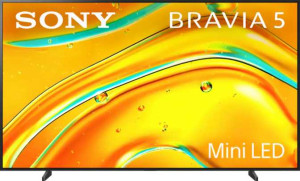
At the foundation, both the Sony Bravia XR50 98″ and the TCL 98X11K 98″ share the same core panel specs: identical 4K (3840 x 2160) resolution, a 45 ppi pixel density, 10-bit color depth rendering 1.07 billion colors, and matching 178° horizontal and vertical viewing angles. Both also feature Mini-LED backlighting, anti-reflection coatings, and ambient light sensors — meaning neither has a structural advantage in resolution clarity, color volume potential, or everyday usability features like glare management.
The meaningful differences emerge in two areas. First, panel technology: the TCL adds a QLED quantum dot layer on top of its Mini-LED backlight, which is designed to expand color gamut and improve peak brightness efficiency. The Sony's panel is listed simply as LED-backlit LCD Mini-LED without quantum dot enhancement, which could place it at a disadvantage in color saturation and brightness headroom, though the provided specs do not include nit values to confirm the magnitude of that gap. Second, the TCL operates at a native 144Hz refresh rate versus the Sony's 120Hz — a tangible benefit for fast-motion content, gaming, and future-proofing, as 144Hz provides smoother motion cadence and lower input latency headroom. On the HDR front, the TCL supports HDR10, HDR10+, Dolby Vision, and HLG, while the Sony omits HDR10+ — a format used by Amazon Prime Video and some UHD Blu-rays — narrowing its HDR ecosystem compatibility slightly.
Based strictly on the provided display specifications, the TCL 98X11K holds a clear edge: its QLED layer, higher 144Hz refresh rate, and full four-format HDR support (including HDR10+) collectively give it broader capability across gaming, streaming, and high-dynamic-range content. The Sony matches it on all shared fundamentals but trails on panel technology and motion performance by the numbers available here.