Sony ULT Tower 9
Sony ULT Tower 9AC

Sony ULT Tower 9 Sony ULT Tower 9AC

Overview

Welcome to this in-depth specification comparison between the Sony ULT Tower 9 and the Sony ULT Tower 9AC. While these two powerful party speakers share a strong foundation of common features, they diverge in some meaningful ways. The key battlegrounds in this comparison include audio codec support, RGB lighting, wired connectivity options, and overall weight. Read on to explore every specification side by side and find out which model best suits your needs.

Common Features

  • Both products have the same volume of 170133.6 cm³.
  • Neither product has a neodymium magnet.
  • Both products have a control panel placed on the device.
  • Both products are sweat resistant.
  • Neither product includes a travel bag.
  • Neither product has a touch screen.
  • Neither product has a detachable cable.
  • Neither product is a neckband speaker.
  • Both products have stereo speakers.
  • Both products have a battery level indicator.
  • Neither product has a removable battery.
  • Neither product supports wireless charging.
  • Both products use Bluetooth version 5.3.
  • Neither product supports Bluetooth pairing using NFC.
  • Neither product has a 3.5 mm audio jack socket.
  • Neither product supports aptX Lossless, aptX Adaptive, aptX HD, aptX, or aptX Low Latency.
  • Both products can be used wirelessly.
  • Both products support remote smartphone control.
  • Neither product supports fast pairing.
  • Neither product has voice commands.
  • Neither product has a radio.
  • Both products have voice prompts.
  • Neither product has a mute function.
  • Neither product works as a power bank.
  • Both products support pairing for stereo sound.

Main Differences

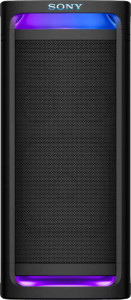
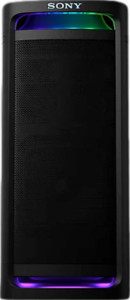
  • RGB lighting is present on the Sony ULT Tower 9 but not available on the Sony ULT Tower 9AC.
  • The Sony ULT Tower 9 weighs 29600 g while the Sony ULT Tower 9AC weighs 28500 g.
  • An AUX input is available on the Sony ULT Tower 9 but not present on the Sony ULT Tower 9AC.
  • LDAC support is present on the Sony ULT Tower 9AC but not available on the Sony ULT Tower 9.
  • AAC support is present on the Sony ULT Tower 9AC but not available on the Sony ULT Tower 9.
Specs Comparison
Sony ULT Tower 9

Sony ULT Tower 9

Sony ULT Tower 9AC

Sony ULT Tower 9AC

Design:
volume 170133.6 cm³ 170133.6 cm³
has a neodymium magnet
control panel placed on a device
water resistance Sweat resistant Sweat resistant
travel bag is included
has a touch screen
has RGB lighting
has a detachable cable
is a neckband speaker
has a remote control
weight 29600 g 28500 g
height 910 mm 910 mm
width 410 mm 410 mm
thickness 456 mm 456 mm

In terms of physical footprint, the Sony ULT Tower 9 and ULT Tower 9AC are virtually identical — sharing the exact same 910 × 410 × 456 mm dimensions and 170,133.6 cm³ volume. For a tower speaker of this scale, that means both units demand the same floor space and placement considerations in a room. Neither includes a travel bag or detachable cable, and both offer only sweat resistance as water protection — a modest rating that signals these are strictly indoor, stationary devices.

The two meaningful differentiators lie in weight and lighting. The ULT Tower 9 weighs 29,600 g versus the Tower 9AC's 28,500 g — a 1,100 g difference. While neither speaker is designed to be moved frequently, that roughly 1 kg gap can matter when repositioning the unit or during initial setup, giving the Tower 9AC a marginal handling advantage. More visually significant is the presence of RGB lighting on the Tower 9, which the Tower 9AC entirely lacks. For users who want an expressive light show as part of their audio setup, this is a genuine feature gap.

On design, the ULT Tower 9 holds a clear edge if RGB ambiance is a priority — it adds a visual dimension the Tower 9AC simply does not offer. If lighting is irrelevant to the buyer, the Tower 9AC's marginally lighter build gives it a slight practical advantage, though the difference is minor. Neither unit differentiates itself on build features like touch controls, remote, or enhanced weather resistance, so the choice in this category largely comes down to whether the RGB aesthetic justifies the extra weight.
Sound quality:
has stereo speakers

The sound quality data available for both the Sony ULT Tower 9 and ULT Tower 9AC converges on a single shared trait: both feature stereo speakers. For tower speakers at this size, stereo output is an expected baseline — it means each unit is capable of delivering distinct left and right audio channels, producing a wider soundstage compared to a mono speaker of similar form factor.

With only this one spec shared identically across both products, there is no differentiator to analyze within the provided data. The two units are evenly matched on this dimension, and no advantage can be assigned to either based solely on what is available here.

Power:
has a battery level indicator
has a removable battery
has wireless charging

Across every power-related spec provided, the Sony ULT Tower 9 and ULT Tower 9AC are identical. Both include a battery level indicator — a practical convenience that lets users monitor remaining charge at a glance rather than being caught off guard by sudden shutdowns. Neither unit supports wireless charging or offers a removable battery, which is typical for tower speakers of this class where internal, fixed battery configurations are the norm.

Since no differentiating data exists within this group, the two products are fully tied on power features. Buyers should not factor power specifications into their decision between these two models.

Connectivity:
Bluetooth version 5.3 5.3
supports Bluetooth pairing using NFC
has a socket for a 3.5 mm audio jack
has an AUX input
has aptX Lossless
has LDAC
has aptX Adaptive
has aptX HD
has aptX
has aptX Low Latency
has AAC
has AirPlay
has Chromecast built-in
has Auracast
has Bluetooth LE Audio
maximum Bluetooth range 10 m 10 m
supports Wi-Fi
has a 3.5mm male connector
has an external memory slot
is DLNA-certified
supports Ethernet
has a microphone input

Both the Sony ULT Tower 9 and ULT Tower 9AC share Bluetooth 5.3 with a 10 m maximum range and include a microphone input — a solid shared foundation. Neither supports Wi-Fi, NFC pairing, or any of the more advanced wireless audio ecosystems like AirPlay or Chromecast, which keeps both units firmly in the traditional Bluetooth speaker category.

The meaningful split comes in wireless audio codec support and wired connectivity. The Tower 9AC supports LDAC and AAC — codecs absent on the Tower 9. LDAC is Sony's high-resolution audio codec, capable of transmitting up to three times more data than standard Bluetooth SBC, making it a significant advantage for users streaming from LDAC-compatible sources who want the highest possible wireless audio fidelity. AAC adds better compatibility and quality for Apple device users. The Tower 9, by contrast, gains an AUX input that the Tower 9AC lacks — a practical wired fallback for connecting non-Bluetooth sources like older devices or DJ equipment.

The connectivity edge belongs to the ULT Tower 9AC for most modern use cases. LDAC and AAC support meaningfully expand its wireless audio quality ceiling, which is harder to replicate than the AUX convenience offered by the Tower 9. That said, users who rely on wired analog connections will find the Tower 9's AUX input a genuine differentiator the Tower 9AC simply cannot match.

Features:
release date April 2025 April 2025
Can be used wirelessly
supports a remote smartphone
has fast pairing
has voice commands
Has a radio
Has voice prompts
has a mute function
works as a power bank
has a sleep timer

Feature-for-feature, the Sony ULT Tower 9 and ULT Tower 9AC are completely identical in this category. Both operate wirelessly, support smartphone remote control, include voice prompts for audible feedback during use, and offer a sleep timer — a convenient addition for users who want the speaker to power down automatically after a set period.

Neither unit supports fast pairing, voice commands, or radio, and neither doubles as a power bank. These are consistent omissions across both models, reflecting a shared product philosophy focused on audio delivery rather than multi-function utility. The result is a complete tie — there is no feature advantage to be found on either side within the provided data.

Miscellaneous:
supports pairing for stereo sound

The sole miscellaneous spec available for both the Sony ULT Tower 9 and ULT Tower 9AC is stereo pairing support, and both units offer it equally. This capability allows two compatible speakers to be linked together — one handling the left channel, the other the right — effectively expanding the soundstage beyond what a single unit can produce. For larger rooms or open spaces, this can make a meaningful difference in audio immersion.

Since the spec is identical across both models, this category results in a complete tie. Neither product offers any miscellaneous advantage over the other based on the available data.

Comparison Summary & Verdict

After examining all available specifications, both the Sony ULT Tower 9 and the Sony ULT Tower 9AC prove to be well-matched speakers that share the same volume, Bluetooth 5.3, stereo speaker setup, and support for wireless and stereo-pairing use. However, their differences reveal two distinct personalities. The Sony ULT Tower 9 stands out with its RGB lighting and AUX input, making it the better pick for users who want a visually striking speaker with wired connectivity flexibility. On the other hand, the Sony ULT Tower 9AC is slightly lighter at 28500 g and gains a clear audio advantage with support for both LDAC and AAC codecs, appealing to audiophiles who prioritize higher-quality wireless audio streaming. Choose accordingly based on whether visual flair and wired options or superior codec support matters more to you.

Sony ULT Tower 9
Buy Sony ULT Tower 9 if...

Buy the Sony ULT Tower 9 if you want RGB lighting for a more visually dynamic experience and need an AUX input for wired audio connectivity.

Sony ULT Tower 9AC
Buy Sony ULT Tower 9AC if...

Buy the Sony ULT Tower 9AC if you prioritize superior wireless audio quality through LDAC and AAC codec support, and prefer a slightly lighter build.