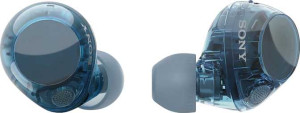
Sony WF-C710N
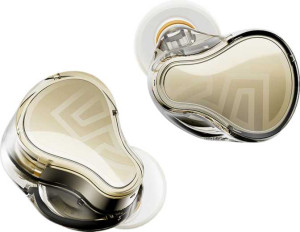
Soundpeats H3

Sony WF-C710N Soundpeats H3

Overview

Welcome to our detailed specification comparison between the Sony WF-C710N and the Soundpeats H3, two compelling true wireless earbuds competing for your attention. While both share a familiar in-ear form factor and core everyday features, they take notably different approaches when it comes to noise cancellation, audio codec support, and battery performance. Read on as we break down every key spec to help you decide which pair deserves a spot in your ears.

Common Features

  • Both products have an in-ear fit design.
  • Neither product uses wires or cables.
  • Neither product is a neckband earbud style.
  • Wingtips are not included with either product.
  • RGB lighting is not present on either product.
  • Both products feature stereo speakers.
  • UV light is not available on either product.
  • Neither product has a display.
  • Both products offer passive noise reduction.
  • The lowest frequency on both products is 20 Hz.
  • The highest frequency on both products is 20000 Hz.
  • Spatial audio is not supported on either product.
  • Dolby Atmos is not available on either product.
  • Wireless charging is not supported on either product.
  • Both products have a battery level indicator.
  • Both products have a rechargeable battery.
  • Both products include a USB Type-C connection.
  • Bluetooth LE Audio is not supported on either product.
  • The maximum Bluetooth range on both products is 10 m.
  • Fast charging is supported on both products.
  • Both products support connecting to 2 devices simultaneously via multipoint.
  • A mute function is available on both products.
  • Both products can be used as a headset.
  • Both products have a control panel placed on the device.
  • Voice prompts are available on both products.
  • A travel bag is included with both products.
  • Both products feature a noise-canceling microphone.

Main Differences

  • Ingress Protection rating is IPX4 on Sony WF-C710N and IPX5 on Soundpeats H3.
  • Water resistance is sweat resistant on Sony WF-C710N and water resistant on Soundpeats H3.
  • Weight is 10.4 g on Sony WF-C710N and 12 g on Soundpeats H3.
  • Active noise cancellation is present on Sony WF-C710N but not available on Soundpeats H3.
  • Driver unit size is 5 mm on Sony WF-C710N and 12 mm on Soundpeats H3.
  • Battery life is 12 hours on Sony WF-C710N and 7 hours on Soundpeats H3.
  • Battery life of the charging case is 21.5 hours on Sony WF-C710N and 30 hours on Soundpeats H3.
  • Charge time is 1.5 hours on Sony WF-C710N and 1 hour on Soundpeats H3.
  • Fast pairing is available on Sony WF-C710N but not on Soundpeats H3.
  • Bluetooth version is 5.3 on Sony WF-C710N and 5.4 on Soundpeats H3.
  • LDAC support is present on Soundpeats H3 but not available on Sony WF-C710N.
  • aptX Adaptive support is present on Soundpeats H3 but not available on Sony WF-C710N.
  • aptX support is present on Soundpeats H3 but not available on Sony WF-C710N.
  • aptX Lossless support is present on Soundpeats H3 but not available on Sony WF-C710N.
  • Ambient sound mode is available on Sony WF-C710N but not on Soundpeats H3.
  • In/on-ear detection is present on Sony WF-C710N but not available on Soundpeats H3.
  • A find device feature is available on Sony WF-C710N but not on Soundpeats H3.
Specs Comparison
Sony WF-C710N

Sony WF-C710N

Soundpeats H3

Soundpeats H3

Design:
Fit In-ear In-ear
Ingress Protection (IP) rating IPX4 IPX5
water resistance Sweat resistant Water resistant
weight 10.4 g 12 g
has no wires or cables
are neckband earbuds
wingtips included
has RGB lighting
has stereo speakers
has UV light
Has a display

Both the Sony WF-C710N and the Soundpeats H3 share the same fundamental design DNA: true wireless, in-ear earbuds with no neckband, no RGB gimmicks, and no display — a clean, no-frills form factor focused on audio utility. For users who want straightforward earbuds without visual extras, both deliver the same basic silhouette.

The two clearest differentiators are weight and water resistance. The WF-C710N comes in at a lighter 10.4 g versus the H3's 12 g — a difference that may sound trivial on paper but becomes noticeable during extended wear, as lighter earbuds reduce ear fatigue and feel more secure over long sessions. On the flip side, the H3 holds an advantage in durability with an IPX5 rating, meaning it can withstand low-pressure water jets, whereas the WF-C710N's IPX4 rating only guarantees protection against splashing from any direction. In practical terms, the H3 is better suited for heavy workouts or light rain exposure, while the Sony is more of a sweat-resistant daily driver.

Overall, neither product has a sweeping design edge, but the advantage depends on your priority: the Sony WF-C710N wins on comfort through its lighter build, while the Soundpeats H3 wins on resilience with its superior IP rating. Active users or those frequently outdoors should lean toward the H3, while those prioritizing all-day wearability may prefer the Sony.

Sound quality:
has active noise cancellation (ANC)
has passive noise reduction
driver unit size 5 mm 12 mm
lowest frequency 20 Hz 20 Hz
highest frequency 20000 Hz 20000 Hz
supports spatial audio
has Dolby Atmos
has Dirac Virtuo
has a neodymium magnet

The most significant dividing line in this category is active noise cancellation. The Sony WF-C710N includes ANC, while the Soundpeats H3 relies solely on passive noise reduction — meaning the H3 depends entirely on the physical seal of the eartip to block ambient sound, with no electronic assistance. For commuters, office workers, or anyone in consistently noisy environments, this is a meaningful real-world gap in favor of the Sony.

On the driver side, the H3 features a considerably larger 12 mm driver compared to the Sony's 5 mm unit. Larger drivers generally have more physical surface area to move air, which can translate to fuller bass response and a wider soundstage — though driver size alone does not guarantee superior sound, as tuning plays an equally critical role. Neither earbud uses a neodymium magnet, supports spatial audio, or carries Dolby Atmos certification, and both share an identical frequency range of 20 Hz to 20,000 Hz, covering the full spectrum of human hearing on paper.

The verdict here hinges on use case. The Sony WF-C710N holds a clear functional edge for noise-sensitive environments thanks to its ANC capability — a feature the H3 simply cannot replicate. However, the Soundpeats H3's larger driver hints at a potentially more impactful low-end signature that may appeal to listeners who prioritize raw audio volume and bass energy over isolation. For most users, ANC is the more versatile and impactful advantage, giving the Sony the overall edge in this category.

Power:
Battery life 12 hours 7 hours
Battery life of charging case 21.5 hours 30 hours
charge time 1.5 hours 1 hours
has wireless charging
Has a solar power battery
has a battery level indicator
has a rechargeable battery

Earbud battery life tells only half the story — the charging case is where total endurance is really determined. The Sony WF-C710N delivers an impressive 12 hours of playback per charge, which is well above average for true wireless earbuds and comfortably covers a full day of heavy use without reaching for the case. The Soundpeats H3, by contrast, offers 7 hours per charge — a respectable figure for casual listeners, but noticeably shorter for those who wear their earbuds continuously through long workdays or travel.

Flip the equation to total combined endurance, however, and the picture shifts. The H3's case provides an additional 30 hours of reserve charge, bringing the all-in total to 37 hours. The Sony's case adds 21.5 hours, for a combined total of 33.5 hours. So while the Sony lasts longer per session, the H3 system can sustain slightly more cumulative listening time before needing a wall outlet. The H3 also charges faster at 1 hour versus the Sony's 1.5 hours, a small but handy edge for users who are often short on time between uses. Neither model supports wireless charging.

For most users, the Sony WF-C710N holds the more practical advantage: its longer per-session battery means fewer interruptions and less case dependency throughout the day. The H3's greater case capacity is useful for extended trips away from power, but that benefit only materializes once the earbuds themselves have already run down multiple times. Unless multi-day portability without any charging is the primary concern, the Sony's endurance per wear is the more impactful real-world strength.

Connectivity:
has fast pairing
Has USB Type-C
Bluetooth version 5.3 5.4
has LDAC
has LDHC
has Bluetooth LE Audio
has aptX Adaptive
has aptX Low Latency
has aptX HD
has aptX
has aptX Lossless
has aptX Voice
has Auracast
maximum Bluetooth range 10 m 10 m
supports Bluetooth pairing using NFC
Can be used wirelessly
has AAC

Codec support is where these two earbuds diverge most sharply. Both carry AAC as a baseline, but the Soundpeats H3 goes considerably further, adding LDAC, aptX Adaptive, aptX, and aptX Lossless to its arsenal. These codecs enable significantly higher-bitrate audio transmission over Bluetooth — LDAC in particular can stream at up to three times the data rate of AAC, and aptX Lossless theoretically allows CD-quality wireless audio. For listeners with high-resolution music libraries or lossless streaming subscriptions, this is a tangible, audible difference — provided their source device supports the matching codec. The Sony WF-C710N offers no such options beyond AAC, which imposes a ceiling on wireless audio quality regardless of the source.

The H3 also runs on the slightly newer Bluetooth 5.4 versus the Sony's 5.3, though in practice the real-world difference between these two adjacent versions is minimal for most users. Both products share identical 10 m wireless range, USB-C charging, and the absence of NFC pairing. The Sony does recover one convenience point with fast pairing support, which allows quicker initial setup with compatible devices — something the H3 lacks.

Taken together, the Soundpeats H3 holds a clear and meaningful advantage in this category. Its breadth of high-fidelity codec support makes it the stronger choice for audio enthusiasts, Android users with compatible devices, or anyone invested in lossless streaming. The Sony's fast pairing is a minor convenience perk, but it does not offset the H3's substantially richer connectivity and audio transmission capabilities.
Features:
release date March 2025 October 2025
has ambient sound mode
has in/on-ear detection
has find device feature
Supports fast charging
multipoint count 2 2
can read notifications
has a mute function
can be used as a headset
control panel placed on a device
Has voice prompts
travel bag is included
Has an in-line control panel
Has a temperature sensor
Has a built-in camera remote control function

Strip away the shared features — fast charging, 2-device multipoint, on-device controls, voice prompts, mute, headset capability, and an included travel bag — and three specs cleanly separate these two earbuds. The Sony WF-C710N includes ambient sound mode, in/on-ear detection, and a find device feature, none of which are present on the Soundpeats H3. Each of these omissions carries real daily-use consequences.

Ambient sound mode lets the Sony passthrough environmental audio without removing the earbuds — invaluable at a coffee counter, during a commute, or in any situation requiring momentary awareness. In/on-ear detection automates playback: audio pauses when an earbud is removed and resumes when reinserted, a small but genuinely appreciated quality-of-life feature. The find device function adds a layer of security, helping locate misplaced earbuds via a companion app. The H3 offers none of these, which means more manual intervention for routine interactions that the Sony handles automatically.

With an otherwise near-identical feature baseline, the Sony WF-C710N holds an unambiguous advantage in this category. The trio of missing features on the H3 are not obscure edge-case specs — they are everyday usability tools that meaningfully shape how intuitive and seamless the listening experience feels over time.

Microphone:
has a noise-canceling microphone

Both the Sony WF-C710N and the Soundpeats H3 include a noise-canceling microphone, meaning each is equipped to filter out ambient sound during calls and voice input rather than transmitting raw, unfiltered audio. This is a meaningful baseline — particularly for users who frequently take calls in busy or loud environments — as it helps ensure the listener on the other end hears the speaker clearly rather than surrounding noise.

With only a single shared data point available in this category, no differentiation can be drawn between the two products. The provided specs do not indicate microphone count, placement, or any additional call quality technologies, so any further comparison would go beyond the available data. Based strictly on what is specified, this category is a complete tie.

Comparison Summary & Verdict

After examining every specification, these two earbuds clearly cater to different listeners. The Sony WF-C710N stands out with its active noise cancellation, ambient sound mode, in-ear detection, and find-device feature, making it the stronger choice for commuters and focus-driven users who want a more polished, feature-rich experience. Its lighter 10.4 g build and fast pairing add further convenience. The Soundpeats H3, on the other hand, wins decisively on audio codec versatility, offering LDAC, aptX, aptX Adaptive, and aptX Lossless support alongside a larger 12 mm driver and a superior IPX5 water resistance rating. Its charging case also delivers a longer 30-hour reserve. Audiophiles and outdoor users who prioritize high-resolution wireless audio and better water protection will find the Soundpeats H3 a compelling pick.

Sony WF-C710N
Buy Sony WF-C710N if...

Buy the Sony WF-C710N if you want active noise cancellation, ambient sound mode, and smart features like in-ear detection and find-device support for a more refined daily commute experience.

Soundpeats H3
Buy Soundpeats H3 if...

Buy the Soundpeats H3 if you prioritize high-resolution audio codec support — including LDAC, aptX Adaptive, and aptX Lossless — a larger driver, and stronger IPX5 water resistance.