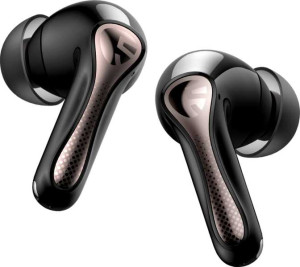
Soundpeats Air 5 Pro
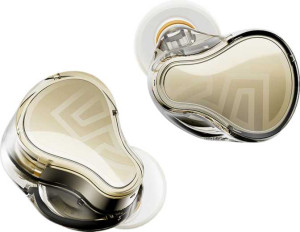
Soundpeats H3

Soundpeats Air 5 Pro Soundpeats H3

Overview

Welcome to our detailed specification face-off between the Soundpeats Air 5 Pro and the Soundpeats H3. Both are fully wireless, IPX5-rated in-ear earbuds sharing a strong foundation — including Bluetooth 5.4, LDAC, aptX Adaptive, six microphones, and fast charging support. Yet beneath that common ground, they diverge on some critical fronts, most notably around noise cancellation, driver size, and connectivity features. Read on to discover which one best fits your listening lifestyle.

Common Features

  • Both the Soundpeats Air 5 Pro and Soundpeats H3 use an in-ear fit.
  • Both products carry an IPX5 ingress protection rating.
  • Both the Soundpeats Air 5 Pro and Soundpeats H3 are water resistant.
  • Neither product uses wires or cables.
  • Neither product is a neckband earbud design.
  • Wingtips are not included with either the Soundpeats Air 5 Pro or Soundpeats H3.
  • RGB lighting is not present on either product.
  • Both the Soundpeats Air 5 Pro and Soundpeats H3 feature stereo speakers.
  • Passive noise reduction is available on both products.
  • Both products share a lowest frequency of 20 Hz.
  • Both products share a highest frequency of 20000 Hz.
  • Spatial audio is not supported on either the Soundpeats Air 5 Pro or Soundpeats H3.
  • Dolby Atmos is not available on either product.
  • A neodymium magnet is not used in either product.
  • Both the Soundpeats Air 5 Pro and Soundpeats H3 have a 35 mAh earbud battery.
  • Wireless charging is not available on either product.
  • Both products include a battery level indicator.
  • Both the Soundpeats Air 5 Pro and Soundpeats H3 have a rechargeable battery.
  • Neither product supports fast pairing.
  • Both products feature a USB Type-C charging connection.
  • Both the Soundpeats Air 5 Pro and Soundpeats H3 support Bluetooth 5.4.
  • LDAC is supported on both products.
  • LDHC is not supported on either product.
  • aptX Adaptive is supported on both the Soundpeats Air 5 Pro and Soundpeats H3.
  • aptX Low Latency is not supported on either product.
  • aptX HD is not supported on either product.
  • In-ear or on-ear detection is not available on either product.
  • A find device feature is not present on either product.
  • Fast charging is supported on both the Soundpeats Air 5 Pro and Soundpeats H3.
  • Neither product can read notifications.
  • A mute function is available on both products.
  • Both the Soundpeats Air 5 Pro and Soundpeats H3 can be used as a headset.
  • Both products have a control panel placed on the device.
  • Voice prompts are available on both the Soundpeats Air 5 Pro and Soundpeats H3.
  • Both products are equipped with 6 microphones.
  • A noise-canceling microphone is present on both the Soundpeats Air 5 Pro and Soundpeats H3.

Main Differences

  • Weight is 9.6 g on the Soundpeats Air 5 Pro and 12 g on the Soundpeats H3.
  • Active noise cancellation (ANC) is present on the Soundpeats Air 5 Pro but not available on the Soundpeats H3.
  • Driver unit size is 10 mm on the Soundpeats Air 5 Pro and 12 mm on the Soundpeats H3.
  • Battery life is 7.5 hours on the Soundpeats Air 5 Pro and 7 hours on the Soundpeats H3.
  • Battery life of the charging case is 29.5 hours on the Soundpeats Air 5 Pro and 30 hours on the Soundpeats H3.
  • Charge time is 1.5 hours on the Soundpeats Air 5 Pro and 1 hour on the Soundpeats H3.
  • Charging case battery power is 520 mAh on the Soundpeats Air 5 Pro and 400 mAh on the Soundpeats H3.
  • Bluetooth LE Audio is supported on the Soundpeats Air 5 Pro but not available on the Soundpeats H3.
  • Ambient sound mode is present on the Soundpeats Air 5 Pro but not available on the Soundpeats H3.
Specs Comparison
Soundpeats Air 5 Pro

Soundpeats Air 5 Pro

Soundpeats H3

Soundpeats H3

Design:
Fit In-ear In-ear
Ingress Protection (IP) rating IPX5 IPX5
water resistance Water resistant Water resistant
weight 9.6 g 12 g
has no wires or cables
are neckband earbuds
wingtips included
has RGB lighting
has stereo speakers
has UV light
Has a display

Both the Soundpeats Air 5 Pro and the Soundpeats H3 share the same fundamental design DNA: true wireless, in-ear earbuds with no neckband, no wingtips, no RGB lighting, and an IPX5 water resistance rating. IPX5 means both can handle sweat and light rain without issue, making either a solid companion for workouts or commutes in variable weather — though neither is rated for submersion.

The only meaningful differentiator in this category is weight. The Air 5 Pro comes in at 9.6 g per earbud, while the H3 weighs 12 g — a difference of about 25%. While 2.4 grams may sound negligible on paper, in the context of in-ear earbuds it is actually noticeable over extended listening sessions. Lighter earbuds exert less downward pressure on the ear canal, which typically translates to reduced fatigue during long wear and a more secure passive fit for a wider range of ear shapes.

On design, the Air 5 Pro holds a clear edge purely due to its lighter build. All other design attributes are functionally identical between the two, so for users who prioritize all-day comfort or use their earbuds during physical activity, the Air 5 Pro's lower weight is a tangible, real-world advantage.

Sound quality:
has active noise cancellation (ANC)
has passive noise reduction
driver unit size 10 mm 12 mm
lowest frequency 20 Hz 20 Hz
highest frequency 20000 Hz 20000 Hz
supports spatial audio
has Dolby Atmos
has Dirac Virtuo
has a neodymium magnet

The most significant dividing line between these two earbuds in the sound quality category is the presence of Active Noise Cancellation (ANC). The Air 5 Pro includes ANC while the H3 does not — a meaningful distinction for anyone who regularly listens in noisy environments like public transit, open offices, or busy streets. Both rely on passive noise reduction through their in-ear fit, but passive isolation alone is considerably less effective at blocking low-frequency rumble such as engine noise or air conditioning hum, which is precisely where ANC excels.

Where the H3 pushes back is driver size. Its 12 mm driver is notably larger than the Air 5 Pro's 10 mm unit. Larger drivers generally have more physical surface area to move air, which can translate to fuller bass response and greater overall dynamic range — though driver size alone does not guarantee superior sound, as tuning plays an equally important role. Without neodymium magnets or spatial audio processing on either side, neither product claims a premium driver configuration, so the H3's size advantage is a potential rather than a guaranteed one.

Both share an identical frequency range of 20 Hz to 20,000 Hz, covering the full spectrum of human hearing, and neither offers spatial audio, Dolby Atmos, or Dirac Virtuo processing. Overall, the Air 5 Pro holds the clearer advantage in this category: ANC is a practical, everyday feature that the H3 simply cannot match, and for most users that will outweigh the H3's modest driver size edge.

Power:
Battery life 7.5 hours 7 hours
Battery life of charging case 29.5 hours 30 hours
charge time 1.5 hours 1 hours
battery power 35 mAh 35 mAh
battery power (charging case) 520mAh 400mAh
has wireless charging
Has a solar power battery
has a battery level indicator
has a rechargeable battery

Earbud battery life is practically identical here — 7.5 hours for the Air 5 Pro versus 7 hours for the H3 — a gap small enough that real-world usage differences like volume level or ANC activation will likely eclipse it entirely. More revealing is what happens at the case level: despite the Air 5 Pro packing a substantially larger 520 mAh case battery compared to the H3's 400 mAh, both deliver nearly the same total combined playback time of roughly 29.5 and 30 hours respectively. This suggests the H3 is extracting comparable efficiency from a leaner power system.

Where the H3 carves out a genuine practical advantage is charge time. It refills in 1 hour flat, while the Air 5 Pro requires 1.5 hours — 50% longer. For users who top up their earbuds during a lunch break or short commute, that half-hour difference is meaningful. Neither model supports wireless charging, so both are dependent on a cable, making fast wired charging speed a more relevant convenience factor.

On balance, this category is closely contested. The Air 5 Pro edges ahead in per-session endurance, but the H3 counters with faster charging and equivalent total runtime despite its smaller case. Users who prioritize quick top-ups will favor the H3; those who go longer between charges and value the larger capacity buffer will lean toward the Air 5 Pro. Neither holds a decisive overall advantage.

Connectivity:
has fast pairing
Has USB Type-C
Bluetooth version 5.4 5.4
has LDAC
has LDHC
has Bluetooth LE Audio
has aptX Adaptive
has aptX Low Latency
has aptX HD
has aptX
has aptX Lossless
has aptX Voice
has Auracast
maximum Bluetooth range 10 m 10 m
supports Bluetooth pairing using NFC
Can be used wirelessly
has AAC

At the foundation, these two earbuds are remarkably well-matched on connectivity. Both run Bluetooth 5.4 — the current generation standard — and share an impressive codec roster including LDAC, aptX Adaptive, aptX Lossless, aptX, and AAC. This is a notably strong codec lineup for earbuds at this price tier, meaning both are capable of streaming high-resolution audio wirelessly when paired with a compatible source device, rather than being limited to standard SBC compression.

The lone but meaningful differentiator is Bluetooth LE Audio, which the Air 5 Pro supports and the H3 does not. LE Audio is a next-generation Bluetooth audio architecture that brings improved efficiency, lower latency, and better audio quality at lower bitrates compared to Classic Bluetooth audio. In practical terms, it enables more stable connections in congested RF environments and lays the groundwork for multi-stream audio and improved hearing aid compatibility. While LE Audio device ecosystems are still maturing, its absence on the H3 does represent a forward-compatibility gap.

Everything else — Bluetooth range, USB-C charging, NFC pairing support (absent on both), and fast pairing (also absent on both) — is identical. The Air 5 Pro holds the edge in this category strictly due to its LE Audio support, which offers both present-day efficiency benefits and greater future-proofing as the broader ecosystem catches up.

Features:
release date June 2025 October 2025
has ambient sound mode
has in/on-ear detection
has find device feature
Supports fast charging
can read notifications
has a mute function
can be used as a headset
control panel placed on a device
Has voice prompts
travel bag is included
Has an in-line control panel
Has a temperature sensor
Has a built-in camera remote control function

Across most of the features category, these two earbuds are functionally identical — both support fast charging, mute, on-device touch controls, voice prompts, headset use for calls, and even include a travel bag. For everyday usability, that shared foundation is solid and well-rounded.

The single feature that separates them is ambient sound mode, present on the Air 5 Pro and absent on the H3. Ambient mode uses the earbuds' microphones to pipe in environmental sound, allowing the wearer to stay aware of their surroundings — conversations, announcements, traffic — without removing the earbuds. It is a feature that pairs naturally with ANC (also exclusive to the Air 5 Pro, as noted in the sound quality category), since together they give the user full control over how much of the outside world they let in. Without it, H3 users must physically remove an earbud to interact with their environment.

The Air 5 Pro has the clear edge here. Ambient sound mode is not a niche perk — for commuters, office workers, or anyone who alternates between focused listening and situational awareness, it is a genuinely practical daily feature. The H3 matches the Air 5 Pro on every other feature in this group, but that one omission is a meaningful gap.

Microphone:
number of microphones 6 6
has a noise-canceling microphone

On paper, the microphone specifications for these two earbuds are identical: both deploy 6 microphones across the pair and both feature noise-canceling mic processing. A 6-mic array is a generous configuration at this tier — more microphones allow for more sophisticated beamforming, where the system isolates the user's voice from multiple directional inputs and suppresses background noise more effectively than a single- or dual-mic setup can.

The noise-canceling microphone designation indicates that both apply active processing to call audio, not just relying on hardware placement alone. For users who frequently take calls in noisy settings — outdoors, on transit, or in busy workspaces — this matters more than raw mic count.

This category is a dead tie. Every available data point is shared equally between the Air 5 Pro and the H3, and there is no basis within the provided specs to give either an advantage. A buyer prioritizing call quality should treat both as equivalent on paper and look to other categories to inform their decision.

Comparison Summary & Verdict

After examining every specification, a clear picture emerges for each product. The Soundpeats Air 5 Pro is the more feature-rich option: it offers Active Noise Cancellation, an ambient sound mode, Bluetooth LE Audio, and a lighter 9.6 g build — all while delivering 7.5 hours of playback and a 520 mAh charging case. It suits commuters, travelers, or anyone who values immersive, distraction-free listening. The Soundpeats H3, on the other hand, counters with a larger 12 mm driver for potentially fuller sound, a faster 1-hour charge time, and a marginally longer combined case runtime of 30 hours. It is the better pick for audio enthusiasts who prioritize raw driver performance and quick top-ups over advanced noise management features. Both share an equally capable six-microphone system and strong codec support, so neither disappoints as a daily headset.

Soundpeats Air 5 Pro
Buy Soundpeats Air 5 Pro if...

Buy the Soundpeats Air 5 Pro if you want active noise cancellation, an ambient sound mode, and Bluetooth LE Audio in a lighter, feature-packed earbud.

Soundpeats H3
Buy Soundpeats H3 if...

Buy the Soundpeats H3 if you prefer a larger 12 mm driver for bigger sound and need a faster one-hour charge time without paying for advanced noise cancellation.