Swiss Military NXT Pods
Xiaomi Open Earphones Pro

Swiss Military NXT Pods Xiaomi Open Earphones Pro

Overview

Welcome to this in-depth specification comparison between the Swiss Military NXT Pods and the Xiaomi Open Earphones Pro. These two wireless earphones share a surprisingly strong foundation, yet differ in meaningful ways that could sway your buying decision. From their contrasting fit styles to distinctions in battery endurance and audio codec support, this side-by-side breakdown will help you understand exactly where each product stands before you commit.

Common Features

  • Both products are wireless with no cables or cords.
  • Neither product is a neckband-style earbud.
  • Neither product includes wingtips.
  • RGB lighting is not available on either product.
  • Both products feature stereo speakers.
  • UV light functionality is not present on either product.
  • Neither product has a built-in display.
  • Active noise cancellation is not available on either product.
  • Both products offer passive noise reduction.
  • The lowest frequency on both products is 20 Hz.
  • The highest frequency on both products is 20000 Hz.
  • Dolby Atmos support is not available on either product.
  • Dirac Virtuo support is not available on either product.
  • Neither product uses a neodymium magnet.
  • Wireless charging is not supported on either product.
  • Neither product has a solar-powered battery.
  • Both products include a battery level indicator.
  • Both products have a rechargeable battery.
  • Fast pairing is not supported on either product.
  • Both products feature a USB Type-C connector.
  • Both products use Bluetooth version 5.4.
  • LDAC support is not available on either product.
  • Bluetooth LE Audio is not supported on either product.
  • aptX Adaptive support is not available on either product.
  • aptX Low Latency support is not available on either product.
  • aptX HD support is not available on either product.
  • Ambient sound mode is not available on either product.
  • Neither product features in-ear or on-ear detection.
  • Fast charging is supported on both products.
  • Neither product is capable of reading notifications.
  • Neither product has a built-in translator.
  • Both products include a mute function.
  • Both products can be used as a headset.
  • Both products have a control panel placed directly on the device.

Main Differences

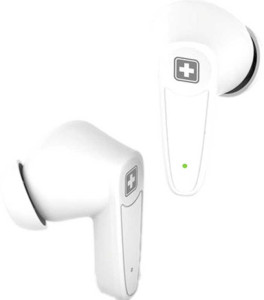
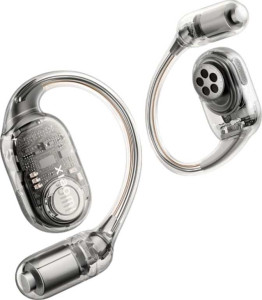
  • The fit type is in-ear on Swiss Military NXT Pods, while Xiaomi Open Earphones Pro uses an open-ear fit.
  • Spatial audio support is present on Xiaomi Open Earphones Pro but not available on Swiss Military NXT Pods.
  • Battery life is 8 hours on Swiss Military NXT Pods and 8.5 hours on Xiaomi Open Earphones Pro.
  • The battery life of the charging case is 32 hours on Swiss Military NXT Pods and 36.5 hours on Xiaomi Open Earphones Pro.
  • Charge time is 1 hour on Swiss Military NXT Pods and 1.5 hours on Xiaomi Open Earphones Pro.
  • LDHC support is present on Xiaomi Open Earphones Pro but not available on Swiss Military NXT Pods.
  • AAC support is present on Xiaomi Open Earphones Pro but not available on Swiss Military NXT Pods.
Specs Comparison
Swiss Military NXT Pods

Swiss Military NXT Pods

Xiaomi Open Earphones Pro

Xiaomi Open Earphones Pro

Design:
Fit In-ear Open-ear
has no wires or cables
are neckband earbuds
wingtips included
has RGB lighting
has stereo speakers
has UV light
Has a display

The most significant design difference between the Swiss Military NXT Pods and the Xiaomi Open Earphones Pro comes down to a single but consequential spec: fit type. The NXT Pods use an in-ear design, meaning the eartip physically enters the ear canal, while the Xiaomi Open Earphones Pro adopts an open-ear form factor that rests outside the canal entirely. This distinction shapes the entire user experience — in-ear designs typically deliver better passive noise isolation and stronger bass response, whereas open-ear designs prioritize comfort over long sessions and situational awareness, allowing ambient sound to pass through naturally.

Beyond fit, both products share an identical design profile: fully wireless with no cables or wires, no neckband, no wingtips, no RGB lighting, no UV light, no display, and stereo speakers on both sides. None of these shared traits differentiate the two products, but they confirm both are modern, streamlined true-wireless earphones targeting everyday portability.

For this design group, the Xiaomi Open Earphones Pro will appeal to users who prioritize all-day wearability and environmental awareness — ideal for outdoor use or office environments. The Swiss Military NXT Pods hold the edge for users who need better sound isolation or a more secure, canal-fitting seal. Neither design is objectively superior; the right choice depends entirely on how and where the earphones will be used.
Sound quality:
has active noise cancellation (ANC)
has passive noise reduction
lowest frequency 20 Hz 20 Hz
highest frequency 20000 Hz 20000 Hz
supports spatial audio
has Dolby Atmos
has Dirac Virtuo
has a neodymium magnet

On paper, both earphones share a near-identical acoustic foundation: the same 20 Hz – 20,000 Hz frequency range covering the full audible spectrum, passive noise reduction only (no ANC), and no proprietary spatial audio processing like Dolby Atmos or Dirac Virtuo. For most of these attributes, the two products are evenly matched.

The single differentiator in this group is that the Xiaomi Open Earphones Pro supports spatial audio, while the Swiss Military NXT Pods do not. Spatial audio simulates a three-dimensional soundstage — making music, movies, and gaming feel more immersive by placing sounds around and above the listener rather than strictly left-right. This is a meaningful advantage for users who consume a lot of cinematic or gaming content, though its real-world impact depends on how well Xiaomi implements it at the software level.

Given the data available, the Xiaomi Open Earphones Pro holds a clear edge in this category solely due to spatial audio support. For listeners who prioritize straightforward stereo music playback, the gap narrows considerably — but for immersive media consumption, the Xiaomi offering has a functional advantage the NXT Pods simply cannot match.

Power:
Battery life 8 hours 8.5 hours
Battery life of charging case 32 hours 36.5 hours
charge time 1 hours 1.5 hours
has wireless charging
Has a solar power battery
has a battery level indicator
has a rechargeable battery

Both earphones deliver strong all-day battery performance, but the Xiaomi Open Earphones Pro edges ahead across every endurance metric. Its 8.5-hour earbud runtime versus the NXT Pods' 8 hours is a modest difference in isolation — roughly one extra short commute or workout session before needing a top-up. The more telling gap is in total system endurance: the Xiaomi's case extends battery life to 36.5 hours combined, compared to 32 hours for the Swiss Military. That extra 4.5 hours means meaningfully fewer trips to a power outlet over the course of a week.

The trade-off comes at charge time. The NXT Pods refill in just 1 hour, while the Xiaomi requires 1.5 hours — 50% longer. For users who frequently forget to charge and need a quick turnaround, that half-hour difference is noticeable. Neither model supports wireless charging, so both require a cable regardless.

Weighing total capacity against charge speed, the Swiss Military NXT Pods suit users who value faster recharging, while the Xiaomi Open Earphones Pro is the better pick for those who prioritize going longer between charges. On net, the Xiaomi holds a slight edge in this category due to its superior total runtime — but the NXT Pods' faster charge time keeps the gap from being decisive.

Connectivity:
has fast pairing
Has USB Type-C
Bluetooth version 5.4 5.4
has LDAC
has LDHC
has Bluetooth LE Audio
has aptX Adaptive
has aptX Low Latency
has aptX HD
has aptX
has aptX Lossless
has aptX Voice
has Auracast
maximum Bluetooth range 10 m 10 m
supports Bluetooth pairing using NFC
Can be used wirelessly
has AAC

At the infrastructure level, these two earphones are virtually identical: both run on Bluetooth 5.4, top out at a 10-meter wireless range, charge via USB-C, and lack fast pairing or NFC. Where they diverge is in audio codec support — a detail that directly affects streaming quality.

The Xiaomi Open Earphones Pro supports both AAC and LDHC, while the Swiss Military NXT Pods support neither. AAC is widely relevant for Apple device users, as iPhones prioritize it for efficient, higher-quality Bluetooth audio transmission. LDHC goes further — it is a high-resolution codec capable of transmitting audio at up to 900 kbps, well above the standard SBC baseline, making it meaningful for listeners who stream lossless or high-bitrate audio. The NXT Pods, lacking any enhanced codec, will default to SBC on most devices, which imposes a lower ceiling on wireless audio fidelity.

The Xiaomi Open Earphones Pro holds a clear advantage in this category. Codec support may seem like a technical footnote, but in practice it determines whether your wireless connection can faithfully carry high-quality audio — and having both AAC and LDHC covers a broad range of devices and use cases that the NXT Pods simply cannot match.

Features:
release date July 2025 July 2025
has ambient sound mode
has in/on-ear detection
Supports fast charging
can read notifications
Has a built-in translator
has a mute function
can be used as a headset
control panel placed on a device
Has voice prompts
travel bag is included
Has an in-line control panel
Has a temperature sensor
Has a built-in camera remote control function

Across every feature in this category, the Swiss Military NXT Pods and the Xiaomi Open Earphones Pro are a perfect match. Both support fast charging, include on-device controls, offer voice prompts, double as a headset with a mute function, and come bundled with a travel bag. Neither product includes ambient sound mode, ear detection, or any smart features like notification readout or a built-in translator.

The practical takeaway is that both earphones cover the essentials competently. Fast charging is a genuinely useful inclusion — even a short charge window can add meaningful playback time. On-device controls and voice prompts reduce phone dependency for everyday tasks like adjusting volume or checking battery status, while headset capability makes both viable for calls and remote work, not just music.

This category is a clear tie. Every feature present on one product is present on the other, and every feature absent from one is absent from both. Users should look to other specification groups — particularly connectivity and sound quality — to differentiate between these two earphones, as features alone offer no basis for choosing one over the other.

Comparison Summary & Verdict

After reviewing all available specifications, both earphones prove to be capable wireless audio companions with shared fundamentals like Bluetooth 5.4, fast charging, USB Type-C, and passive noise reduction. However, their differences paint a clear picture of who each product serves best. The Swiss Military NXT Pods appeal to users who prefer a traditional in-ear fit and value a quicker one-hour charge time. The Xiaomi Open Earphones Pro, on the other hand, is the stronger pick for listeners who want an open-ear design, slightly longer battery life of 8.5 hours, a larger case reserve of 36.5 hours, and richer codec support including AAC and LDHC, along with spatial audio capability.

Swiss Military NXT Pods
Buy Swiss Military NXT Pods if...

Buy the Swiss Military NXT Pods if you prefer a secure in-ear fit and want a faster one-hour charge time to get back to listening quickly.

Xiaomi Open Earphones Pro
Buy Xiaomi Open Earphones Pro if...

Buy the Xiaomi Open Earphones Pro if you prefer an open-ear design, want spatial audio support, and value broader codec compatibility with AAC and LDHC alongside longer overall battery life.