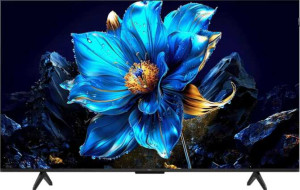
TCL 43P7K 43"
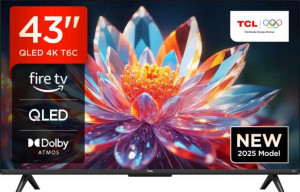
TCL 43T6C-UK 43"

TCL 43P7K 43" TCL 43T6C-UK 43"

Overview

Choosing between the TCL 43P7K 43″ and the TCL 43T6C-UK 43″ is not as straightforward as it might seem. Both are 43-inch QLED 4K televisions sharing a strong common foundation, yet they diverge in several areas that could meaningfully shape your viewing and gaming experience. In this comparison, we examine their contrasting approaches to refresh rate and HDR capabilities, connectivity options, and smart features to help you identify which model best suits your needs.

Common Features

  • Both TVs have a 4K (UHD) QLED, LED-backlit LCD display type.
  • Both TVs share a resolution of 3840 x 2160 px.
  • Both TVs reproduce 1070 million display colors.
  • Both TVs have a 10-bit panel bit depth.
  • Both TVs have a typical brightness of 350 nits.
  • HDR10 support is available on both products.
  • Dolby Vision support is available on both products.
  • Both TVs share the same width of 956 mm and height of 559 mm.
  • Both TVs support VESA mounting.
  • Both TVs operate within the same temperature range of 5 °C to 35 °C.
  • Both TVs include Bluetooth connectivity.
  • Both TVs use HDMI 2.1 and have 3 HDMI ports.
  • Both TVs support Wi-Fi 4 (802.11n) and Wi-Fi 5 (802.11ac).
  • Both TVs have 2 USB ports and 1 RJ45 port.
  • Miracast support is available on both products.
  • Both TVs deliver 2 x 10W audio output power.
  • Dolby Atmos support is available on both products.
  • DTS:X support is available on both products.
  • Stereo speakers are present on both products.
  • Both TVs support Digital Out audio.
  • SRS TheaterSound HD is not available on either product.
  • Dolby Virtual support is not available on either product.
  • A subwoofer is not included on either product.
  • AirPlay support is available on both products.
  • Both TVs have a built-in smart TV platform.
  • Both TVs work with Alexa.
  • Siri/Apple HomeKit support is not available on either product.
  • Both TVs support remote smartphone control.
  • Neither TV has a rechargeable remote control.
  • Both TVs have a standby power consumption of 0.5W.
  • Both TVs include a search browser.

Main Differences

  • Screen size is 42.5″ on TCL 43P7K 43″ and 43″ on TCL 43T6C-UK 43″.
  • Pixel density is 104 ppi on TCL 43P7K 43″ and 102 ppi on TCL 43T6C-UK 43″.
  • Refresh rate is 60Hz on TCL 43P7K 43″ and 120Hz on TCL 43T6C-UK 43″.
  • HDR10+ support is present on TCL 43P7K 43″ but not available on TCL 43T6C-UK 43″.
  • Adaptive synchronization via AMD FreeSync is available on TCL 43P7K 43″ but no adaptive synchronization is present on TCL 43T6C-UK 43″.
  • Bluetooth version is 5.4 on TCL 43P7K 43″ and 5.0 on TCL 43T6C-UK 43″.
  • A 3.5 mm audio jack is present on TCL 43P7K 43″ but not available on TCL 43T6C-UK 43″.
  • Weight is 6700 g on TCL 43P7K 43″ and 6400 g on TCL 43T6C-UK 43″.
  • Thickness is 72 mm on TCL 43P7K 43″ and 73 mm on TCL 43T6C-UK 43″.
  • Volume is 38477.088 cm³ on TCL 43P7K 43″ and 39011.492 cm³ on TCL 43T6C-UK 43″.
  • USB recording support is not available on TCL 43P7K 43″ but is present on TCL 43T6C-UK 43″.
Specs Comparison
TCL 43P7K 43"

TCL 43P7K 43"

TCL 43T6C-UK 43"

TCL 43T6C-UK 43"

Display:
display resolution 4K (UHD) 4K (UHD)
Display type QLED, LED-backlit, LCD QLED, LED-backlit, LCD
screen size 42.5" 43"
resolution 3840 x 2160 px 3840 x 2160 px
pixel density 104 ppi 102 ppi
display colors 1070 million 1070 million
bit depth 10-bit 10-bit
brightness (typical) 350 nits 350 nits
refresh rate 60Hz 120Hz
supports HDR10
supports HDR10+
supports Dolby Vision
supports HLG
Adaptive synchronization AMD FreeSync None
has anti-reflection coating
has an ambient light sensor
maximum horizontal viewing angle 178º 178º
maximum vertical viewing angle 178º 178º

Both the TCL 43P7K and TCL 43T6C-UK share the same core display DNA: QLED LED-backlit LCD panels, a native 4K (3840 x 2160) resolution, 10-bit color depth rendering 1.07 billion colors, identical 350 nits typical brightness, and wide 178° viewing angles in both directions. In everyday use, these shared traits mean both sets will look broadly similar in terms of color richness and HDR exposure in a normally lit room.

The real divergence lies in two areas. First, motion handling: the 43T6C-UK's 120Hz refresh rate is a significant practical advantage over the 43P7K's 60Hz panel — smoother motion in fast sports, action films, and especially gaming is directly perceptible to most viewers. Second, HDR ecosystem support splits the other way: the 43P7K uniquely adds HDR10+ (dynamic metadata HDR) and AMD FreeSync adaptive sync, while the 43T6C-UK supports neither. HDR10+ delivers scene-by-scene tone mapping on compatible content, and FreeSync eliminates screen tearing for compatible PC or console sources.

Which product has the edge depends on the primary use case. For gaming or sports viewing, the 43T6C-UK's 120Hz refresh rate is the more impactful spec — fluidity is immediately noticeable. For cinematic HDR content and PC gaming, the 43P7K's HDR10+ and FreeSync support offer a more complete feature set at 60Hz. Neither TV is a clear all-around winner; the 43T6C-UK leads on motion, the 43P7K leads on HDR range and adaptive sync.

Connectivity:
Has Bluetooth
HDMI version HDMI 2.1 HDMI 2.1
HDMI ports 3 3
supports Wi-Fi
Wi-Fi version Wi-Fi 4 (802.11n), Wi-Fi 5 (802.11ac) Wi-Fi 4 (802.11n), Wi-Fi 5 (802.11ac)
Bluetooth version 5.4 5
USB ports 2 2
RJ45 ports 1 1
supports Miracast
has a socket for a 3.5 mm audio jack
has an external memory slot
has a VGA connector
DVB standards DVB-C, DVB-S, DVB-S2, DVB-T, DVB-T2 DVB-T, DVB-T2, DVB-C, DVB-S, DVB-S2
has a DVI connector

The connectivity foundation of both TVs is virtually identical: 3 HDMI 2.1 ports, 2 USB ports, a wired RJ45 Ethernet port, dual-band Wi-Fi covering both Wi-Fi 4 and Wi-Fi 5, Miracast screen mirroring, and a full matching suite of DVB tuner standards (DVB-T/T2, DVB-C, DVB-S/S2). For most users, this shared backbone means both sets are equally capable of handling modern source devices, fast wireless streaming, and over-the-air or satellite reception without compromise.

Two details separate them. The TCL 43P7K ships with Bluetooth 5.4 versus the 43T6C-UK's Bluetooth 5.0 — a meaningful if incremental difference. Bluetooth 5.4 brings improved connection stability and lower latency, which matters most when pairing wireless headphones or speakers for direct TV audio. More practically impactful is the 43P7K's inclusion of a 3.5mm headphone jack, which the 43T6C-UK entirely omits. For anyone who relies on wired headphones for late-night viewing or hearing accessibility, this is a genuine functional gap.

On connectivity, the TCL 43P7K holds a clear edge. The newer Bluetooth version is a modest but real upgrade, and the presence of a headphone jack adds tangible flexibility that the 43T6C-UK simply cannot match. Users who never use wired audio output will find both sets equivalent, but for everyone else, the 43P7K is the more versatile option here.

Audio:
audio output power 2 x 10W 2 x 10W
supports Digital Out
has SRS TheaterSound HD
has stereo speakers
has Dolby Atmos
supports Dolby Virtual
has a subwoofer
has DTS:X
HDMI ARC / eARC HDMI eARC, HDMI ARC HDMI ARC, HDMI eARC

Rarely does a spec group tell such a clear story: the audio hardware and feature sets of the TCL 43P7K and TCL 43T6C-UK are completely identical. Both deliver 2 x 10W stereo output, support Dolby Atmos and DTS:X object-based audio decoding, include both HDMI ARC and eARC, and offer a digital audio output for external receivers. Neither includes a subwoofer or any proprietary sound enhancement technology.

The practical takeaway is straightforward. A combined 20W stereo output is adequate for small-to-medium room casual viewing but will feel limited for cinematic or high-volume use — both sets will benefit equally from an external soundbar or AV receiver. The inclusion of eARC on both models is a worthwhile highlight: it allows lossless, high-bandwidth audio formats like Dolby Atmos TrueHD to pass through to a compatible soundbar without compression, which is a meaningful advantage over basic ARC if you plan to invest in external audio.

This group is a complete tie. There is no measurable or meaningful audio difference between these two televisions based on the provided specifications. The audio system should play no role in choosing between them.

Design:
width 956 mm 956 mm
weight 6700 g 6400 g
thickness 72 mm 73 mm
height 559 mm 559 mm
volume 38477.088 cm³ 39011.492 cm³
Supports VESA mount
maximum operating temperature 35 °C 35 °C
lowest potential operating temperature 5 °C 5 °C

From a physical standpoint, these two TVs are near-twins. Width and height are identical at 956 mm × 559 mm, both support VESA mounting, and both share the same operating temperature range. The difference in thickness is negligible — 72 mm versus 73 mm — and would be imperceptible in any real installation, whether wall-mounted or stand-placed.

The one numerical difference worth noting is weight: the TCL 43P7K comes in at 6700 g compared to the 43T6C-UK's 6400 g, a gap of 300 g. In isolation this is minor, but it has mild practical relevance during installation — particularly for a single-person wall mount, where every saved gram reduces strain. Once mounted or placed on a stand, the difference is entirely irrelevant to day-to-day use.

Design is effectively a near-tie, with a very slight physical handling edge to the TCL 43T6C-UK by virtue of its marginally lower weight. No buyer should factor this category meaningfully into their decision — footprint, mounting compatibility, and environmental tolerances are identical across both models.

Features:
release date March 2025 April 2025
has AirPlay
has built-in smart TV
works with Alexa
works with Siri/Apple HomeKit
supports a remote smartphone
has a rechargeable remote control
supports USB recording
standby power consumption 0.5W 0.5W
has a search browser
has a sleep timer
has a child lock
has voice commands

Across the smart feature set, these two TVs are remarkably aligned. Both carry a full-featured smart TV platform with AirPlay, Alexa voice control, smartphone remote support, a web browser, and standard usability staples like a sleep timer and child lock. Neither integrates with Apple HomeKit/Siri, which is worth flagging for households already invested in Apple's smart home ecosystem.

The single functional differentiator in this group is USB recording, supported by the TCL 43T6C-UK but absent on the 43P7K. This feature allows users to connect a USB storage device and record live broadcast content directly — essentially a built-in personal video recorder. For cord-cutters or viewers of live DVB broadcast television who want to time-shift content without a separate set-top box, this is a genuinely useful capability that the 43P7K simply cannot replicate.

The TCL 43T6C-UK takes a narrow but clear edge here. For users who rely on streaming services exclusively, the difference is irrelevant and the two sets are functionally tied. But for anyone who watches live broadcast TV and values the ability to record it, the 43T6C-UK's USB recording support adds real, everyday utility that the 43P7K lacks.

Comparison Summary & Verdict

Both TVs deliver a capable QLED 4K picture with Dolby Vision, Dolby Atmos, and a shared suite of smart features, making either a solid living-room choice. However, the differences are meaningful depending on your priorities. The TCL 43T6C-UK 43″ stands out with its 120Hz refresh rate and USB recording capability, making it the stronger pick for those who want smoother motion and the flexibility to record broadcast content. The TCL 43P7K 43″, on the other hand, appeals to gamers and enthusiasts with its AMD FreeSync adaptive sync, HDR10+ support, newer Bluetooth 5.4, and a 3.5mm audio jack for headphone connectivity. Neither TV is a clear all-round winner; the right choice depends entirely on how you plan to use it.

TCL 43P7K 43
Buy TCL 43P7K 43" if...

Buy the TCL 43P7K 43″ if you are a gamer or enthusiast who values AMD FreeSync support, HDR10+ compatibility, and a 3.5mm headphone jack for direct audio output.

TCL 43T6C-UK 43
Buy TCL 43T6C-UK 43" if...

Buy the TCL 43T6C-UK 43″ if you prioritize a smoother 120Hz refresh rate for everyday viewing and want the added convenience of USB recording for broadcast content.