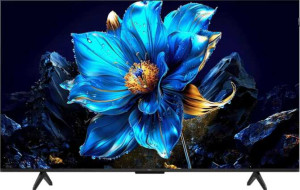
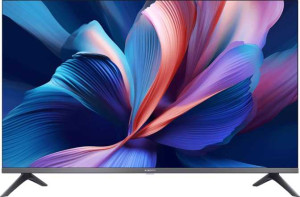
TCL 43P7K 43"
Xiaomi TV A Pro 2026 43"

TCL 43P7K 43" Xiaomi TV A Pro 2026 43"

Overview

Choosing between two capable 43-inch 4K smart TVs can be a real challenge when they share so many fundamentals. In this detailed comparison, we put the TCL 43P7K 43″ head-to-head against the Xiaomi TV A Pro 2026 43″, two QLED displays built on a common foundation of HDR10+, HDMI 2.1, and smart platform features. The real decisions hinge on their HDR and audio codec support, smart home ecosystem compatibility, and a set of practical everyday features that could make one a significantly better fit for your living room than the other.

Common Features

  • Both TVs have a 4K (UHD) resolution of 3840 x 2160 px.
  • Both use a QLED, LED-backlit, LCD display type.
  • Both support a color depth of 1070 million colors at 10-bit.
  • Both have a 60Hz refresh rate.
  • HDR10 support is available on both products.
  • HDR10+ support is available on both products.
  • Both have Bluetooth connectivity.
  • Both use HDMI 2.1 and include 3 HDMI ports.
  • Wi-Fi 4 (802.11n) and Wi-Fi 5 (802.11ac) are supported on both TVs.
  • Both include 1 RJ45 ethernet port.
  • Miracast support is available on both products.
  • Both have a 3.5mm audio jack socket.
  • Both deliver 2 x 10W audio output power.
  • Digital audio output is supported on both products.
  • DTS:X is supported on both products.
  • Stereo speakers are present on both TVs.
  • Both TVs have a thickness of 72 mm and support VESA mounting.
  • Chromecast built-in is available on both products.
  • AirPlay support is available on both products.
  • Both are compatible with Google Assistant and support smartphone remote control.
  • Both have a standby power consumption of 0.5W.

Main Differences

  • Screen size is 42.5″ on TCL 43P7K 43″ and 43″ on Xiaomi TV A Pro 2026 43″.
  • Pixel density is 104 ppi on TCL 43P7K 43″ and 102 ppi on Xiaomi TV A Pro 2026 43″.
  • Dolby Vision support is present on TCL 43P7K 43″ but not available on Xiaomi TV A Pro 2026 43″.
  • Bluetooth version is 5.4 on TCL 43P7K 43″ and 5.0 on Xiaomi TV A Pro 2026 43″.
  • USB ports number 2 on TCL 43P7K 43″ and 1 on Xiaomi TV A Pro 2026 43″.
  • Dolby Atmos support is present on TCL 43P7K 43″ but not available on Xiaomi TV A Pro 2026 43″.
  • Width is 956 mm on TCL 43P7K 43″ and 957 mm on Xiaomi TV A Pro 2026 43″.
  • Weight is 6700 g on TCL 43P7K 43″ and 6000 g on Xiaomi TV A Pro 2026 43″.
  • Height is 559 mm on TCL 43P7K 43″ and 563 mm on Xiaomi TV A Pro 2026 43″.
  • Volume is 38477.088 cm³ on TCL 43P7K 43″ and 38792.952 cm³ on Xiaomi TV A Pro 2026 43″.
  • Maximum operating temperature is 35°C on TCL 43P7K 43″ and 40°C on Xiaomi TV A Pro 2026 43″.
  • Lowest operating temperature is 5°C on TCL 43P7K 43″ and 0°C on Xiaomi TV A Pro 2026 43″.
  • Alexa compatibility is present on TCL 43P7K 43″ but not available on Xiaomi TV A Pro 2026 43″.
  • USB recording support is available on Xiaomi TV A Pro 2026 43″ but not present on TCL 43P7K 43″.
Specs Comparison
TCL 43P7K 43"

TCL 43P7K 43"

Xiaomi TV A Pro 2026 43"

Xiaomi TV A Pro 2026 43"

Display:
display resolution 4K (UHD) 4K (UHD)
Display type QLED, LED-backlit, LCD QLED, LED-backlit, LCD
screen size 42.5" 43"
resolution 3840 x 2160 px 3840 x 2160 px
pixel density 104 ppi 102 ppi
display colors 1070 million 1070 million
bit depth 10-bit 10-bit
refresh rate 60Hz 60Hz
supports HDR10
supports HDR10+
supports Dolby Vision
supports HLG
has anti-reflection coating
has an ambient light sensor
maximum horizontal viewing angle 178º 178º
maximum vertical viewing angle 178º 178º

Both the TCL 43P7K and the Xiaomi TV A Pro 2026 43″ share the same core display foundation: a QLED, LED-backlit LCD panel at 4K (3840 x 2160) resolution, 10-bit color depth rendering 1.07 billion colors, a 60Hz refresh rate, and identical 178º viewing angles in both directions. Both also support HDR10, HDR10+, and HLG, and include anti-reflection coating and an ambient light sensor. For the vast majority of everyday viewing scenarios, these two TVs are remarkably similar on paper.

The one meaningful differentiator is Dolby Vision support: the TCL has it, the Xiaomi does not. In practice, Dolby Vision is a dynamic HDR format that adjusts metadata scene-by-scene, often delivering more precise brightness and color accuracy than HDR10+ on compatible content — particularly from streaming platforms like Netflix and Apple TV+. If your primary content sources use Dolby Vision heavily, the TCL holds a real, practical advantage. The pixel density gap (104 ppi vs. 102 ppi) is negligible at typical viewing distances and should not factor into any decision.

Overall, the TCL 43P7K has a clear edge in this category solely due to its Dolby Vision support. All other display specs are functionally identical, making Dolby Vision the single deciding factor for display-focused buyers.

Connectivity:
Has Bluetooth
HDMI version HDMI 2.1 HDMI 2.1
HDMI ports 3 3
supports Wi-Fi
Wi-Fi version Wi-Fi 4 (802.11n), Wi-Fi 5 (802.11ac) Wi-Fi 4 (802.11n), Wi-Fi 5 (802.11ac)
Bluetooth version 5.4 5
USB ports 2 1
RJ45 ports 1 1
supports Miracast
has a socket for a 3.5 mm audio jack
has an external memory slot
has a VGA connector
DVB standards DVB-C, DVB-S, DVB-S2, DVB-T, DVB-T2 DVB-T, DVB-T2, DVB-C, DVB-S, DVB-S2
has a DVI connector

The wired connectivity foundation is identical between the two TVs: both offer 3 HDMI 2.1 ports, an RJ45 ethernet port, a 3.5mm audio jack, and matching Wi-Fi support (Wi-Fi 4 and Wi-Fi 5). HDMI 2.1 is a strong shared asset, enabling 4K signals with higher bandwidth headroom for future devices. Wireless screen mirroring via Miracast is also present on both.

Two specs separate them. First, the TCL 43P7K includes 2 USB ports versus just 1 on the Xiaomi — a practical daily-use difference if you connect USB storage, a keyboard, or other peripherals simultaneously. Second, Bluetooth versioning differs: the TCL ships with Bluetooth 5.4 while the Xiaomi carries Bluetooth 5.0. Version 5.4 brings improved connection stability and lower latency, which matters most when pairing wireless headphones or audio devices where dropouts are noticeable.

The TCL 43P7K holds the edge in this category. Neither gap is dramatic, but together — an extra USB port and a newer Bluetooth revision — they represent a meaningfully more flexible connectivity setup for users who regularly use peripherals.

Audio:
audio output power 2 x 10W 2 x 10W
supports Digital Out
has SRS TheaterSound HD
has stereo speakers
has Dolby Atmos
supports Dolby Virtual
has a subwoofer
has DTS:X
HDMI ARC / eARC HDMI eARC, HDMI ARC HDMI ARC, HDMI eARC

On paper, these two TVs are nearly audio-identical: matched 2 x 10W stereo output, Digital Out, DTS:X, and both HDMI ARC and eARC support. The eARC port is worth noting as a shared strength — it allows lossless, high-bitrate audio to pass through to a soundbar or AV receiver, which is the more important connection for users who plan to upgrade their sound setup externally.

The single differentiator is Dolby Atmos: the TCL 43P7K supports it, the Xiaomi TV A Pro 2026 does not. Dolby Atmos is an object-based surround sound format that adds a sense of height and spatial dimensionality to compatible content on streaming platforms and Blu-ray. On built-in TV speakers alone its impact is modest, but it becomes notably more relevant when passing audio to a Dolby Atmos-capable soundbar via eARC — a scenario where the Xiaomi would fall short.

The TCL 43P7K has the edge here, purely on the strength of Dolby Atmos support. For users relying solely on the TV's built-in speakers, the real-world difference will be subtle. But for anyone pairing the TV with an external audio system, the TCL's Atmos capability unlocks a meaningfully richer audio chain.

Design:
width 956 mm 957 mm
weight 6700 g 6000 g
thickness 72 mm 72 mm
height 559 mm 563 mm
volume 38477.088 cm³ 38792.952 cm³
Supports VESA mount
maximum operating temperature 35 °C 40 °C
lowest potential operating temperature 5 °C 0 °C

Physically, these two TVs are near-twins: footprint dimensions differ by just 1mm in width and 4mm in height, thickness is identical at 72mm, and both support VESA mounting. For anyone deciding between a stand placement or wall mount, the two are interchangeable from a sizing standpoint.

Weight is the more tangible differentiator. The Xiaomi TV A Pro 2026 comes in at 6000g versus the TCL's 6700g — a 700g difference that is noticeable during installation, particularly when wall-mounting solo. Lighter TVs reduce strain on mounts and make single-person installs more manageable.

The less obvious but genuinely useful distinction lies in operating temperature range. The Xiaomi tolerates conditions from 0°C to 40°C, while the TCL is rated for 5°C to 35°C. This gives the Xiaomi a practical advantage in environments that run cooler (a garage, workshop, or seasonal room in winter) or warmer (a kitchen or poorly ventilated space). For standard living room use neither limit is relevant, but in edge-case environments the Xiaomi's broader tolerance is a real benefit. Overall, the Xiaomi TV A Pro 2026 holds a narrow edge in this category, thanks to its lighter weight and wider operating temperature range.

Features:
release date March 2025 April 2025
has Chromecast built-in
has AirPlay
has built-in smart TV
compatible with Google Assistant
works with Alexa
works with Siri/Apple HomeKit
supports a remote smartphone
has a rechargeable remote control
supports USB recording
standby power consumption 0.5W 0.5W
has a search browser
has a sleep timer
has a child lock
has voice commands

The smart feature overlap between these two TVs is substantial: both run a built-in smart platform with Chromecast, AirPlay, Google Assistant, voice commands, smartphone remote support, a browser, sleep timer, and child lock — all at an identical 0.5W standby draw. For most users, day-to-day smart TV operation will feel functionally equivalent.

Each TV claims one exclusive feature that the other lacks. The TCL 43P7K adds Alexa compatibility, which is a meaningful perk for households already embedded in Amazon's ecosystem — it allows the TV to be controlled and automated alongside other Alexa devices without a workaround. The Xiaomi TV A Pro 2026, meanwhile, supports USB recording, letting users record live broadcast content directly to a connected USB drive — a feature that still carries real practical value for those without a dedicated DVR or set-top box.

This category is essentially a tie with different strengths. The right choice depends entirely on the user's setup: Amazon smart home users will prefer the TCL, while viewers who rely on live TV recording will find the Xiaomi's USB recording capability more immediately useful.

Comparison Summary & Verdict

Both the TCL 43P7K 43″ and the Xiaomi TV A Pro 2026 43″ deliver a well-rounded 4K QLED experience, sharing HDR10+, DTS:X, Chromecast, AirPlay, and Google Assistant support. Where they diverge is meaningful: the TCL stands out for home cinema enthusiasts with its exclusive Dolby Vision and Dolby Atmos support, a more advanced Bluetooth 5.4 connection, two USB ports instead of one, and Amazon Alexa compatibility. If immersive HDR visuals and rich spatial audio are your priorities, the TCL is the stronger performer. The Xiaomi counters with a lighter 6000 g chassis, a broader operating temperature range starting at 0°C, and the handy ability to record live TV via USB recording. For viewers who record broadcast content or need a more environmentally resilient set, the Xiaomi makes a compelling and practical case.

TCL 43P7K 43
Buy TCL 43P7K 43" if...

Buy the TCL 43P7K 43″ if you prioritize premium HDR with Dolby Vision, immersive Dolby Atmos audio, Alexa integration, and the latest Bluetooth 5.4 connectivity.

Xiaomi TV A Pro 2026 43
Buy Xiaomi TV A Pro 2026 43" if...

Buy the Xiaomi TV A Pro 2026 43″ if you want a lighter build, need USB recording for live TV, or require a wider operating temperature range down to 0°C.