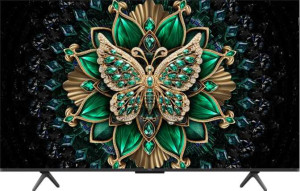
TCL 50C6K 50"
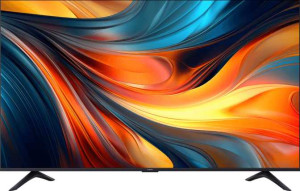
Xiaomi TV A 2026 50"

TCL 50C6K 50" Xiaomi TV A 2026 50"

Overview

Welcome to our in-depth specification comparison between the TCL 50C6K 50″ and the Xiaomi TV A 2026 50″. Both are 50-inch 4K smart TVs sharing a strong common foundation, yet they diverge sharply in areas that matter most to demanding viewers. From display technology and refresh rate to audio power and smart platform features, this comparison breaks down every key spec to help you make the most informed buying decision possible.

Common Features

  • Both TVs offer 4K (UHD) resolution at 3840 x 2160 px.
  • Both TVs have a 10-bit panel capable of displaying 1070 million colors.
  • HDR10 support is available on both products.
  • HLG support is available on both products.
  • An anti-reflection coating is present on both products.
  • An ambient light sensor is built into both products.
  • Both TVs share the same width of 1111 mm.
  • VESA mount support is available on both products.
  • Both TVs include Bluetooth connectivity.
  • Both TVs use HDMI 2.1 ports and include one RJ45 ethernet port.
  • Wi-Fi 4 (802.11n) and Wi-Fi 5 (802.11ac) are supported on both products.
  • Miracast support is available on both products.
  • A 3.5 mm audio jack socket is present on both products.
  • Neither TV includes an external memory slot.
  • Both TVs feature stereo speakers with Dolby Audio support.
  • DTS:X audio decoding is supported on both products.
  • Both TVs include HDMI ARC and HDMI eARC.
  • Dolby Virtual is not supported on either product.
  • A subwoofer is not included on either product.
  • Chromecast built-in, AirPlay, Google Assistant compatibility, and smart TV functionality are all present on both products.
  • Neither TV works with Siri or Apple HomeKit.
  • USB recording support is available on both products.
  • Neither TV comes with a rechargeable remote control.

Main Differences

  • The TCL 50C6K 50″ uses a QLED, LED-backlit, LCD, Mini-LED display type, while the Xiaomi TV A 2026 50″ uses a standard LED-backlit LCD panel.
  • The screen size is 49.5″ on the TCL 50C6K 50″ and 50″ on the Xiaomi TV A 2026 50″.
  • Pixel density is 89 ppi on the TCL 50C6K 50″ and 88 ppi on the Xiaomi TV A 2026 50″.
  • The refresh rate is 144Hz on the TCL 50C6K 50″ and 60Hz on the Xiaomi TV A 2026 50″.
  • HDR10+ support is present on the TCL 50C6K 50″ but not available on the Xiaomi TV A 2026 50″.
  • Dolby Vision support is present on the TCL 50C6K 50″ but not available on the Xiaomi TV A 2026 50″.
  • The TCL 50C6K 50″ has 4 HDMI ports, while the Xiaomi TV A 2026 50″ has 3 HDMI ports.
  • Bluetooth version is 5.4 on the TCL 50C6K 50″ and 5.0 on the Xiaomi TV A 2026 50″.
  • The TCL 50C6K 50″ includes 2 USB ports, while the Xiaomi TV A 2026 50″ includes 1 USB port.
  • Audio output power is 2 x 15W on the TCL 50C6K 50″ and 2 x 10W on the Xiaomi TV A 2026 50″.
  • Dolby Atmos support is present on the TCL 50C6K 50″ but not available on the Xiaomi TV A 2026 50″.
  • The weight is 9100 g on the TCL 50C6K 50″ and 7400 g on the Xiaomi TV A 2026 50″.
  • Thickness is 68.7 mm on the TCL 50C6K 50″ and 73 mm on the Xiaomi TV A 2026 50″.
  • Height is 646 mm on the TCL 50C6K 50″ and 643 mm on the Xiaomi TV A 2026 50″.
  • Volume is 49306.4022 cm³ on the TCL 50C6K 50″ and 52149.229 cm³ on the Xiaomi TV A 2026 50″.
  • The maximum operating temperature is 35 °C on the TCL 50C6K 50″ and 40 °C on the Xiaomi TV A 2026 50″.
  • The lowest operating temperature is 5 °C on the TCL 50C6K 50″ and 0 °C on the Xiaomi TV A 2026 50″.
  • Alexa compatibility is present on the TCL 50C6K 50″ but not available on the Xiaomi TV A 2026 50″.
Specs Comparison
TCL 50C6K 50"

TCL 50C6K 50"

Xiaomi TV A 2026 50"

Xiaomi TV A 2026 50"

Display:
display resolution 4K (UHD) 4K (UHD)
Display type QLED, LED-backlit, LCD, Mini-LED LED-backlit, LCD
screen size 49.5" 50"
resolution 3840 x 2160 px 3840 x 2160 px
pixel density 89 ppi 88 ppi
display colors 1070 million 1070 million
bit depth 10-bit 10-bit
refresh rate 144Hz 60Hz
supports HDR10
supports HDR10+
supports Dolby Vision
supports HLG
has anti-reflection coating
has an ambient light sensor
maximum horizontal viewing angle 178º 178º
maximum vertical viewing angle 178º 178º

Both TVs share the same 4K (3840 x 2160) resolution across near-identical screen sizes, and their pixel densities of 89 ppi vs 88 ppi are functionally indistinguishable. They also match on 10-bit color depth, 1.07 billion display colors, anti-reflection coating, ambient light sensor, and wide 178° viewing angles — so the baseline viewing experience starts from the same foundation.

The real divergence lies in panel technology and motion handling. The TCL 50C6K uses a QLED Mini-LED panel, which delivers superior local dimming, higher peak brightness, and more saturated colors compared to the Xiaomi's conventional LED-backlit LCD. More critically, the TCL's 144Hz refresh rate versus the Xiaomi's 60Hz is a substantial gap: fast-moving content like sports or gaming will look dramatically smoother on the TCL, and it opens the door to higher frame-rate gaming from compatible sources. A 60Hz panel simply cannot render motion with the same fluidity.

HDR support further widens the gap. The TCL covers HDR10, HDR10+, Dolby Vision, and HLG, meaning it can render the full range of HDR content from streaming platforms, Blu-ray, and broadcast. The Xiaomi supports only HDR10 and HLG, missing out on the dynamic metadata of HDR10+ and Dolby Vision — formats that adjust the image scene-by-scene for more accurate highlights and shadow detail. The TCL 50C6K holds a clear and meaningful advantage in this category across panel quality, motion performance, and HDR versatility.
Connectivity:
Has Bluetooth
HDMI version HDMI 2.1 HDMI 2.1
HDMI ports 4 3
supports Wi-Fi
Wi-Fi version Wi-Fi 4 (802.11n), Wi-Fi 5 (802.11ac) Wi-Fi 4 (802.11n), Wi-Fi 5 (802.11ac)
Bluetooth version 5.4 5
USB ports 2 1
RJ45 ports 1 1
supports Miracast
has a socket for a 3.5 mm audio jack
has an external memory slot
has a VGA connector
DVB standards DVB-T, DVB-T2, DVB-C, DVB-S, DVB-S2 DVB-T, DVB-T2, DVB-C, DVB-S, DVB-S2
has a DVI connector

The shared foundation here is solid: both TVs offer HDMI 2.1, identical Wi-Fi support (Wi-Fi 5 max), a wired RJ45 port, Miracast, a 3.5mm audio jack, and the same DVB tuner suite. For everyday connectivity needs — streaming over Wi-Fi, plugging in a soundbar, or connecting to a cable/satellite service — either TV covers the basics without compromise.

Where the TCL 50C6K pulls ahead is in port count. Its 4 HDMI ports versus the Xiaomi's 3, and 2 USB ports versus just 1, matter more than they might seem at first glance. A typical living room setup with a games console, a streaming stick, a Blu-ray player, and a soundbar can easily exhaust three HDMI ports, forcing the Xiaomi owner to reach for a switch. Similarly, a single USB port limits simultaneous use of storage devices or peripherals. The TCL simply gives users more room to grow without adapters or hubs.

The Bluetooth gap — 5.4 on the TCL versus 5.0 on the Xiaomi — is the most technically nuanced difference. Bluetooth 5.4 brings improved connection stability and lower latency, which is meaningful for wireless audio accessories like headphones or speakers. It is not a dramatic real-world leap for most users, but it is a forward-looking advantage. Overall, the TCL 50C6K holds a clear edge in connectivity, driven primarily by its more generous port selection and newer Bluetooth standard.

Audio:
audio output power 2 x 15W 2 x 10W
supports Digital Out
has SRS TheaterSound HD
has stereo speakers
has Dolby Atmos
has Dolby Audio
supports Dolby Virtual
has a subwoofer
has DTS:X
HDMI ARC / eARC HDMI ARC, HDMI eARC HDMI ARC, HDMI eARC

On the shared side, both TVs deliver stereo speakers, Dolby Audio, DTS:X, Digital Out, and full HDMI ARC and eARC support — the latter being particularly useful for passing high-quality audio to a modern soundbar without a separate optical cable. For users planning to route sound through an external system anyway, these two TVs start from an equivalent base.

For those relying on the built-in speakers, however, the differences are meaningful. The TCL 50C6K's 2 x 15W output versus the Xiaomi's 2 x 10W represents a 50% increase in rated power, which in practice translates to noticeably greater headroom — louder maximum volume with less distortion and a fuller sound in larger rooms. The TCL also adds Dolby Atmos decoding, which the Xiaomi lacks. While true spatial audio requires dedicated hardware that neither TV possesses, Dolby Atmos decoding still allows the TCL to process and downmix Atmos-encoded content from streaming services more accurately, preserving the director's intended audio mix rather than falling back to a generic stereo track.

The TCL 50C6K holds a clear audio advantage on both raw output power and format support. Users who stream Atmos content regularly or prefer not to invest in a soundbar will find the TCL's audio system meaningfully more capable out of the box.

Design:
width 1111 mm 1111 mm
weight 9100 g 7400 g
thickness 68.7 mm 73 mm
height 646 mm 643 mm
volume 49306.4022 cm³ 52149.229 cm³
Supports VESA mount
maximum operating temperature 35 °C 40 °C
lowest potential operating temperature 5 °C 0 °C

At identical widths and near-identical heights, these two TVs will occupy essentially the same footprint on a stand or wall — a non-issue for placement planning. Both support VESA mounting, so wall installation is straightforward on either. The meaningful physical differences lie elsewhere.

Weight is the most practical divergence: the TCL 50C6K comes in at 9,100 g against the Xiaomi's 7,400 g — a 1.7 kg gap that is almost certainly attributable to the TCL's denser Mini-LED panel assembly. For solo wall-mounting, that extra mass is noticeable and may require a second pair of hands. The Xiaomi is also marginally thicker at 73 mm versus 68.7 mm, though this is unlikely to matter in any real installation scenario.

The operating temperature range tells an interesting story for edge-case environments. The Xiaomi handles a broader range — 0 °C to 40 °C — compared to the TCL's 5 °C to 35 °C, meaning it is rated for slightly cooler and warmer conditions. This is largely irrelevant in a typical living room, but relevant for conservatories, garages, or regions with temperature extremes. Overall, this category is close to a draw for most users: the Xiaomi has a modest handling advantage due to lower weight and a wider operating range, but neither TV presents a design liability.

Features:
release date March 2025 August 2025
has Chromecast built-in
has AirPlay
has built-in smart TV
compatible with Google Assistant
works with Alexa
works with Siri/Apple HomeKit
supports a remote smartphone
has a rechargeable remote control
supports USB recording
standby power consumption 0.5W 0.5W
has a search browser
has a sleep timer
has a child lock
has voice commands

For smart home and ecosystem features, these two TVs are remarkably aligned. Both ship with a full smart TV platform, Chromecast built-in, AirPlay, Google Assistant, voice commands, smartphone remote support, USB recording, and identical 0.5W standby consumption. Whether you are casting from an Android phone, mirroring an iPhone, or controlling the TV hands-free, both deliver the same core experience.

The only functional differentiator in this category is Amazon Alexa compatibility, which the TCL 50C6K supports and the Xiaomi does not. For households already invested in the Alexa ecosystem — smart lights, thermostats, routines — this means the TCL can be woven into those automations natively, without a workaround. For users whose smart home runs on Google Assistant exclusively, the distinction is irrelevant.

This is one of the closest categories across the entire comparison. The TCL holds a narrow edge thanks solely to Alexa support, but it is only meaningful for Alexa-centric households. For everyone else, the feature sets are effectively identical.

Comparison Summary & Verdict

After examining every spec, a clear picture emerges for each TV. The TCL 50C6K 50″ is the stronger performer for home cinema and gaming enthusiasts: its QLED Mini-LED panel, blazing 144Hz refresh rate, Dolby Vision and HDR10+ support, Dolby Atmos audio at 2x15W, and Alexa compatibility make it a feature-rich powerhouse. It also wins on connectivity with 4 HDMI ports and 2 USB ports. The Xiaomi TV A 2026 50″, on the other hand, is a more lightweight and straightforward option — it runs cooler with a higher maximum operating temperature tolerance, is physically slimmer in volume, and comes in at a lower weight, suggesting a more budget-friendly, space-conscious profile. If you want the best picture quality, smoothest motion, and richest sound, choose the TCL. If you need a simple, reliable 4K smart TV without the premium extras, the Xiaomi is a practical choice.

TCL 50C6K 50
Buy TCL 50C6K 50" if...

Buy the TCL 50C6K 50″ if you want a premium viewing and gaming experience with a QLED Mini-LED panel, 144Hz refresh rate, Dolby Vision, HDR10+, Dolby Atmos, and richer connectivity including 4 HDMI ports and Alexa support.

Xiaomi TV A 2026 50
Buy Xiaomi TV A 2026 50" if...

Buy the Xiaomi TV A 2026 50″ if you are looking for a lightweight, no-frills 4K smart TV with a slimmer footprint, broader operating temperature range, and all the essential smart features at a likely lower price point.