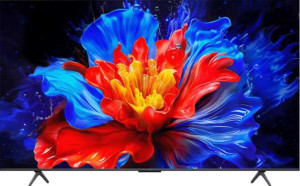
Both the TCL 50C7K and TCL 85P8K share the same 4K (3840 x 2160) resolution, 144Hz refresh rate, 10-bit color depth, and full HDR suite (HDR10, HDR10+, Dolby Vision, HLG), meaning neither has an edge in terms of content compatibility or motion handling. However, the similarities largely end there — the panel technology and brightness tell very different stories.
The most decisive differentiator is brightness: the 50C7K uses a Mini-LED backlight and delivers a striking 2000 nits of typical brightness, versus just 450 nits on the 85P8K's standard LED-backlit panel. In practice, this means the 50C7K can render HDR highlights with dramatically more punch and remain clearly visible in bright, sunlit rooms, while the 85P8K's output will appear comparatively dim and washed-out under the same conditions. Pixel density compounds this gap: at 89 ppi on a 49.5″ screen versus 52 ppi on an 84.6″ panel, the 50C7K produces a noticeably sharper image at normal viewing distances. The 50C7K also supports the full AMD FreeSync Premium Pro stack, whereas the 85P8K offers only base-level AMD FreeSync — a meaningful gap for gamers who want variable refresh rate with HDR and low-framerate compensation.
The TCL 50C7K holds a clear display advantage in every performance-critical dimension: brightness, panel technology, sharpness, and gaming sync capabilities. The 85P8K's sole practical edge is its substantially larger screen, which may matter for living-room viewing distances where pixel density differences become less perceptible — but buyers prioritizing picture quality and HDR impact will find the 50C7K decisively superior on paper.