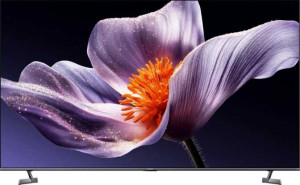
TCL 55C7K 55"
Xiaomi TV S Pro Mini LED 2026 55"

TCL 55C7K 55" Xiaomi TV S Pro Mini LED 2026 55"

Overview

Welcome to our in-depth specification comparison between the TCL 55C7K 55″ and the Xiaomi TV S Pro Mini LED 2026 55″. Both 55-inch Mini-LED TVs share a strong foundation — 4K resolution, 144Hz refresh rate, and a rich feature set — yet they diverge in meaningful ways across brightness output, connectivity options, audio hardware, and physical design. Read on to see how these two displays stack up across every key specification category.

Common Features

  • Both TVs have a 4K (UHD) display resolution of 3840 x 2160 px.
  • Both TVs use a QLED, LED-backlit, LCD, Mini-LED display type.
  • Both TVs support 1070 million display colors at 10-bit depth.
  • Both TVs have a 144Hz refresh rate.
  • HDR10 support is available on both products.
  • HDR10+ support is available on both products.
  • Both TVs include Bluetooth connectivity.
  • Both TVs have HDMI 2.1 ports.
  • Both TVs support Wi-Fi 4 (802.11n), Wi-Fi 5 (802.11ac), and Wi-Fi 6 (802.11ax).
  • Both TVs include one RJ45 port.
  • Miracast support is available on both products.
  • Both TVs have a 3.5mm audio jack socket.
  • Neither TV has an external memory slot.
  • Dolby Digital support is available on both products.
  • Dolby Digital Plus support is available on both products.
  • Digital Out support is available on both products.
  • Both TVs have stereo speakers with Dolby Atmos and Dolby Audio.
  • SRS TheaterSound HD is not available on either product.
  • Dolby Virtual support is not available on either product.
  • Both TVs support VESA mounting.
  • AirPlay support is available on both products.
  • Both TVs have a built-in smart TV platform compatible with Google Assistant.
  • Neither TV works with Alexa or Siri/Apple HomeKit.
  • Both TVs support remote smartphone control but do not have a rechargeable remote control.
  • USB recording support is available on both products.

Main Differences

  • Screen size is 54.6″ on TCL 55C7K 55″ and 55″ on Xiaomi TV S Pro Mini LED 2026 55″.
  • Pixel density is 81 ppi on TCL 55C7K 55″ and 80 ppi on Xiaomi TV S Pro Mini LED 2026 55″.
  • Typical brightness is 2600 nits on TCL 55C7K 55″ and 1700 nits on Xiaomi TV S Pro Mini LED 2026 55″.
  • HDMI port count is 4 on TCL 55C7K 55″ and 3 on Xiaomi TV S Pro Mini LED 2026 55″.
  • Bluetooth version is 5.4 on TCL 55C7K 55″ and 5.2 on Xiaomi TV S Pro Mini LED 2026 55″.
  • USB port count is 3 on TCL 55C7K 55″ and 2 on Xiaomi TV S Pro Mini LED 2026 55″.
  • A built-in subwoofer is present on TCL 55C7K 55″ but not available on Xiaomi TV S Pro Mini LED 2026 55″.
  • Width is 1226 mm on TCL 55C7K 55″ and 1225 mm on Xiaomi TV S Pro Mini LED 2026 55″.
  • Weight is 14500 g on TCL 55C7K 55″ and 12900 g on Xiaomi TV S Pro Mini LED 2026 55″.
  • Thickness is 55.9 mm on TCL 55C7K 55″ and 71 mm on Xiaomi TV S Pro Mini LED 2026 55″.
  • Height is 710 mm on TCL 55C7K 55″ and 709 mm on Xiaomi TV S Pro Mini LED 2026 55″.
  • Volume is 48658.714 cm³ on TCL 55C7K 55″ and 61665.275 cm³ on Xiaomi TV S Pro Mini LED 2026 55″.
  • Maximum operating temperature is 35 °C on TCL 55C7K 55″ and 40 °C on Xiaomi TV S Pro Mini LED 2026 55″.
  • Minimum operating temperature is 5 °C on TCL 55C7K 55″ and 0 °C on Xiaomi TV S Pro Mini LED 2026 55″.
  • Operating power consumption is 76W on TCL 55C7K 55″ and 230W on Xiaomi TV S Pro Mini LED 2026 55″.
Specs Comparison
TCL 55C7K 55"

TCL 55C7K 55"

Xiaomi TV S Pro Mini LED 2026 55"

Xiaomi TV S Pro Mini LED 2026 55"

Display:
display resolution 4K (UHD) 4K (UHD)
Display type QLED, LED-backlit, LCD, Mini-LED QLED, LED-backlit, LCD, Mini-LED
screen size 54.6" 55"
resolution 3840 x 2160 px 3840 x 2160 px
pixel density 81 ppi 80 ppi
display colors 1070 million 1070 million
bit depth 10-bit 10-bit
brightness (typical) 2600 nits 1700 nits
refresh rate 144Hz 144Hz
supports HDR10
supports HDR10+
supports Dolby Vision
supports HLG
has anti-reflection coating
has an ambient light sensor
maximum horizontal viewing angle 178º 178º
maximum vertical viewing angle 178º 178º

Both the TCL 55C7K and the Xiaomi TV S Pro Mini LED 2026 share the same fundamental display architecture: a 4K (3840 x 2160) QLED Mini-LED LCD panel with a 144Hz refresh rate, 10-bit color depth, and support for 1070 million colors. Their HDR compatibility is also identical, covering HDR10, HDR10+, Dolby Vision, and HLG — meaning neither has an edge in format versatility. Viewing angles (178º both axes), anti-reflection coating, and ambient light sensor are likewise matched across the board.

The one specification where these two televisions diverge meaningfully is peak brightness. The TCL 55C7K is rated at 2600 nits typical brightness, versus 1700 nits on the Xiaomi. That 900-nit gap is not cosmetic — in a bright living room or when playing HDR content with specular highlights, higher nits translate directly into more punch, better tone mapping headroom, and more vivid HDR performance. The TCL's advantage here is substantial and will be perceptible in real-world viewing conditions, particularly with HDR material.

Overall, the TCL 55C7K holds a clear edge in this group purely on the strength of its significantly higher brightness rating. All other display characteristics are effectively equivalent between the two models, so for users prioritizing HDR impact and performance in well-lit environments, the TCL is the stronger choice based on the available data.

Connectivity:
Has Bluetooth
HDMI version HDMI 2.1 HDMI 2.1
HDMI ports 4 3
supports Wi-Fi
Wi-Fi version Wi-Fi 4 (802.11n), Wi-Fi 5 (802.11ac), Wi-Fi 6 (802.11ax) Wi-Fi 4 (802.11n), Wi-Fi 5 (802.11ac), Wi-Fi 6 (802.11ax)
Bluetooth version 5.4 5.2
USB ports 3 2
RJ45 ports 1 1
supports Miracast
has a socket for a 3.5 mm audio jack
has an external memory slot
has a VGA connector
DVB standards DVB-T, DVB-T2, DVB-C, DVB-S, DVB-S2 DVB-T, DVB-T2, DVB-C, DVB-S, DVB-S2
has a DVI connector

At the protocol level, both TVs are well-matched: HDMI 2.1 across all ports, Wi-Fi 6 (802.11ax), a wired RJ45 port, Miracast, and identical DVB tuner coverage. These shared foundations mean either TV is equally capable of handling 4K/120fps gaming signals, fast wireless networks, and a full range of broadcast standards.

Where the TCL 55C7K pulls ahead is in raw port count and wireless precision. It offers 4 HDMI ports versus 3 on the Xiaomi, and 3 USB ports versus 2 — practically relevant for users running a full home theater setup with a console, streaming stick, soundbar, and hard drive simultaneously. On the wireless side, the TCL's Bluetooth 5.4 versus the Xiaomi's 5.2 brings minor improvements in connection stability and coexistence with other 2.4GHz devices, though the real-world difference is modest for typical TV use cases like connecting a remote or headphones.

The TCL 55C7K has a tangible connectivity edge, primarily due to its extra HDMI and USB ports — a practical advantage for cable-heavy setups. The Bluetooth and protocol differences are secondary. The Xiaomi's port complement is still adequate for most users, but anyone planning to connect multiple devices simultaneously will find the TCL more accommodating.

Audio:
supports Dolby Digital
supports Digital Out
supports Dolby Digital Plus
has SRS TheaterSound HD
has stereo speakers
has Dolby Atmos
has Dolby Audio
supports Dolby Virtual
has a subwoofer
has DTS:X
HDMI ARC / eARC HDMI ARC, HDMI eARC HDMI ARC, HDMI eARC

For the most part, these two TVs are acoustically identical on paper. Both support the same codec lineup — Dolby Atmos, Dolby Audio, Dolby Digital Plus, and DTS:X — and both feature stereo speakers with HDMI ARC and eARC outputs for external audio systems. Users routing sound through a soundbar or AV receiver will find no meaningful difference between the two.

The single differentiator in this group is the TCL 55C7K's inclusion of a built-in subwoofer, which the Xiaomi lacks. In practice, a dedicated subwoofer handles low-frequency reproduction — bass in music, explosions and rumble in films — that stereo drivers alone typically struggle to convey. This matters most for users who plan to rely on the TV's internal speakers rather than an external audio setup.

For standalone speaker performance, the TCL 55C7K has a clear advantage thanks to its subwoofer. However, for anyone already planning to pair their TV with a soundbar or home theater system via eARC, this distinction largely disappears — and both TVs are equally well-equipped for that use case.

Design:
width 1226 mm 1225 mm
weight 14500 g 12900 g
thickness 55.9 mm 71 mm
height 710 mm 709 mm
volume 48658.714 cm³ 61665.275 cm³
Supports VESA mount
maximum operating temperature 35 °C 40 °C
lowest potential operating temperature 5 °C 0 °C

Footprint-wise, these two TVs are virtually interchangeable — width and height differ by just 1mm — so either will fit the same shelf or wall space without compromise. Both also support VESA mounting, making installation flexibility a non-issue for either choice.

The more nuanced story is the trade-off between thickness and weight. The TCL 55C7K is considerably slimmer at 55.9 mm versus the Xiaomi's 71 mm, giving it a notably lower profile when wall-mounted or placed on a stand — a meaningful aesthetic difference in minimalist setups. The Xiaomi, however, is 1600 g lighter at 12,900 g compared to the TCL's 14,500 g, which eases handling during installation, particularly for a single-person wall mount. The TCL's smaller overall volume (roughly 21% less than the Xiaomi's) reflects its slimmer chassis design.

On operating temperature range, the Xiaomi has a slight edge — rated down to 0 °C and up to 40 °C, versus 5 °C–35 °C for the TCL — which could matter in rooms that get unusually cold or warm, such as sunrooms or garages. Overall, this group has no single dominant winner: the TCL 55C7K suits those prioritizing a slimmer profile, while the Xiaomi is easier to physically handle and tolerates a wider temperature range.

Features:
release date March 2025 September 2025
has AirPlay
has built-in smart TV
compatible with Google Assistant
works with Alexa
works with Siri/Apple HomeKit
supports a remote smartphone
has a rechargeable remote control
supports USB recording
operating power consumption 76W 230W
standby power consumption 0.5W 0.5W
has a search browser
has a sleep timer
has a child lock
has voice commands

From a smart features standpoint, these two televisions are essentially identical. Both run a built-in smart TV platform with Google Assistant and AirPlay support, smartphone remote control, USB recording, voice commands, and the same set of convenience features like sleep timer and child lock. Neither works with Alexa or Apple HomeKit, so ecosystem compatibility is a wash for both.

The one figure that stands out sharply is operating power consumption. The TCL 55C7K draws just 76W under typical use, while the Xiaomi TV S Pro Mini LED 2026 draws a striking 230W — three times as much. Over the course of a year of regular viewing (say, 6 hours daily), that gap translates to a substantial difference in electricity costs. Standby consumption is identical at 0.5W for both, so the disparity is purely in active use.

This group has a clear winner on one axis: the TCL 55C7K is dramatically more energy-efficient, which matters for running costs over the TV's lifetime. Given that every smart feature in this group is otherwise matched between the two, power consumption is the decisive differentiator here — and the TCL's advantage is hard to ignore.

Comparison Summary & Verdict

After a thorough side-by-side review, both TVs prove to be compelling Mini-LED performers, but each has a distinct profile. The TCL 55C7K 55″ stands out with a significantly higher 2600-nit peak brightness, a built-in subwoofer, more HDMI and USB ports, a slimmer 55.9 mm chassis, and a far more efficient 76W power consumption — making it the stronger all-round package for enthusiasts who want vivid HDR performance and richer connectivity without a high energy bill. The Xiaomi TV S Pro Mini LED 2026 55″, on the other hand, is lighter at 12900 g, tolerates a wider operating temperature range down to 0 °C, and has a smaller physical footprint in terms of volume, which may appeal to users prioritising a lighter, more compact installation. Choose the TCL if brightness, audio depth, and port variety are priorities; choose the Xiaomi if a lighter build and broader thermal tolerance better suit your environment.

TCL 55C7K 55
Buy TCL 55C7K 55" if...

Buy the TCL 55C7K 55″ if you want superior brightness at 2600 nits, a built-in subwoofer for richer audio, more HDMI and USB ports, and a much lower power consumption of just 76W.

Xiaomi TV S Pro Mini LED 2026 55
Buy Xiaomi TV S Pro Mini LED 2026 55" if...

Buy the Xiaomi TV S Pro Mini LED 2026 55″ if you prioritise a lighter set at 12900 g and need a TV that operates reliably in cooler environments down to 0 °C.