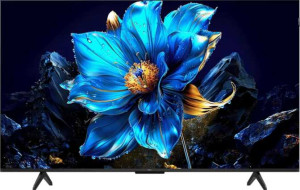
TCL 55P7K 55"
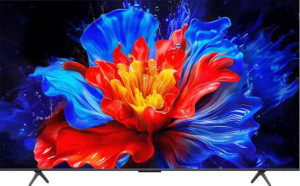
TCL 55P8K 55"

TCL 55P7K 55" TCL 55P8K 55"

Overview

Welcome to our in-depth specification comparison between the TCL 55P7K 55″ and the TCL 55P8K 55″. Both televisions share the same QLED panel, 4K resolution, and a rich feature set, yet they diverge in meaningful ways. Key battlegrounds include the display refresh rate, built-in audio hardware, and connectivity options — differences that could significantly influence which model suits your living room best.

Common Features

  • Both TVs have a 4K (UHD) display resolution.
  • Both TVs use a QLED, LED-backlit, LCD display type.
  • Both TVs have a screen size of 54.6″.
  • Both TVs have a resolution of 3840 x 2160 px.
  • Both TVs have a pixel density of 81 ppi.
  • Both TVs support 1070 million display colors.
  • Both TVs have a 10-bit color bit depth.
  • Both TVs have a typical brightness of 350 nits.
  • Both TVs include Bluetooth 5.4 connectivity.
  • Both TVs use HDMI 2.1 ports.
  • Both TVs support Wi-Fi 4 (802.11n) and Wi-Fi 5 (802.11ac).
  • Both TVs include one RJ45 port.
  • Both TVs support Miracast screen mirroring.
  • Both TVs have a 3.5 mm audio jack.
  • Both TVs support Digital Audio Out.
  • Both TVs include stereo speakers.
  • Both TVs support Dolby Atmos.
  • Both TVs support DTS:X audio.
  • SRS TheaterSound HD is not available on either TV.
  • Dolby Virtual support is not available on either TV.
  • Both TVs share the same physical dimensions: 1224 mm wide, 708 mm tall, and 69.5 mm thick.
  • Both TVs support VESA mounting.
  • Both TVs have an operating temperature range of 5 °C to 35 °C.
  • Both TVs have a standby power consumption of 0.5W.
  • Both TVs include AirPlay support.
  • Both TVs have a built-in smart TV platform.
  • Both TVs are compatible with Google Assistant.
  • Siri and Apple HomeKit support is not available on either TV.
  • Both TVs support smartphone remote control.
  • Neither TV includes a rechargeable remote control.
  • Both TVs include a built-in search browser.

Main Differences

  • The refresh rate is 60Hz on the TCL 55P7K 55″ and 144Hz on the TCL 55P8K 55″.
  • The TCL 55P7K 55″ has 3 HDMI ports, while the TCL 55P8K 55″ has 4 HDMI ports.
  • The TCL 55P7K 55″ has 2 USB ports, while the TCL 55P8K 55″ has 1 USB port.
  • A built-in subwoofer is present on the TCL 55P8K 55″ but not available on the TCL 55P7K 55″.
  • USB recording is supported on the TCL 55P8K 55″ but not available on the TCL 55P7K 55″.
  • The weight is 10700 g on the TCL 55P7K 55″ and 11300 g on the TCL 55P8K 55″.
Specs Comparison
TCL 55P7K 55"

TCL 55P7K 55"

TCL 55P8K 55"

TCL 55P8K 55"

Display:
display resolution 4K (UHD) 4K (UHD)
Display type QLED, LED-backlit, LCD QLED, LED-backlit, LCD
screen size 54.6" 54.6"
resolution 3840 x 2160 px 3840 x 2160 px
pixel density 81 ppi 81 ppi
display colors 1070 million 1070 million
bit depth 10-bit 10-bit
brightness (typical) 350 nits 350 nits
refresh rate 60Hz 144Hz
supports HDR10
supports HDR10+
supports Dolby Vision
supports HLG
Adaptive synchronization AMD FreeSync AMD FreeSync
has anti-reflection coating
has an ambient light sensor
maximum horizontal viewing angle 178º 178º
maximum vertical viewing angle 178º 178º

The TCL 55P7K and TCL 55P8K share an identical display foundation: both are QLED LED-backlit LCD panels measuring 54.6″ at 3840 x 2160 (4K UHD) resolution, with the same 81 ppi pixel density, 10-bit color depth, 1.07 billion colors, and a typical brightness of 350 nits. HDR support is also identical across both — covering HDR10, HDR10+, Dolby Vision, and HLG — meaning neither has an advantage in content compatibility or color volume on paper.

The one meaningful differentiator is the refresh rate. The P7K is limited to 60Hz, while the P8K steps up to 144Hz. In practice, this distinction matters most for fast-motion content and gaming: a 144Hz panel can render motion significantly more smoothly, reduces blur during action sequences, and unlocks higher frame-rate gaming when paired with a capable source. Both TVs support AMD FreeSync for variable refresh rate, but the P8K can take fuller advantage of it across a wider frame-rate range.

For everyday TV viewing — streaming, movies, standard broadcast — the two displays are effectively equivalent. However, if gaming performance or smooth high-frame-rate content is a priority, the P8K holds a clear edge solely due to its 144Hz refresh rate, which is the only spec separating these two otherwise identical panels.

Connectivity:
Has Bluetooth
HDMI version HDMI 2.1 HDMI 2.1
HDMI ports 3 4
supports Wi-Fi
Wi-Fi version Wi-Fi 4 (802.11n), Wi-Fi 5 (802.11ac) Wi-Fi 4 (802.11n), Wi-Fi 5 (802.11ac)
Bluetooth version 5.4 5.4
USB ports 2 1
RJ45 ports 1 1
supports Miracast
has a socket for a 3.5 mm audio jack
has an external memory slot
has a VGA connector
DVB standards DVB-C, DVB-S, DVB-S2, DVB-T, DVB-T2 DVB-T, DVB-T2, DVB-C, DVB-S, DVB-S2
has a DVI connector

Wireless connectivity is a dead heat between the two: both the P7K and P8K offer Wi-Fi 5 (802.11ac), Bluetooth 5.4, Miracast screen mirroring, and a wired RJ45 Ethernet port. This means neither has an advantage in wireless range, stability, or casting capability — a capable and modern baseline either way.

Where the two diverge is in their wired port layout. The P8K gains an extra HDMI 2.1 port — four versus the P7K's three — which is a tangible benefit for users with multiple 4K or high-refresh-rate sources such as a gaming console, soundbar, streaming stick, and Blu-ray player all connected simultaneously. However, the P8K trades a USB port to get there, offering only 1 USB port compared to the P7K's 2. That reduction is a real-world inconvenience if you frequently use USB for media playback or peripheral connections.

The choice here comes down to your setup. The P8K has the edge for HDMI-heavy home theater configurations, while the P7K is more practical for users who rely on USB connectivity. Neither holds an across-the-board advantage in this category — it is a direct trade-off between one extra HDMI port and one fewer USB port.

Audio:
supports Digital Out
has SRS TheaterSound HD
has stereo speakers
has Dolby Atmos
supports Dolby Virtual
has a subwoofer
has DTS:X
HDMI ARC / eARC HDMI eARC, HDMI ARC HDMI ARC, HDMI eARC

On the audio format front, both TVs are equally capable: Dolby Atmos, DTS:X, Digital Out, stereo speakers, and HDMI eARC are present on both the P7K and P8K. eARC in particular is worth noting — it supports high-bandwidth audio formats over HDMI, making both TVs well-suited for passthrough to a quality soundbar or AV receiver without any compromise in audio fidelity.

The single hardware differentiator in this category is the built-in subwoofer on the P8K, which the P7K lacks. A dedicated subwoofer handles low-frequency reproduction independently from the main drivers, meaning the P8K can deliver more pronounced bass — useful for action films, music, and games — without straining its full-range speakers. On a TV without one, low-end impact is typically limited by the physical constraints of the cabinet.

For users who plan to pair either TV with an external soundbar or audio system, this difference is largely irrelevant. But for those relying primarily on the TV's built-in audio, the P8K holds a clear advantage thanks to its subwoofer, which gives it a more complete out-of-the-box sound profile than the P7K.

Design:
width 1224 mm 1224 mm
weight 10700 g 11300 g
thickness 69.5 mm 69.5 mm
height 708 mm 708 mm
volume 60228.144 cm³ 60228.144 cm³
Supports VESA mount
maximum operating temperature 35 °C 35 °C
lowest potential operating temperature 5 °C 5 °C

From a design standpoint, these two TVs are virtually indistinguishable. Width, height, thickness, and overall volume are identical across the P7K and P8K, and both support VESA mounting with the same operating temperature range. For installation purposes — whether wall-mounting or placing on a stand — the two can be treated as the same physical footprint.

The only measurable difference is weight: the P8K comes in at 11,300 g versus the P7K's 10,700 g, a gap of 600 g. That modest difference is likely attributable to the P8K's additional subwoofer hardware noted in its audio specs. In practical terms, 600 g will not affect wall-mount bracket selection or single-person installation in any meaningful way.

This category is effectively a tie. The dimensional and mounting specs are identical, and the marginal weight difference carries no real-world consequence for the vast majority of installation scenarios.

Features:
release date March 2025 March 2025
has AirPlay
has built-in smart TV
compatible with Google Assistant
works with Siri/Apple HomeKit
supports a remote smartphone
has a rechargeable remote control
supports USB recording
standby power consumption 0.5W 0.5W
has a search browser
has a sleep timer
has a child lock
has voice commands

Smart platform capabilities are identical between the two: both the P7K and P8K run a built-in smart TV system with Google Assistant, AirPlay, smartphone remote support, voice commands, and a web browser. Neither supports Apple HomeKit or Siri, so iOS-centric smart home users should note that limitation applies equally to both models.

The sole functional difference in this category is USB recording, which is available on the P8K but absent on the P7K. This feature allows users to connect a USB storage device and record live broadcast content directly — a genuinely useful capability for households that watch scheduled TV programming and want a simple, no-subscription alternative to a DVR or external recorder.

For pure streaming households, this distinction is largely irrelevant. But for anyone who watches live broadcast or cable TV and values the ability to record, the P8K has a clear functional advantage here. It is a niche but meaningful feature that the P7K simply does not offer.

Comparison Summary & Verdict

After reviewing all specifications, both TVs deliver an identical QLED 4K picture with 10-bit color and 350 nits of brightness, making either a solid choice for everyday viewing. However, the distinctions are clear. The TCL 55P8K 55″ stands out with its 144Hz refresh rate, built-in subwoofer, 4 HDMI ports, and USB recording support, making it the stronger pick for gamers, cinephiles, and users who want a more complete all-in-one entertainment hub. The TCL 55P7K 55″, on the other hand, offers 2 USB ports versus just one on the P8K, is slightly lighter at 10700g, and still covers all core smart TV and audio features. It represents a practical, capable option for viewers who prioritize connectivity flexibility and simplicity over premium motion handling.

TCL 55P7K 55
Buy TCL 55P7K 55" if...

Buy the TCL 55P7K 55″ if you need more USB ports for connecting multiple devices and prefer a slightly lighter set without paying for premium motion or built-in subwoofer features.

TCL 55P8K 55
Buy TCL 55P8K 55" if...

Buy the TCL 55P8K 55″ if you want a smoother 144Hz experience for gaming or fast-action content, a built-in subwoofer for richer audio, more HDMI ports, and the convenience of USB recording.