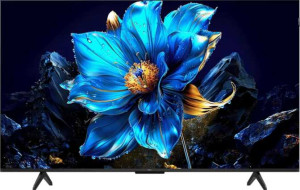
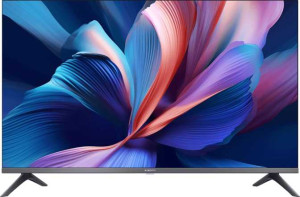
TCL 55P7K 55"
Xiaomi TV A Pro 2026 55"

TCL 55P7K 55" Xiaomi TV A Pro 2026 55"

Overview

When choosing between the TCL 55P7K 55″ and the Xiaomi TV A Pro 2026 55″, you are looking at two capable QLED 4K smart TVs that share a strong common foundation. Yet beneath the surface, key differences emerge around Dolby Vision and Dolby Atmos support, smart home ecosystem compatibility, physical design, and a handful of practical usability features that could meaningfully influence your decision depending on your home setup and viewing habits.

Common Features

  • Both TVs have a 4K UHD display resolution of 3840 x 2160 px.
  • Both TVs use a QLED, LED-backlit, LCD display type.
  • Both TVs display 1.07 billion colors with a 10-bit color depth.
  • Both TVs have a 60Hz refresh rate.
  • HDR10 support is available on both products.
  • HDR10+ support is available on both products.
  • Both TVs include Bluetooth connectivity.
  • Both TVs feature HDMI 2.1 ports, with 3 HDMI ports each.
  • Both TVs support Wi-Fi 4 (802.11n) and Wi-Fi 5 (802.11ac).
  • Both TVs include 1 RJ45 (Ethernet) port.
  • Miracast support is available on both products.
  • Both TVs have a 3.5mm audio jack socket.
  • Both TVs deliver 2 x 10W of audio output power.
  • Digital audio output is available on both products.
  • Stereo speakers are present on both products.
  • DTS:X support is available on both products.
  • Both TVs support VESA mounting.
  • Chromecast is built into both products.
  • AirPlay support is available on both products.
  • Google Assistant compatibility is present on both products.
  • Both TVs have a standby power consumption of 0.5W.

Main Differences

  • Screen size is 54.6″ on the TCL 55P7K 55″ and 55″ on the Xiaomi TV A Pro 2026 55″.
  • Pixel density is 81 ppi on the TCL 55P7K 55″ and 80 ppi on the Xiaomi TV A Pro 2026 55″.
  • Dolby Vision support is present on the TCL 55P7K 55″ but not available on the Xiaomi TV A Pro 2026 55″.
  • Bluetooth version is 5.4 on the TCL 55P7K 55″ and 5.0 on the Xiaomi TV A Pro 2026 55″.
  • USB port count is 2 on the TCL 55P7K 55″ and 1 on the Xiaomi TV A Pro 2026 55″.
  • Dolby Atmos support is present on the TCL 55P7K 55″ but not available on the Xiaomi TV A Pro 2026 55″.
  • Width is 1224 mm on the TCL 55P7K 55″ and 1226 mm on the Xiaomi TV A Pro 2026 55″.
  • Weight is 10700 g on the TCL 55P7K 55″ and 9200 g on the Xiaomi TV A Pro 2026 55″.
  • Thickness is 69.5 mm on the TCL 55P7K 55″ and 76 mm on the Xiaomi TV A Pro 2026 55″.
  • Height is 708 mm on the TCL 55P7K 55″ and 711 mm on the Xiaomi TV A Pro 2026 55″.
  • Volume is 60228.144 cm³ on the TCL 55P7K 55″ and 66248.136 cm³ on the Xiaomi TV A Pro 2026 55″.
  • Maximum operating temperature is 35°C on the TCL 55P7K 55″ and 40°C on the Xiaomi TV A Pro 2026 55″.
  • Minimum operating temperature is 5°C on the TCL 55P7K 55″ and 0°C on the Xiaomi TV A Pro 2026 55″.
  • Alexa compatibility is present on the TCL 55P7K 55″ but not available on the Xiaomi TV A Pro 2026 55″.
  • USB recording support is available on the Xiaomi TV A Pro 2026 55″ but not present on the TCL 55P7K 55″.
Specs Comparison
TCL 55P7K 55"

TCL 55P7K 55"

Xiaomi TV A Pro 2026 55"

Xiaomi TV A Pro 2026 55"

Display:
display resolution 4K (UHD) 4K (UHD)
Display type QLED, LED-backlit, LCD QLED, LED-backlit, LCD
screen size 54.6" 55"
resolution 3840 x 2160 px 3840 x 2160 px
pixel density 81 ppi 80 ppi
display colors 1070 million 1070 million
bit depth 10-bit 10-bit
refresh rate 60Hz 60Hz
supports HDR10
supports HDR10+
supports Dolby Vision
supports HLG
has anti-reflection coating
has an ambient light sensor
maximum horizontal viewing angle 178º 178º
maximum vertical viewing angle 178º 178º

Both the TCL 55P7K and the Xiaomi TV A Pro 2026 55″ share the same core display foundation: QLED, LED-backlit LCD panels with a 4K (3840 x 2160) resolution, 10-bit color depth, 1.07 billion colors, a 60Hz refresh rate, and identical 178º viewing angles in both directions. At this price and size tier, these are solid, expected specifications — the near-identical 81 ppi vs 80 ppi pixel density difference is imperceptible in practice and should not factor into any decision.

The one meaningful differentiator is Dolby Vision support: the TCL has it, the Xiaomi does not. While both TVs handle HDR10, HDR10+, and HLG — covering the vast majority of streaming and broadcast HDR content — Dolby Vision is the premium HDR format used extensively by Apple TV+, Disney+, and Netflix for their flagship titles. It enables dynamic, scene-by-scene tone mapping that can visibly improve highlight and shadow detail on compatible content. Its absence on the Xiaomi means those streams will fall back to HDR10, which uses static metadata and is generally considered a step down in precision.

For display quality, the TCL 55P7K has a clear edge over the Xiaomi TV A Pro 2026 solely due to its Dolby Vision compatibility. If you regularly consume content from Dolby Vision-heavy platforms, this is a tangible, real-world advantage. All other display specifications between these two TVs are effectively identical.

Connectivity:
Has Bluetooth
HDMI version HDMI 2.1 HDMI 2.1
HDMI ports 3 3
supports Wi-Fi
Wi-Fi version Wi-Fi 4 (802.11n), Wi-Fi 5 (802.11ac) Wi-Fi 4 (802.11n), Wi-Fi 5 (802.11ac)
Bluetooth version 5.4 5
USB ports 2 1
RJ45 ports 1 1
supports Miracast
has a socket for a 3.5 mm audio jack
has an external memory slot
has a VGA connector
DVB standards DVB-C, DVB-S, DVB-S2, DVB-T, DVB-T2 DVB-T, DVB-T2, DVB-C, DVB-S, DVB-S2
has a DVI connector

The shared connectivity backbone here is strong and identical: both TVs offer HDMI 2.1 across 3 ports, a wired RJ45 ethernet port, dual-band Wi-Fi up to Wi-Fi 5 (802.11ac), Miracast, a 3.5mm audio jack, and the same full suite of DVB tuner standards (T/T2, C, S/S2). For most users, this common ground covers all everyday connection needs reliably.

The differences, while not dramatic, do favor the TCL. It carries 2 USB ports versus the Xiaomi's single port — a practical advantage for anyone connecting a USB drive and a peripheral simultaneously without reaching for a hub. More notably, the TCL ships with Bluetooth 5.4 compared to the Xiaomi's Bluetooth 5.0. In real-world terms, 5.4 brings improved connection stability, lower latency, and better handling of multiple simultaneous Bluetooth devices — meaningful if you use wireless headphones, a soundbar, or a gamepad.

The TCL 55P7K has a modest but clear edge in connectivity. The extra USB port adds everyday convenience, and the newer Bluetooth version offers tangible benefits for wireless audio and accessory use. The Xiaomi is not poorly connected by any measure, but in a direct comparison, the TCL simply offers more flexibility.

Audio:
audio output power 2 x 10W 2 x 10W
supports Digital Out
has SRS TheaterSound HD
has stereo speakers
has Dolby Atmos
supports Dolby Virtual
has a subwoofer
has DTS:X
HDMI ARC / eARC HDMI eARC, HDMI ARC HDMI ARC, HDMI eARC

On paper, these two TVs are nearly audio twins: matched 2 x 10W stereo output, no subwoofer, Digital Out, and shared support for both DTS:X and HDMI eARC. At this power level, built-in speaker performance will be similar — adequate for casual viewing but unlikely to impress in a larger room. The eARC port on both is a welcome inclusion, as it enables full-bandwidth audio passthrough to a capable soundbar or AV receiver, future-proofing the setup for lossless formats.

The single but significant split is Dolby Atmos: the TCL supports it, the Xiaomi does not. Dolby Atmos is the dominant object-based surround format on streaming platforms like Netflix, Disney+, and Apple TV+, adding height and spatial dimensionality to the sound field. Even through the TV's built-in speakers, Atmos processing can produce a noticeably more expansive soundstage. Through an eARC-connected Atmos soundbar, the gap widens further — the TCL can pass a true Atmos signal while the Xiaomi cannot.

The TCL 55P7K holds a clear audio advantage, entirely on the strength of its Dolby Atmos support. For users who rely solely on built-in speakers the difference is real but moderate; for those pairing the TV with an Atmos-capable soundbar, it becomes a more consequential distinction.

Design:
width 1224 mm 1226 mm
weight 10700 g 9200 g
thickness 69.5 mm 76 mm
height 708 mm 711 mm
volume 60228.144 cm³ 66248.136 cm³
Supports VESA mount
maximum operating temperature 35 °C 40 °C
lowest potential operating temperature 5 °C 0 °C

Footprint-wise, these two TVs are virtually interchangeable — width and height differ by just a few millimeters, and both support VESA mounting. Where they diverge is in weight and depth. The TCL is notably heavier at 10,700 g versus the Xiaomi's 9,200 g, a difference of 1.5 kg that matters most during installation: wall-mounting the TCL demands closer attention to bracket load ratings, and solo mounting is less comfortable. The Xiaomi's lighter chassis is a genuine practical advantage at this stage.

The thickness story flips the other way. The TCL measures 69.5 mm deep compared to the Xiaomi's 76 mm, making the TCL the slimmer unit despite its greater mass. In wall-mount scenarios, a shallower profile means the TV sits closer to the wall — a meaningful aesthetic difference in minimalist setups. Combined, the TCL's smaller overall volume reflects a denser but more compact chassis design.

On operating temperature range, the Xiaomi TV A Pro 2026 has a wider tolerance — rated from 0 °C to 40 °C versus the TCL's 5 °C to 35 °C — which could matter in garages, sunrooms, or poorly climate-controlled spaces. Overall, neither TV has a sweeping design advantage: the Xiaomi wins on weight, the TCL wins on slimness, and the right choice depends on whether ease of installation or wall-mount profile matters more to the buyer.

Features:
release date March 2025 April 2025
has Chromecast built-in
has AirPlay
has built-in smart TV
compatible with Google Assistant
works with Alexa
works with Siri/Apple HomeKit
supports a remote smartphone
has a rechargeable remote control
supports USB recording
standby power consumption 0.5W 0.5W
has a search browser
has a sleep timer
has a child lock
has voice commands

Both TVs arrive with a well-rounded smart feature set: built-in Chromecast, AirPlay, Google Assistant, voice commands, smartphone remote support, and a matching 0.5W standby consumption. For the majority of users, this shared foundation covers all the bases — app casting, voice search, and cross-device control are all present on either set.

The two meaningful divergences cut in opposite directions. The TCL adds Amazon Alexa compatibility, which is a real convenience advantage in households already built around Echo devices or a broader Alexa smart home ecosystem — it means direct, native control without workarounds. The Xiaomi counters with USB recording, the ability to record live broadcast content directly to a connected USB drive. For cord-cutters or users who rely on the built-in DVB tuner, this is a tangible, practical feature the TCL simply cannot match.

This group is effectively a tie that depends on use case. If your home runs on Alexa, the TCL has the edge. If you want DVR-style recording without an external device, the Xiaomi wins. Neither advantage is universal — buyers should weight whichever feature aligns with their actual habits.

Comparison Summary & Verdict

Both the TCL 55P7K 55″ and the Xiaomi TV A Pro 2026 55″ deliver a solid 4K QLED experience with shared strengths including HDR10+ support, HDMI 2.1, DTS:X audio, and a full smart TV platform with Chromecast and AirPlay. However, their differences point each model toward a distinct audience. The TCL 55P7K 55″ stands out for home theater enthusiasts with its Dolby Vision and Dolby Atmos support, Alexa compatibility, an extra USB port, and a slimmer profile. The Xiaomi TV A Pro 2026 55″, on the other hand, appeals to practical users who value its lighter build at 9200 g, a wider operating temperature range down to 0°C, and the convenience of USB recording. Choose the TCL for a richer premium audio-visual ecosystem; choose the Xiaomi for a lighter, more flexible everyday setup.

TCL 55P7K 55
Buy TCL 55P7K 55" if...

Buy the TCL 55P7K 55″ if you want a more immersive home cinema experience with Dolby Vision, Dolby Atmos, and Alexa support, and appreciate having an extra USB port.

Xiaomi TV A Pro 2026 55
Buy Xiaomi TV A Pro 2026 55" if...

Buy the Xiaomi TV A Pro 2026 55″ if you prefer a lighter TV with USB recording capability and a wider operating temperature range for more flexible placement.