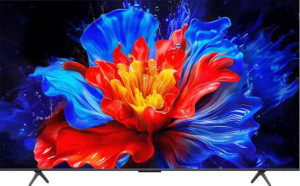
TCL 55P8K 55"
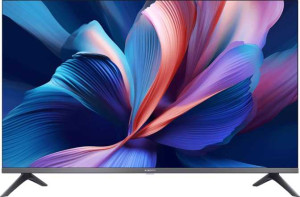
Xiaomi TV A Pro 2026 43"

TCL 55P8K 55" Xiaomi TV A Pro 2026 43"

Overview

Welcome to our detailed specification face-off between the TCL 55P8K 55″ and the Xiaomi TV A Pro 2026 43″. Both TVs share a solid foundation of 4K QLED display technology, HDR10+ support, and smart TV features, yet they take notably different paths when it comes to refresh rate and display performance, audio capabilities, and physical footprint. Read on to see exactly how these two sets stack up across every key specification.

Common Features

  • Both TVs have a 4K (UHD) resolution of 3840 x 2160 px.
  • Both TVs use a QLED, LED-backlit, LCD display type.
  • Both TVs support 1070 million display colors at 10-bit depth.
  • HDR10 support is available on both products.
  • HDR10+ support is available on both products.
  • HLG support is available on both products.
  • Both TVs include Bluetooth connectivity.
  • Both TVs use HDMI 2.1 ports.
  • Both TVs support Wi-Fi 4 (802.11n) and Wi-Fi 5 (802.11ac).
  • Both TVs have 1 USB port and 1 RJ45 port.
  • Miracast support is available on both products.
  • Both TVs include a 3.5 mm audio jack socket.
  • Digital Out support is available on both products.
  • SRS TheaterSound HD is not available on either product.
  • Both TVs feature stereo speakers and Dolby Audio.
  • Dolby Virtual support is not available on either product.
  • DTS:X support is available on both products.
  • Both TVs include HDMI ARC and HDMI eARC.
  • Both TVs support VESA mounting.
  • AirPlay, built-in smart TV, Google Assistant compatibility, USB recording, and 0.5W standby power consumption are shared across both products.

Main Differences

  • Screen size is 54.6″ on TCL 55P8K 55″ and 43″ on Xiaomi TV A Pro 2026 43″.
  • Pixel density is 81 ppi on TCL 55P8K 55″ and 102 ppi on Xiaomi TV A Pro 2026 43″.
  • Refresh rate is 144Hz on TCL 55P8K 55″ and 60Hz on Xiaomi TV A Pro 2026 43″.
  • Dolby Vision support is present on TCL 55P8K 55″ but not available on Xiaomi TV A Pro 2026 43″.
  • The number of HDMI ports is 4 on TCL 55P8K 55″ and 3 on Xiaomi TV A Pro 2026 43″.
  • Bluetooth version is 5.4 on TCL 55P8K 55″ and 5.0 on Xiaomi TV A Pro 2026 43″.
  • Dolby Atmos support is present on TCL 55P8K 55″ but not available on Xiaomi TV A Pro 2026 43″.
  • A built-in subwoofer is present on TCL 55P8K 55″ but not available on Xiaomi TV A Pro 2026 43″.
  • Width is 1224 mm on TCL 55P8K 55″ and 957 mm on Xiaomi TV A Pro 2026 43″.
  • Height is 708 mm on TCL 55P8K 55″ and 563 mm on Xiaomi TV A Pro 2026 43″.
  • Thickness is 69.5 mm on TCL 55P8K 55″ and 72 mm on Xiaomi TV A Pro 2026 43″.
  • Weight is 11300 g on TCL 55P8K 55″ and 6000 g on Xiaomi TV A Pro 2026 43″.
  • Volume is 60228.144 cm³ on TCL 55P8K 55″ and 38792.952 cm³ on Xiaomi TV A Pro 2026 43″.
  • Maximum operating temperature is 35 °C on TCL 55P8K 55″ and 40 °C on Xiaomi TV A Pro 2026 43″.
  • Lowest potential operating temperature is 5 °C on TCL 55P8K 55″ and 0 °C on Xiaomi TV A Pro 2026 43″.
Specs Comparison
TCL 55P8K 55"

TCL 55P8K 55"

Xiaomi TV A Pro 2026 43"

Xiaomi TV A Pro 2026 43"

Display:
display resolution 4K (UHD) 4K (UHD)
Display type QLED, LED-backlit, LCD QLED, LED-backlit, LCD
screen size 54.6" 43"
resolution 3840 x 2160 px 3840 x 2160 px
pixel density 81 ppi 102 ppi
display colors 1070 million 1070 million
bit depth 10-bit 10-bit
refresh rate 144Hz 60Hz
supports HDR10
supports HDR10+
supports Dolby Vision
supports HLG
has anti-reflection coating
has an ambient light sensor
maximum horizontal viewing angle 178º 178º
maximum vertical viewing angle 178º 178º

Both the TCL 55P8K and the Xiaomi TV A Pro 2026 43″ share the same panel technology — QLED, LED-backlit LCD — and identical resolution at 3840 x 2160 px (4K UHD), along with matching 10-bit color depth and 1.07 billion displayable colors. Their viewing angles (178° on both axes) and the presence of anti-reflection coating and an ambient light sensor are also identical, meaning neither product holds an edge on these shared fundamentals.

The most impactful differentiator is the refresh rate: the TCL runs at 144Hz versus the Xiaomi's 60Hz. In practice, this means the TCL handles fast-motion content — sports, action films, and especially gaming — with significantly less blur and smoother transitions. For a living-room TV used primarily for streaming standard content, 60Hz is adequate; but for gaming or high-frame-rate sources, 144Hz is a meaningful real-world upgrade. On HDR support, the TCL adds Dolby Vision on top of the HDR10, HDR10+, and HLG formats both TVs share — Dolby Vision is the most widely adopted premium HDR format on streaming platforms like Netflix and Apple TV+, so its absence on the Xiaomi is a notable gap for HDR enthusiasts.

The size difference (54.6″ vs 43″) is a use-case consideration rather than a quality judgment, but it does explain why the Xiaomi's pixel density is higher at 102 ppi versus the TCL's 81 ppi — the same resolution spread across a smaller panel yields a sharper image at close viewing distances. Overall, the TCL 55P8K holds a clear display advantage for performance-oriented users thanks to its superior refresh rate and Dolby Vision support, while the Xiaomi suits buyers who prioritize a compact form factor over motion handling and HDR breadth.

Connectivity:
Has Bluetooth
HDMI version HDMI 2.1 HDMI 2.1
HDMI ports 4 3
supports Wi-Fi
Wi-Fi version Wi-Fi 4 (802.11n), Wi-Fi 5 (802.11ac) Wi-Fi 4 (802.11n), Wi-Fi 5 (802.11ac)
Bluetooth version 5.4 5
USB ports 1 1
RJ45 ports 1 1
supports Miracast
has a socket for a 3.5 mm audio jack
has an external memory slot
has a VGA connector
DVB standards DVB-T, DVB-T2, DVB-C, DVB-S, DVB-S2 DVB-T, DVB-T2, DVB-C, DVB-S, DVB-S2
has a DVI connector

At a foundational level, both TVs cover the same connectivity bases: HDMI 2.1, matching Wi-Fi support (Wi-Fi 4 and Wi-Fi 5), a single USB port, an Ethernet port, Miracast, and a 3.5mm audio jack. HDMI 2.1 on both is worth noting positively — it supports higher bandwidth for 4K@120Hz signals from modern consoles and PCs, future-proofing the connection for demanding sources.

The differences, while modest, do favor the TCL 55P8K in two areas. It offers 4 HDMI ports compared to the Xiaomi's 3, which is a practical advantage for users running multiple devices — a soundbar, a games console, a streaming stick, and a Blu-ray player can all stay plugged in simultaneously without swapping cables. On the wireless side, the TCL's Bluetooth 5.4 is a step ahead of the Xiaomi's Bluetooth 5.0; the newer version brings improvements in connection stability, lower latency, and more efficient energy use — tangible benefits when pairing wireless headphones or audio accessories.

Neither TV supports external memory expansion or legacy video connectors, and their DVB tuner support is identical, so those specs are a wash. Overall, the TCL holds a narrow but real connectivity edge — the extra HDMI port adds everyday convenience, and the newer Bluetooth version is a quiet but meaningful upgrade for wireless peripherals.

Audio:
supports Digital Out
has SRS TheaterSound HD
has stereo speakers
has Dolby Atmos
has Dolby Audio
supports Dolby Virtual
has a subwoofer
has DTS:X
HDMI ARC / eARC HDMI ARC, HDMI eARC HDMI ARC, HDMI eARC

Shared audio foundations are solid on both sides: stereo speakers, Dolby Audio, DTS:X, Digital Out, and full HDMI ARC and eARC support are present on each TV. eARC in particular is worth highlighting — it carries high-bandwidth audio formats like lossless Dolby TrueHD and DTS-HD Master Audio to a connected soundbar without compression, making it a valuable feature for anyone planning to pair either TV with an external audio system.

Where the gap opens is in the TCL's two exclusive audio features. The TCL 55P8K includes Dolby Atmos support and a built-in subwoofer, neither of which is present on the Xiaomi. Dolby Atmos adds an object-based spatial audio layer to compatible content — most major streaming platforms now carry Atmos tracks — delivering a more immersive, three-dimensional soundstage directly from the TV's own speakers. The built-in subwoofer reinforces low-frequency output, meaning bass in action sequences, music, and cinematic content is reproduced with more body and depth without requiring any external hardware.

For users who intend to connect a dedicated soundbar or AV receiver, the subwoofer gap matters less since external systems handle bass independently. But for anyone relying on the TV's built-in audio, the TCL holds a clear advantage — Dolby Atmos and a dedicated subwoofer represent a meaningfully richer out-of-the-box listening experience compared to what the Xiaomi offers.

Design:
width 1224 mm 957 mm
weight 11300 g 6000 g
thickness 69.5 mm 72 mm
height 708 mm 563 mm
volume 60228.144 cm³ 38792.952 cm³
Supports VESA mount
maximum operating temperature 35 °C 40 °C
lowest potential operating temperature 5 °C 0 °C

The size difference between these two TVs is substantial and shapes almost every design consideration. The TCL 55P8K spans 1224 mm wide and weighs 11.3 kg, while the Xiaomi TV A Pro 2026 43″ comes in at 957 mm wide and just 6 kg — nearly half the weight. For solo installation or wall-mounting, that weight gap is directly felt: the Xiaomi is significantly easier to maneuver, lift, and secure without assistance. Both TVs support VESA mounting, so wall installation is an option for either.

Thickness is nearly identical — 69.5 mm for the TCL versus 72 mm for the Xiaomi — meaning neither has a meaningful profile advantage when mounted or placed on a stand. The overall volume difference (roughly 60,000 cm³ vs 39,000 cm³) simply reflects the larger panel size of the TCL rather than any design inefficiency on either side.

A subtle but practical distinction emerges in operating temperature range: the Xiaomi tolerates conditions from 0 °C to 40 °C, versus the TCL's 5 °C to 35 °C. This gives the Xiaomi slightly more flexibility for installation in cooler or warmer environments — a conservatory, a garage, or a poorly heated room, for instance. Neither product holds a decisive design edge overall; the differences here are largely a consequence of screen size rather than engineering choices. The Xiaomi is the more practical option for constrained spaces or single-person installs, while the TCL's larger footprint is simply the trade-off for its bigger screen.

Features:
release date March 2025 April 2025
has AirPlay
has built-in smart TV
compatible with Google Assistant
works with Siri/Apple HomeKit
supports a remote smartphone
has a rechargeable remote control
supports USB recording
standby power consumption 0.5W 0.5W
has a search browser
has a sleep timer
has a child lock
has voice commands

Rare in a head-to-head comparison, the Features group is a complete dead heat — every single specification listed is identical across the TCL 55P8K and the Xiaomi TV A Pro 2026 43″. Both run a built-in smart TV platform, support Google Assistant and AirPlay, offer voice commands, smartphone remote control, and USB recording. Neither is compatible with Siri or Apple HomeKit, and neither ships with a rechargeable remote.

The highlights worth contextualizing: AirPlay support means iPhone and Mac users can mirror or cast content wirelessly without any additional hardware — a convenience that Android-centric competitors often skip. USB recording allows users to record live broadcast content directly to an external drive, a feature increasingly rare on mid-range TVs. And the matched 0.5W standby consumption means neither TV draws meaningfully more power when idle, which is a minor but recurring cost consideration over years of use.

Since no differentiators exist within this spec group, the verdict is a complete tie. Buyers weighing these two TVs on smart features and software capabilities alone will find no reason to favor one over the other — the decision should rest entirely on the distinctions found in other specification groups.

Comparison Summary & Verdict

After examining all the evidence, it is clear that both TVs share a strong common core — 4K QLED panels, HDR10+, Dolby Audio, DTS:X, and a capable smart platform — but their differences define two distinct use cases. The TCL 55P8K 55″ stands out with its larger 54.6-inch screen, impressive 144Hz refresh rate, Dolby Vision and Dolby Atmos support, a built-in subwoofer, and four HDMI 2.1 ports, making it the stronger choice for home cinema enthusiasts and gamers who demand premium audio-visual performance. The Xiaomi TV A Pro 2026 43″, on the other hand, offers a higher pixel density of 102 ppi, a lighter and more compact build at just 6000 g, a wider operating temperature range down to 0 °C, and a more affordable 43-inch form factor, making it ideal for smaller rooms or buyers who prioritize a sharp, space-efficient display over top-tier gaming and audio specs.

TCL 55P8K 55
Buy TCL 55P8K 55" if...

Buy the TCL 55P8K 55″ if you want a larger screen with a 144Hz refresh rate, Dolby Vision, Dolby Atmos, and a built-in subwoofer for an immersive gaming and home cinema experience.

Xiaomi TV A Pro 2026 43
Buy Xiaomi TV A Pro 2026 43" if...

Buy the Xiaomi TV A Pro 2026 43″ if you need a compact, lightweight TV with a sharper 102 ppi display that fits comfortably in a smaller room without sacrificing 4K QLED quality.