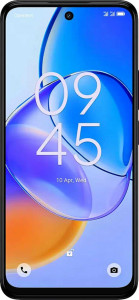
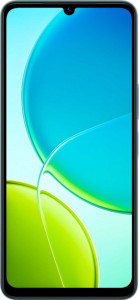
The connectivity foundations are identical across both phones — 5G, Wi-Fi 5, Bluetooth 5.4, NFC, USB Type-C, and expandable storage are all present on both. For everyday use, this means neither device is at a disadvantage for wireless performance, contactless payments, or file transfers. The matching 3300 Mbps download ceiling and Wi-Fi 5 support ensure both can take full advantage of modern mobile and home network speeds.
Two differences stand out on closer inspection. First, the SIM configuration diverges: the TCL 60 5G offers 1 physical SIM plus 1 eSIM, while the Vivo Y29s provides 2 physical SIM slots. For users who travel internationally or want to run personal and work numbers simultaneously, the Vivo's dual physical SIM setup is more universally flexible — eSIM adoption, while growing, is still not supported by all carriers worldwide. Second, the TCL includes a gyroscope while the Vivo does not. A gyroscope enables accurate screen rotation, immersive gaming, augmented reality apps, and stabilized navigation — its absence on the Vivo is a tangible functional gap for users who rely on these capabilities.
This category splits cleanly depending on the user's priority. The Vivo Y29s holds a practical edge for dual-SIM users who need two physical cards, but the TCL 60 5G has a meaningful sensor advantage with its gyroscope, which unlocks a broader range of motion-dependent apps and experiences. On balance, the TCL's gyroscope is the more broadly impactful differentiator for the average user, giving it a slight overall edge in this group.