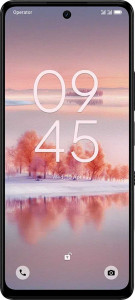
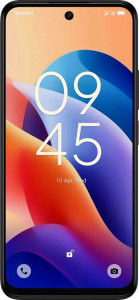
TCL 60 NxtPaper
TCL 60 SE

TCL 60 NxtPaper TCL 60 SE

Common Features

  • Both phones are water resistant with an IP54 ingress protection rating.
  • Both phones weigh 190 g.
  • Neither phone has a rugged build.
  • Neither phone can be folded.
  • Both phones feature a 6.7″ LCD IPS display.
  • Both phones have a pixel density of 262 ppi and a resolution of 720 x 1600 px.
  • Neither phone has branded damage-resistant glass.
  • HDR10 support is not available on either phone.
  • HDR10+ support is not available on either phone.
  • Always-On Display is not available on either phone.
  • Both phones come with 8 GB of RAM.
  • Both phones support integrated LTE and 64-bit processing.
  • Both phones use big.LITTLE technology with 8 CPU threads.
  • Both phones run Android 15 with theme customization and app tracking blocking.
  • Both phones have a 5200 mAh battery with 18W fast charging and come with a charger.
  • Neither phone supports wireless charging or has a removable battery.
  • Both phones have a dual-lens main camera with 50 & 5 MP and an 8 MP front camera.
  • Neither phone has built-in optical image stabilization.
  • Both phones record main camera video at 1080p 30 fps.
  • Both phones have a 3.5 mm audio jack, NFC, USB Type-C (USB 2.0), an external memory slot, a fingerprint scanner, Wi-Fi 5, dual SIM support, and an e-paper display.

Main Differences

  • Thickness is 7.85 mm on TCL 60 NxtPaper and 8.2 mm on TCL 60 SE.
  • Width is 75.5 mm on TCL 60 NxtPaper and 76.2 mm on TCL 60 SE.
  • Height is 167.3 mm on TCL 60 NxtPaper and 165.6 mm on TCL 60 SE.
  • Volume is 99.15 cm³ on TCL 60 NxtPaper and 103.47 cm³ on TCL 60 SE.
  • Display refresh rate is 120 Hz on TCL 60 NxtPaper and 90 Hz on TCL 60 SE.
  • Internal storage is 256 GB on TCL 60 NxtPaper and 512 GB on TCL 60 SE.
  • The chipset is MediaTek Dimensity 6300 on TCL 60 NxtPaper and MediaTek Helio G81 Ultra on TCL 60 SE.
  • The GPU is Arm Mali-G57 MC2 on TCL 60 NxtPaper and Mali G52 MP2 on TCL 60 SE.
  • CPU speed is 2 x 2.4 & 6 x 2 GHz on TCL 60 NxtPaper and 2 x 2 & 6 x 1.8 GHz on TCL 60 SE.
  • Geekbench 6 multi-core score is 2012 on TCL 60 NxtPaper and 1391 on TCL 60 SE.
  • Geekbench 6 single-core score is 782 on TCL 60 NxtPaper and 420 on TCL 60 SE.
  • Semiconductor size is 6 nm on TCL 60 NxtPaper and 12 nm on TCL 60 SE.
  • Maximum memory bandwidth is 17.07 GB/s on TCL 60 NxtPaper and 13.41 GB/s on TCL 60 SE.
  • Maximum supported RAM is 12 GB on TCL 60 NxtPaper and 8 GB on TCL 60 SE.
  • The number of flash LEDs is 2 on TCL 60 NxtPaper and 1 on TCL 60 SE.
  • Slow-motion video recording is supported on TCL 60 SE but not available on TCL 60 NxtPaper.
  • Stereo speakers are present on TCL 60 SE but not available on TCL 60 NxtPaper.
  • 5G support is present on TCL 60 NxtPaper but not available on TCL 60 SE.
  • Bluetooth version is 5.4 on TCL 60 NxtPaper and 5.1 on TCL 60 SE.
  • Download speed is 3300 Mbit/s on TCL 60 NxtPaper and 300 Mbit/s on TCL 60 SE.
  • A gyroscope, compass, and barometer are present on TCL 60 NxtPaper but none of these sensors are available on TCL 60 SE.
Specs Comparison
TCL 60 NxtPaper

TCL 60 NxtPaper

TCL 60 SE

TCL 60 SE

Design:
water resistance Water resistant Water resistant
weight 190 g 190 g
thickness 7.85 mm 8.2 mm
width 75.5 mm 76.2 mm
height 167.3 mm 165.6 mm
volume 99.1545275 cm³ 103.473504 cm³
Ingress Protection (IP) rating IP54 IP54
has a rugged build
can be folded

In terms of design, the TCL 60 NxtPaper and TCL 60 SE are remarkably similar on paper — both weigh exactly 190 g and share the same IP54 water resistance rating, meaning neither is ruggedized but both can handle splashes and light rain without issue. Neither device can be folded, and neither carries a rugged build designation.

Where the two diverge slightly is in their physical dimensions. The NxtPaper is marginally thinner at 7.85 mm versus the SE's 8.2 mm, and its slightly taller, narrower profile results in a noticeably smaller overall volume — 99.15 cm³ compared to the SE's 103.47 cm³. In practice, this means the NxtPaper has a subtly more compact and streamlined feel in hand, even though the weight difference is zero.

The TCL 60 NxtPaper holds a marginal but real design edge here: it is slimmer and more compact, which typically translates to a sleeker look and slightly easier one-handed handling. For users sensitive to bulk or pocket presence, this difference — while not dramatic — is consistent and measurable. The SE offers no compensating design advantage in this group.

Display:
Display type LCD, IPS LCD, IPS
screen size 6.7" 6.7"
pixel density 262 ppi 262 ppi
resolution 720 x 1600 px 720 x 1600 px
refresh rate 120Hz 90Hz
has branded damage-resistant glass
supports HDR10
supports HDR10+
Always-On Display
supports Dolby Vision
Has a secondary screen
has a touch screen

Both phones share the same foundational display hardware: a 6.7″ LCD IPS panel running at 720 x 1600 px with a pixel density of 262 ppi. At this screen size, 262 ppi lands in acceptable but not sharp territory — text and images will look reasonably clear at normal viewing distances, but fine detail won't match the crispness of a 1080p display. Neither device offers HDR support of any kind, nor damage-resistant glass, so both sit at a similar baseline in terms of visual richness and screen durability.

The one meaningful differentiator here is refresh rate. The TCL 60 NxtPaper runs at 120Hz, while the TCL 60 SE is capped at 90Hz. In everyday use, a higher refresh rate makes scrolling through feeds, navigating menus, and swiping between apps feel noticeably smoother and more fluid. It doesn't affect image quality directly, but it significantly influences how responsive the display feels — a difference that users who switch between the two devices would likely perceive immediately.

The TCL 60 NxtPaper takes a clear edge in this group solely on the strength of its 120Hz refresh rate. Everything else is identical, so for users who value display smoothness — particularly for casual gaming or heavy social media use — the NxtPaper is the more compelling choice. The SE's 90Hz is not poor, but it is the lesser option when the two are compared directly.

Performance:
internal storage 256GB 512GB
RAM 8GB 8GB
Chipset (SoC) name MediaTek Dimensity 6300 MediaTek Helio G81 Ultra
GPU name Arm Mali-G57 MC2 Mali G52 MP2
CPU speed 2 x 2.4 & 6 x 2 GHz 2 x 2 & 6 x 1.8 GHz
Geekbench 6 result (multi) 2012 1391
Geekbench 6 result (single) 782 420
Has integrated LTE
RAM speed 2133 MHz 1800 MHz
semiconductor size 6 nm 12 nm
Supports 64-bit
DirectX version DirectX 12 DirectX 12
Has integrated graphics
Uses big.LITTLE technology
CPU threads 8 threads 8 threads
maximum memory bandwidth 17.07 GB/s 13.41 GB/s
L2 cache 1 MB 0.3 MB
maximum memory amount 12GB 8GB
DDR memory version 4 4
L3 cache 2 MB 1 MB

The chipset gap between these two devices is substantial. The TCL 60 NxtPaper runs on the MediaTek Dimensity 6300, built on a modern 6 nm process, while the TCL 60 SE uses the older Helio G81 Ultra on a 12 nm node. A smaller semiconductor process generally translates to better power efficiency and higher sustained performance — the NxtPaper's chip can do more work while generating less heat. This architectural advantage is confirmed by the Geekbench 6 scores: the NxtPaper posts 782 single-core and 2012 multi-core, versus the SE's 420 single-core and 1391 multi-core — roughly double the single-core throughput, which is the figure most relevant to everyday app responsiveness.

Supporting the CPU advantage, the NxtPaper also benefits from faster 2133 MHz RAM versus 1800 MHz on the SE, a higher memory bandwidth of 17.07 GB/s versus 13.41 GB/s, and larger L2 and L3 caches. Together these mean the NxtPaper can feed its processor data more quickly, reducing bottlenecks when multitasking or running demanding apps. It also supports up to 12 GB of RAM versus the SE's ceiling of 8 GB, giving it more headroom for future configurations. The one area where the SE pulls ahead is raw storage: its base configuration offers 512 GB versus the NxtPaper's 256 GB, which matters for users who store large amounts of media locally.

The TCL 60 NxtPaper wins this group decisively on every performance metric. The chipset generation gap, process node advantage, and benchmark scores all point in the same direction. The SE's larger storage allotment is a practical consideration but does nothing to offset the performance deficit — users who prioritize speed and efficiency should clearly favour the NxtPaper here.

Cameras:
megapixels (main camera) 50 & 5 MP 50 & 5 MP
Has a dual-lens (or multi-lens) main camera
megapixels (front camera) 8MP 8MP
has built-in optical image stabilization
video recording (main camera) 1080 x 30 fps 1080 x 30 fps
Has a dual-tone LED flash
number of flash LEDs 2 1
has a BSI sensor
has a CMOS sensor
has continuous autofocus when recording movies
Has phase-detection autofocus for photos
supports slow-motion video recording
has a built-in HDR mode
has manual exposure
has a flash
optical zoom 0x 0x
has manual ISO
has a serial shot mode
has manual focus
has a front camera
Has laser autofocus
Shoots 360° panorama
has manual white balance
shoots raw
has touch autofocus
has manual shutter speed
can create panoramas in-camera
wide aperture (front camera) 2f 2f
Has a front-facing LED flash
has a dual-lens (or multi-lens) front camera
supports HDR10 recording
supports Dolby Vision recording
has a front-facing camera under the display
Has a RGB LED flash
has 3D photo/video recording capabilities

Camera hardware is nearly identical across both devices. Each sports a dual-lens rear setup at 50 & 5 MP, an 8 MP front camera, and identical video capture at 1080p 30fps. Both support phase-detection autofocus, continuous autofocus during recording, HDR mode, and a solid suite of manual controls including ISO, exposure, focus, and white balance. For the typical everyday shooter, these two phones offer a functionally equivalent photography experience.

Two small but genuine differences emerge on closer inspection. The TCL 60 NxtPaper carries 2 flash LEDs versus a single LED on the TCL 60 SE, which can improve flash illumination evenness and coverage in low-light shots — a modest but real practical benefit. Going the other way, the SE is the only one of the two to support slow-motion video recording, giving it an edge for users who occasionally want to capture motion at reduced speed for dramatic or analytical effect.

This group is effectively a wash, with each phone holding one niche advantage over the other. The NxtPaper's dual-LED flash benefits still photography in dim conditions, while the SE's slow-motion capability adds a video mode the NxtPaper lacks entirely. Neither advantage is significant enough to declare a clear overall winner — the right choice here comes down to whether you shoot more stills in low light or value slow-motion video.

Operating system:
Android version Android 15 Android 15
has clipboard warnings
has location privacy options
has camera/microphone privacy options
has Mail Privacy Protection
has theme customization
can block app tracking
blocks cross-site tracking
has on-device machine learning
has notification permissions
has media picker
Can play games while they download
has dark mode
has Wi-Fi password sharing
has battery health check
has an extra dim mode
has focus modes
has dynamic theming
can offload apps
Has customizable notifications
has Live Text
has full-page screenshots
supports split screen
gets direct OS updates
has PiP
Can be used as a PC
Has sharing intents
has a child lock
Supports widgets
Is free and open source
Has offline voice recognition
has voice commands
Tracks the current position of a mobile device
is a multi-user system
has Quick Start

Across every single data point in this group, the TCL 60 NxtPaper and TCL 60 SE are identical. Both ship with Android 15 and offer the same feature set: dynamic theming, dark mode, split-screen multitasking, picture-in-picture, customizable notifications, on-device machine learning, and a full suite of privacy controls covering location, camera, and microphone access.

Notably, neither device receives direct OS updates — meaning software updates are routed through TCL rather than delivered straight from Google. Both also share the same omissions: no Wi-Fi password sharing, no focus modes, and no cross-site tracking protection. These gaps apply equally, so they don't differentiate one product from the other.

This group is a complete tie. There is no basis in the provided data to favour either device from a software standpoint — a user choosing between the two will have an identical operating system experience on both.

Battery:
battery power 5200 mAh 5200 mAh
has wireless charging
Supports fast charging
charging speed 18W 18W
comes with a charger
has a removable battery
has a battery level indicator
has a rechargeable battery

Battery is another category where these two devices are completely indistinguishable. Both carry a 5200 mAh cell — a capacity that sits comfortably above the mid-range average and should comfortably support a full day of moderate use for most people, with headroom to spare for heavier users.

Charging is equally matched: both support 18W fast charging and both come with a charger included in the box — a detail worth noting as it becomes less common even at budget price points. Neither phone offers wireless charging, and neither has a removable battery, which are consistent trade-offs at this segment.

There is no differentiator to call out here — this group is a straight tie. Whichever device a user chooses, they will get the exact same battery capacity, the same charging speed, and the same out-of-box experience. Any real-world difference in battery life between the two would stem from the chipset efficiency gap noted in the Performance group, not from anything in these specs.

Audio:
has a socket for a 3.5 mm audio jack
has stereo speakers
has aptX
has LDAC
has aptX HD
has aptX Adaptive
has aptX Lossless

Audio hardware is where the TCL 60 SE quietly pulls ahead. Both phones retain the increasingly rare 3.5 mm headphone jack — a genuine convenience for users who prefer wired listening without an adapter — and neither supports high-resolution Bluetooth codecs like aptX or LDAC, so wireless audio quality is on equal footing.

The key distinction is that the SE features stereo speakers, while the NxtPaper makes do with a mono setup. In practice, stereo speakers create a noticeably wider and more immersive soundstage when watching videos, playing games, or listening to music through the device's built-in speakers. Mono output, by contrast, collapses all audio into a single channel, which sounds comparatively flat and one-dimensional — particularly on media content mixed for stereo.

The TCL 60 SE takes a clear edge in this group. For anyone who regularly consumes media through their phone's speakers, stereo output is a meaningful quality-of-life upgrade. The shared headphone jack is a welcome feature on both, but it doesn't offset the NxtPaper's deficit when speakers are the primary listening method.

Connectivity & Features:
release date March 2025 March 2025
has 5G support
Wi-Fi version Wi-Fi 4 (802.11n), Wi-Fi 5 (802.11ac) Wi-Fi 4 (802.11n), Wi-Fi 5 (802.11ac)
SIM cards 2 SIM 2 SIM
Bluetooth version 5.4 5.1
has an external memory slot
Has USB Type-C
USB version 2 2
has NFC
download speed 3300 MBits/s 300 MBits/s
Has a fingerprint scanner
has emergency SOS via satellite
has crash detection
is DLNA-certified
has a gyroscope
supports ANT+
Has a heart rate monitor
has GPS
has a compass
supports Wi-Fi
Has an infrared sensor
has an accelerometer
has a cellular module
Has a barometer
has an HDMI output
Uses 3D facial recognition
Has an iris scanner
Stylus included
supports Galileo
Has motion tracking
Has optical tracking
Has a built-in projector

The most consequential difference in this group is cellular: the TCL 60 NxtPaper supports 5G, while the TCL 60 SE is limited to 4G LTE with a maximum download speed of 300 Mbits/s versus the NxtPaper's 3,300 Mbits/s. For users in areas with 5G coverage, this gap means dramatically faster data speeds and better future-proofing as 5G networks continue to expand. The NxtPaper also pairs this with a newer Bluetooth 5.4 versus the SE's 5.1, offering incremental improvements in connection stability and efficiency for wireless peripherals.

Beyond radio connectivity, the NxtPaper carries a richer sensor suite. It includes a gyroscope, compass, and barometer — none of which are present on the SE. The gyroscope enables more accurate motion-based interactions and immersive gaming; the compass supports proper directional navigation in map apps; and the barometer allows altitude tracking and weather-related features. The SE, lacking all three, is notably limited for any use case that depends on environmental or orientation sensing.

The TCL 60 NxtPaper wins this group by a wide margin. The 5G advantage alone is a significant long-term differentiator, and the additional sensors further extend its lead. The two phones share Wi-Fi standards, NFC, expandable storage, USB Type-C, and GPS — but on every point where they diverge, the NxtPaper holds the stronger position.

Miscellaneous:
has a video light
Has sapphire glass display
Has a curved display
Has an e-paper display

Every data point in this group is shared equally between the two devices. Both feature an e-paper display mode — a notable and relatively uncommon capability at this price tier that allows the screen to mimic the low-strain, high-readability characteristics of e-ink, which can be easier on the eyes during extended reading sessions. Both also include a video light for use during video recording.

Neither phone has a curved display or sapphire glass, which is entirely expected at this segment — sapphire glass in particular remains rare even on premium devices. These shared omissions are simply category norms, not meaningful trade-offs.

This group is a complete tie. The e-paper display feature is worth flagging as a shared strength for both products — particularly relevant to the NxtPaper's branding — but since it applies equally to the SE, it offers no basis for differentiation between the two.

Comparison Summary & Verdict

This is a specification comparison between the TCL 60 NxtPaper and TCL 60 SE. Both models feature a 6.7″ LCD, IPS display with a resolution of 720 x 1600 px and share a 5200 mAh battery. They also offer 8GB of RAM and have a dual-lens main camera with 50 & 5 MP. Key differences include the TCL 60 NxtPaper having a higher 120Hz refresh rate, while the TCL 60 SE supports 5G but lacks stereo speakers. The TCL 60 NxtPaper uses the MediaTek Dimensity 6300 chipset with faster CPU speeds, while the TCL 60 SE features a MediaTek Helio G81 Ultra chipset with slower speeds and less RAM bandwidth.