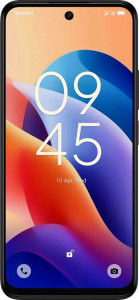
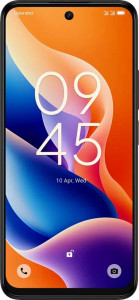
TCL 60 SE
TCL 605

TCL 60 SE TCL 605

Overview

Welcome to our in-depth comparison of the TCL 60 SE and the TCL 605. These two mid-range Android smartphones share a surprising amount of DNA — from their chipset and display to their battery and connectivity — yet they diverge in several meaningful ways. In this head-to-head, we examine key battlegrounds including storage capacity, camera versatility, water resistance, and a few unique hardware features that set each device apart from the other.

Common Features

  • Both phones weigh 190 g.
  • Both phones share the same width of 76.2 mm and height of 165.6 mm.
  • Both phones carry an IP54 ingress protection rating.
  • Neither phone has a rugged build or can be folded.
  • Both phones use an LCD IPS display with a 6.7″ screen size.
  • Both phones have a pixel density of 262 ppi and a resolution of 720 x 1600 px.
  • Both phones support a 90Hz refresh rate.
  • Damage-resistant branded glass is not present on either phone.
  • HDR10 and HDR10+ support are not available on either phone.
  • Both phones are powered by the MediaTek Helio G81 Ultra chipset with a Mali G52 MP2 GPU.
  • Both phones come with 8GB of RAM.
  • Both phones achieve a Geekbench 6 multi-core score of 1391 and a single-core score of 420.
  • Neither phone has built-in optical image stabilization.
  • Both phones record video at 1080p 30 fps on the main camera.
  • Phase-detection autofocus for photos is available on both phones.
  • Both phones run Android 15.
  • Both phones have a 5200 mAh battery with 18W fast charging support.
  • Wireless charging is not available on either phone.
  • Both phones include a 3.5 mm audio jack and stereo speakers.
  • Both phones support Wi-Fi 4 and Wi-Fi 5, Bluetooth 5.1, NFC, USB Type-C (USB 2.0), dual SIM, and an external memory slot.

Main Differences

  • Water resistance is present on the TCL 60 SE but not available on the TCL 605.
  • Thickness is 8.2 mm on the TCL 60 SE and 8.3 mm on the TCL 605.
  • Volume is 103.473504 cm³ on the TCL 60 SE and 104.735376 cm³ on the TCL 605.
  • Internal storage is 512GB on the TCL 60 SE and 256GB on the TCL 605.
  • The main camera is a dual-lens setup (50 & 5 MP) on the TCL 60 SE, while the TCL 605 has a single 50 MP main camera.
  • The front camera is 8MP on the TCL 60 SE and 5MP on the TCL 605.
  • The front camera aperture is f/2.0 on the TCL 60 SE and f/2.2 on the TCL 605.
  • An e-paper display is present on the TCL 60 SE but not available on the TCL 605.
Specs Comparison
TCL 60 SE

TCL 60 SE

TCL 605

TCL 605

Design:
water resistance Water resistant None
weight 190 g 190 g
thickness 8.2 mm 8.3 mm
width 76.2 mm 76.2 mm
height 165.6 mm 165.6 mm
volume 103.473504 cm³ 104.735376 cm³
Ingress Protection (IP) rating IP54 IP54
has a rugged build
can be folded

In terms of physical form factor, the TCL 60 SE and TCL 605 are virtually identical twins: both share the exact same weight of 190 g, width of 76.2 mm, and height of 165.6 mm. Neither features a rugged build or a foldable form factor, so day-to-day handling and pocket feel will be indistinguishable between the two. The marginal thickness difference — 8.2 mm for the 60 SE versus 8.3 mm for the 605 — is a single millimeter gap that translates to no perceptible real-world difference in grip or slimness.

Where the data introduces a notable distinction is in water protection. Both phones carry an IP54 rating, which in practice means resistance to dust ingress and splashes from any direction — suitable for rain or accidental spills, though not submersion. However, the 60 SE explicitly labels its water resistance status as ″Water resistant,″ while the 605 lists it as ″None.″ This internal data inconsistency is worth flagging: the IP54 certification is present for both, yet the 605′s resistance field suggests its protection may not be formally marketed or warranted by TCL in the same way.

Overall, design is essentially a tie on measurable dimensions and weight. If the water resistance labeling discrepancy reflects a real difference in how TCL positions or guarantees the 605′s protection, the TCL 60 SE holds a marginal edge in this category for users who prioritize peace of mind around moisture exposure.

Display:
Display type LCD, IPS LCD, IPS
screen size 6.7" 6.7"
pixel density 262 ppi 262 ppi
resolution 720 x 1600 px 720 x 1600 px
refresh rate 90Hz 90Hz
has branded damage-resistant glass
supports HDR10
supports HDR10+
Always-On Display
supports Dolby Vision
Has a secondary screen
has a touch screen

The display category delivers a straightforward verdict: the TCL 60 SE and TCL 605 are spec-for-spec identical across every single metric. Both sport a 6.7″ LCD IPS panel running at a 720 x 1600 px resolution, which yields a pixel density of 262 ppi — adequate for general use but noticeably below the 400+ ppi threshold where text and images appear truly sharp. Users with keen eyes may detect some softness when reading fine print or viewing detailed images up close.

The shared 90Hz refresh rate is a genuine usability plus at this price tier, making scrolling and UI animations feel noticeably smoother compared to standard 60Hz panels. That said, neither phone supports any HDR format — not HDR10, HDR10+, or Dolby Vision — so video content will not benefit from expanded contrast or wider color range regardless of the source. The absence of branded damage-resistant glass on both models is also worth keeping in mind for users who tend to skip screen protectors.

This is a complete tie. There is no basis in the provided specs to favor one device over the other on display quality; any buying decision in this category comes down entirely to other spec groups.

Performance:
internal storage 512GB 256GB
RAM 8GB 8GB
Chipset (SoC) name MediaTek Helio G81 Ultra MediaTek Helio G81 Ultra
GPU name Mali G52 MP2 Mali G52 MP2
CPU speed 2 x 2 & 6 x 1.8 GHz 2 x 2 & 6 x 1.8 GHz
Geekbench 6 result (multi) 1391 1391
Geekbench 6 result (single) 420 420
Geekbench 5 result (multi) 1300 1300
Geekbench 5 result (single) 350 350
Has integrated LTE
RAM speed 1800 MHz 1800 MHz
semiconductor size 12 nm 12 nm
Supports 64-bit
DirectX version DirectX 12 DirectX 12
Has integrated graphics
OpenGL version 3.2 3.2
OpenGL ES version 3.2 3.2
Uses big.LITTLE technology
CPU threads 8 threads 8 threads
Has TrustZone
maximum memory bandwidth 13.41 GB/s 13.41 GB/s
OpenCL version 2 2
memory channels 2 2
L2 cache 0.3 MB 0.3 MB
eMMC version 5.1 5.1
maximum memory amount 8GB 8GB
GPU execution units 2 2
GPU turbo 950 MHz 950 MHz
number of transistors 5500 million 5500 million
Thermal Design Power (TDP) 5W 5W
DDR memory version 4 4
shading units 32 32
turbo clock speed 2GHz 2GHz
L3 cache 1 MB 1 MB

Under the hood, both phones are powered by the MediaTek Helio G81 Ultra — an entry-level chipset built on a 12nm process with an 8-core big.LITTLE CPU configuration topping out at 2GHz. Real-world performance is modest and consistent with the budget segment: the identical Geekbench 6 scores of 420 single-core and 1391 multi-core confirm neither device will struggle with everyday tasks like browsing, streaming, or light social media use, but demanding 3D games and heavy multitasking will hit a ceiling. The shared Mali G52 MP2 GPU reinforces this positioning — capable enough for casual gaming, not engineered for graphically intensive titles.

RAM and memory configuration are also mirrored across both models: 8GB of DDR4 RAM at 1800 MHz, a maximum memory bandwidth of 13.41 GB/s, and eMMC 5.1 storage. These numbers mean app switching will feel reasonably fluid, though eMMC 5.1 is slower than the UFS storage found in mid-range and premium devices, so large file transfers and app load times will reflect that limitation on both phones equally.

The one meaningful split is internal storage: the TCL 60 SE ships with 512GB versus the TCL 605's 256GB. For users who store large photo libraries, offline video, or many apps locally, this doubling of capacity is a practical advantage. Every other performance metric is identical, so the TCL 60 SE holds a clear edge in this group purely on storage headroom.

Cameras:
megapixels (main camera) 50 & 5 MP 50 MP
Has a dual-lens (or multi-lens) main camera
megapixels (front camera) 8MP 5MP
has built-in optical image stabilization
video recording (main camera) 1080 x 30 fps 1080 x 30 fps
Has a dual-tone LED flash
number of flash LEDs 1 1
has a BSI sensor
has a CMOS sensor
has continuous autofocus when recording movies
Has phase-detection autofocus for photos
supports slow-motion video recording
has a built-in HDR mode
has manual exposure
has a flash
optical zoom 0x 0x
has manual ISO
has a serial shot mode
has manual focus
has a front camera
Has laser autofocus
Shoots 360° panorama
has manual white balance
shoots raw
has touch autofocus
has manual shutter speed
can create panoramas in-camera
wide aperture (front camera) 2f 2.2f
Has a front-facing LED flash
has a dual-lens (or multi-lens) front camera
supports HDR10 recording
supports Dolby Vision recording
has a front-facing camera under the display
Has a RGB LED flash
has 3D photo/video recording capabilities

Two differences stand out immediately in the camera specs. First, the TCL 60 SE fields a dual-lens rear system (50 MP + 5 MP), while the TCL 605 makes do with a single 50 MP shooter. That secondary 5 MP sensor on the 60 SE — likely a depth or ultrawide lens — expands compositional flexibility and enables more capable portrait-style shots with background separation. Second, the 60 SE also wins on selfie hardware: an 8 MP front camera versus the 605's 5 MP, a gap that will be visible in detail and croppability for self-portraits and video calls.

The front aperture difference adds another layer: the 60 SE's f/2.0 lens admits more light than the 605's f/2.2, which translates to modestly brighter and less noisy selfies in dim conditions. Neither phone offers optical image stabilization or shoots beyond 1080p at 30fps for video, so both are firmly in entry-level territory for motion capture. The manual control suite — ISO, exposure, white balance, and focus — is identical across both models, which is a welcome addition at this price point for users who like to fine-tune shots.

The TCL 60 SE holds a clear advantage in this category. The combination of a dual rear camera system, a higher-resolution front sensor, and a wider front aperture gives it a meaningful edge for users who prioritize camera versatility and selfie quality.

Operating system:
Android version Android 15 Android 15
has clipboard warnings
has location privacy options
has camera/microphone privacy options
has Mail Privacy Protection
has theme customization
can block app tracking
blocks cross-site tracking
has on-device machine learning
has notification permissions
has media picker
Can play games while they download
has dark mode
has Wi-Fi password sharing
has battery health check
has an extra dim mode
has focus modes
has dynamic theming
can offload apps
Has customizable notifications
has Live Text
has full-page screenshots
supports split screen
gets direct OS updates
has PiP
Can be used as a PC
Has sharing intents
has a child lock
Supports widgets
Is free and open source
Has offline voice recognition
has voice commands
Tracks the current position of a mobile device
is a multi-user system
has Quick Start

Both the TCL 60 SE and TCL 605 run Android 15 and share an absolutely identical software feature set — every single spec in this group matches. Notably, both benefit from a solid privacy toolkit: location controls, camera and microphone permission management, app tracking blocks, and clipboard warnings are all present, giving users meaningful oversight of how apps access their data. Neither device receives direct OS updates from Google, meaning software patches will be filtered through TCL, which is a consideration for long-term security.

On the usability side, the shared feature list is genuinely strong for the budget tier: split-screen multitasking, Picture-in-Picture, dynamic theming, offline voice recognition, and the ability to play games while they download all contribute to a well-rounded daily experience. The presence of a battery health check tool is a practical addition for monitoring cell degradation over time, while multi-user support makes either phone more versatile in shared-device households.

This category is an unambiguous tie — the software experience on both phones is indistinguishable based on the provided data. A buyer's decision here should hinge entirely on other spec groups rather than any OS-level differentiation.

Battery:
battery power 5200 mAh 5200 mAh
has wireless charging
Supports fast charging
charging speed 18W 18W
has a removable battery
has a battery level indicator
has a rechargeable battery

Matched at every data point, the TCL 60 SE and TCL 605 offer an identical battery experience. Both pack a 5200 mAh cell — a generous capacity for the budget segment that, paired with the modest Helio G81 Ultra chipset and a 720p display, should comfortably support all-day and potentially two-day use for moderate users. Neither phone will leave heavy users anxious about finding a charger before the end of a busy day.

Replenishment speed is also the same: 18W wired fast charging on both. That is a respectable rate for this price tier, meaningfully faster than legacy 10W charging while stopping well short of the 33W–65W speeds found on more premium devices. Wireless charging is absent on both, which is a common omission at this segment. The battery is non-removable on each, as is standard for modern smartphones.

A complete tie — battery life potential and charging behavior will be identical between these two phones, and this category offers no basis for choosing one over the other.

Audio:
has a socket for a 3.5 mm audio jack
has stereo speakers
has aptX
has LDAC
has aptX HD
has aptX Adaptive
has aptX Lossless

Audio hardware is identical on both devices. The TCL 60 SE and TCL 605 each include a 3.5mm headphone jack — a feature increasingly rare even at the budget tier — and stereo speakers, which deliver a noticeably wider and more immersive soundstage than the mono setups common on entry-level phones. For media consumption and casual listening without headphones, stereo output is a genuine quality-of-life advantage that both users will benefit from equally.

On the wireless audio side, neither phone supports advanced Bluetooth codecs such as aptX, aptX HD, LDAC, or their variants. In practice, this means Bluetooth audio will rely on the standard SBC or AAC codecs, which are adequate for everyday listening but will not satisfy audiophiles seeking high-fidelity wireless playback through premium headphones. Users who prioritize wireless audio quality will find both phones similarly limited in this respect.

This group is a straightforward tie. The shared presence of a headphone jack and stereo speakers are the highlights here, and neither phone offers any audio feature the other lacks.

Connectivity & Features:
release date March 2025 March 2025
has 5G support
Wi-Fi version Wi-Fi 4 (802.11n), Wi-Fi 5 (802.11ac) Wi-Fi 4 (802.11n), Wi-Fi 5 (802.11ac)
SIM cards 2 SIM 2 SIM
Bluetooth version 5.1 5.1
has an external memory slot
Has USB Type-C
USB version 2 2
has NFC
download speed 300 MBits/s 300 MBits/s
upload speed 100 MBits/s 100 MBits/s
Has a fingerprint scanner
has emergency SOS via satellite
has crash detection
is DLNA-certified
has a gyroscope
supports ANT+
Has a heart rate monitor
has GPS
has a compass
supports Wi-Fi
Has an infrared sensor
has an accelerometer
has a cellular module
Has a barometer
has an HDMI output
Uses 3D facial recognition
Has an iris scanner
Stylus included
supports Galileo
Has motion tracking
Has optical tracking
Has a built-in projector

Connectivity is another area where the TCL 60 SE and TCL 605 are carbon copies of each other. Both support Wi-Fi 5 (802.11ac) alongside Wi-Fi 4, enabling solid wireless speeds on modern routers. Bluetooth 5.1 provides reliable short-range connectivity with improved positioning accuracy over older versions, and NFC is present on both — a genuinely useful inclusion at this price point, enabling contactless payments and quick device pairing. Neither phone supports 5G, so users are capped at 4G LTE speeds, which is typical and entirely adequate for the budget segment.

The shared feature set extends to physical connectivity and sensors. Both use USB Type-C (USB 2.0 speeds), support dual SIM, and include a microSD slot for expandable storage — practical flexibility for users who want to separate work and personal lines or supplement onboard storage. The fingerprint scanner and GPS with Galileo support are present on both, covering the biometric and navigation bases. Notably absent on each device are a gyroscope and compass, which limits compatibility with augmented reality applications and precise directional navigation.

Every connectivity and feature metric aligns perfectly across these two phones, making this a definitive tie. There is no differentiator in this group to tip the scales in either direction.

Miscellaneous:
has a video light
Has sapphire glass display
Has a curved display
Has an e-paper display

Most specs in this group are shared — both phones include a video light and skip sapphire glass and curved display designs. The one standout differentiator is significant, however: the TCL 60 SE is listed as having an e-paper display, while the TCL 605 does not. An e-ink or e-paper panel — whether as a secondary rear screen or a dedicated reading mode surface — is an unusual and distinctive feature at any price tier, offering paper-like readability in direct sunlight and dramatically lower power consumption compared to conventional LCD or OLED screens.

For users who consume a lot of long-form text, read outdoors frequently, or simply want to extend battery life during light-use scenarios, an e-paper element adds a dimension of utility that the 605 simply cannot match. It also positions the 60 SE as a more versatile device for niche but meaningful use cases that standard smartphone displays handle poorly.

The TCL 60 SE takes a clear edge in this category. The e-paper display capability is the only differentiator across these specs, but it is a meaningful one — unique enough that for the right user, it could be a decisive factor on its own.

Comparison Summary & Verdict

After a thorough look at both devices, it is clear that the TCL 60 SE and TCL 605 are closely matched siblings, sharing the same chipset, display, battery, and software experience. However, the TCL 60 SE pulls ahead for users who want more from their hardware: it offers 512GB of internal storage, a dual-lens main camera with a more capable 8MP front shooter, active water resistance, and the unique addition of an e-paper display. The TCL 605, on the other hand, is a slightly simpler proposition — it lacks those extras but remains a capable everyday device for users who do not need them. If you value versatility, longevity, and richer camera options, the TCL 60 SE is the stronger pick. If your needs are more straightforward and 256GB of storage is sufficient, the TCL 605 delivers the same core experience at a potentially friendlier price point.

TCL 60 SE
Buy TCL 60 SE if...

Buy the TCL 60 SE if you want more storage (512GB), a dual-lens camera system, water resistance, and the bonus of an e-paper display for added versatility.

TCL 605
Buy TCL 605 if...

Buy the TCL 605 if 256GB of storage meets your needs and you prefer a straightforward smartphone without the extra hardware features of its sibling.