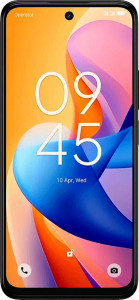
TCL 60R 5G
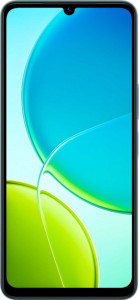
Vivo Y29s

TCL 60R 5G Vivo Y29s

Overview

When choosing between two capable mid-range 5G smartphones, every detail matters. The TCL 60R 5G and the Vivo Y29s share the same MediaTek Dimensity 6300 chipset and both run Android 15, yet they diverge in notable areas including display refresh rate, storage capacity, battery endurance, and camera configuration. This side-by-side comparison dives deep into the full specification sheet to help you decide which device best fits your lifestyle and budget.

Common Features

  • Both phones are water resistant.
  • Both phones have a thickness of 8.2 mm.
  • Neither phone has a rugged build.
  • Neither phone can be folded.
  • Both phones feature an LCD IPS display type.
  • Both phones share a resolution of 720 x 1600 px.
  • Neither phone has branded damage-resistant glass.
  • HDR10 support is not available on either phone.
  • HDR10+ support is not available on either phone.
  • Always-On Display is not available on either phone.
  • Dolby Vision support is not available on either phone.
  • Neither phone has a secondary screen.
  • Both phones are powered by the MediaTek Dimensity 6300 chipset.
  • Both phones use the Arm Mali-G57 MC2 GPU.
  • Both phones have a CPU speed of 2 x 2.4 and 6 x 2 GHz.
  • Both phones achieve a Geekbench 6 multi-core score of 2012.
  • Both phones achieve a Geekbench 6 single-core score of 782.
  • Both phones have a GPU clock speed of 950 MHz.
  • Both phones have integrated LTE.
  • Both phones have a RAM speed of 2133 MHz.
  • Neither phone has built-in optical image stabilization.
  • Both phones support 1080p video recording at 30 fps on the main camera.
  • Neither phone has a dual-tone LED flash.
  • Both phones have a single LED flash.
  • Neither phone has a BSI sensor.
  • Both phones have a CMOS sensor.
  • Both phones support continuous autofocus when recording movies.
  • Both phones support phase-detection autofocus for photos.
  • Both phones run Android 15.
  • Both phones display clipboard warnings.
  • Both phones offer location privacy options.
  • Both phones offer camera and microphone privacy options.
  • Mail Privacy Protection is not available on either phone.
  • Both phones support theme customization.
  • Both phones can block app tracking.
  • Cross-site tracking blocking is not available on either phone.
  • Neither phone supports wireless charging.
  • Both phones support fast charging.
  • Both phones come with a charger included.
  • Neither phone has a removable battery.
  • Both phones have a battery level indicator.
  • Both phones have a rechargeable battery.
  • Both phones include a 3.5 mm audio jack.
  • Both phones have stereo speakers.
  • aptX support is not available on either phone.
  • LDAC support is not available on either phone.
  • aptX HD support is not available on either phone.
  • aptX Adaptive support is not available on either phone.
  • aptX Lossless support is not available on either phone.
  • Both phones support 5G connectivity.
  • Both phones support Wi-Fi 4 (802.11n) and Wi-Fi 5 (802.11ac).
  • Both phones accommodate 2 SIM cards.
  • Both phones have Bluetooth version 5.4.
  • Both phones have an external memory slot.
  • Both phones have a USB Type-C port.
  • Both phones have USB version 2.
  • Both phones have NFC.
  • Both phones have a video light.
  • Neither phone has a sapphire glass display.
  • Neither phone has a curved display.
  • Neither phone has an e-paper display.

Main Differences

  • Weight is 190 g on TCL 60R 5G and 199 g on Vivo Y29s.
  • Width is 76.2 mm on TCL 60R 5G and 77 mm on Vivo Y29s.
  • Height is 165.6 mm on TCL 60R 5G and 167.3 mm on Vivo Y29s.
  • Volume is 103.473504 cm³ on TCL 60R 5G and 105.63322 cm³ on Vivo Y29s.
  • The Ingress Protection rating is IP54 on TCL 60R 5G and IP64 on Vivo Y29s.
  • Screen size is 6.7″ on TCL 60R 5G and 6.74″ on Vivo Y29s.
  • Pixel density is 262 ppi on TCL 60R 5G and 260 ppi on Vivo Y29s.
  • Refresh rate is 120Hz on TCL 60R 5G and 90Hz on Vivo Y29s.
  • Internal storage is 128GB on TCL 60R 5G and 256GB on Vivo Y29s.
  • RAM is 4GB on TCL 60R 5G and 6GB on Vivo Y29s.
  • The main camera is 50 MP on TCL 60R 5G and 50 MP plus a 0.08 MP secondary lens on Vivo Y29s.
  • Main camera aperture is f/1.8 on TCL 60R 5G and f/3 plus f/1.8 on Vivo Y29s.
  • A dual-lens main camera is present on Vivo Y29s but not on TCL 60R 5G.
  • Front camera resolution is 8 MP on TCL 60R 5G and 5 MP on Vivo Y29s.
  • Front camera aperture is f/2 on TCL 60R 5G and f/2.2 on Vivo Y29s.
  • Battery capacity is 5200 mAh on TCL 60R 5G and 5500 mAh on Vivo Y29s.
  • Charging speed is 10W on TCL 60R 5G and 15W on Vivo Y29s.
  • A built-in compass is present on Vivo Y29s but not on TCL 60R 5G.
Specs Comparison
TCL 60R 5G

TCL 60R 5G

Vivo Y29s

Vivo Y29s

Design:
water resistance Water resistant Water resistant
weight 190 g 199 g
thickness 8.2 mm 8.2 mm
width 76.2 mm 77 mm
height 165.6 mm 167.3 mm
volume 103.473504 cm³ 105.63322 cm³
Ingress Protection (IP) rating IP54 IP64
has a rugged build
can be folded

Both phones share an identical 8.2 mm thickness and neither is ruggedized or foldable, so they occupy very similar physical territory. The Vivo Y29s is marginally larger across all three dimensions and tips the scale at 199 g versus the TCL 60R 5G's 190 g — a 9-gram difference that is noticeable over a long day of one-handed use, giving the TCL a slight ergonomic edge for users sensitive to heft.

The more meaningful differentiator is the IP rating. The TCL carries an IP54 certification, meaning it resists dust ingress only partially and handles splashes from any direction. The Vivo steps up to IP64, which adds full dust-tight protection — no dust can enter the enclosure at all — while maintaining the same level of water splash resistance. In practice, this matters if you use your phone in dusty environments like construction sites, dry outdoor trails, or sandy beaches, where fine particles could otherwise work their way into the device over time.

Overall, the Vivo Y29s holds a clear edge in design durability thanks to its superior IP64 dust protection. The TCL 60R 5G partially compensates by being lighter and marginally more compact, making it the better choice if pocket comfort and one-handed usability are the priority, but users who want stronger environmental resilience should favour the Vivo.

Display:
Display type LCD, IPS LCD, IPS
screen size 6.7" 6.74"
pixel density 262 ppi 260 ppi
resolution 720 x 1600 px 720 x 1600 px
refresh rate 120Hz 90Hz
has branded damage-resistant glass
supports HDR10
supports HDR10+
Always-On Display
supports Dolby Vision
Has a secondary screen
has a touch screen

At their core, these two displays are nearly identical: both are LCD IPS panels running at 720 x 1600 px on screens separated by just 0.04 inches (6.7″ vs 6.74″), resulting in pixel densities so close — 262 ppi versus 260 ppi — that no human eye could tell them apart. Neither panel supports HDR10, Dolby Vision, or damage-resistant glass, so on those fronts they are evenly matched at a baseline level.

The single meaningful differentiator is the refresh rate. The TCL 60R 5G runs at 120Hz while the Vivo Y29s tops out at 90Hz. In everyday use, a higher refresh rate translates directly into smoother scrolling through feeds, more fluid app animations, and a generally more responsive feel when navigating the UI — benefits that are consistently noticeable once you have experienced them. For casual media consumption the gap matters less, but for anything involving fast motion or heavy browsing, the TCL's panel will feel more polished.

The TCL 60R 5G takes a clear edge here on the strength of its 120Hz refresh rate alone. Given that every other display attribute is effectively tied, that smoother motion cadence is the deciding factor and makes the TCL the stronger choice for users who prioritize display fluidity.

Performance:
internal storage 128GB 256GB
RAM 4GB 6GB
Chipset (SoC) name MediaTek Dimensity 6300 MediaTek Dimensity 6300
GPU name Arm Mali-G57 MC2 Arm Mali-G57 MC2
CPU speed 2 x 2.4 & 6 x 2 GHz 2 x 2.4 & 6 x 2 GHz
Geekbench 6 result (multi) 2012 2012
Geekbench 6 result (single) 782 782
GPU clock speed 950 MHz 950 MHz
Has integrated LTE
RAM speed 2133 MHz 2133 MHz
semiconductor size 6 nm 6 nm
Supports 64-bit
DirectX version DirectX 12 DirectX 12
Has integrated graphics
Uses big.LITTLE technology
CPU threads 8 threads 8 threads
Uses HMP
maximum memory bandwidth 17.07 GB/s 17.07 GB/s
L2 cache 1 MB 1 MB
L1 cache 512 KB 512 KB
maximum memory amount 12GB 12GB
uses multithreading
DDR memory version 4 4
L3 cache 2 MB 2 MB

Under the hood, these two phones are built from the same blueprint: both run on the MediaTek Dimensity 6300 chip, fabbed on a 6 nm process, paired with an Arm Mali-G57 MC2 GPU. Their Geekbench 6 scores — 782 single-core and 2012 multi-core — are identical, which is exactly what you would expect from hardware that is, in every architectural sense, the same silicon. Raw processing power is therefore a non-factor in choosing between them.

Where the Vivo Y29s pulls ahead is in memory and storage configuration. It ships with 6 GB of RAM and 256 GB of internal storage, compared to the TCL 60R 5G's 4 GB of RAM and 128 GB. The RAM gap is the more impactful of the two: with 50% more memory, the Vivo can keep significantly more apps alive in the background before the system is forced to reload them — a tangible quality-of-life improvement during multitasking or when switching between heavier applications. The doubled storage, meanwhile, means far more headroom for photos, videos, and apps before you hit the ceiling.

The Vivo Y29s holds a clear practical advantage in this category. Since neither phone can outrun the other in raw compute, the extra RAM and storage the Vivo brings translate directly into a more capable and future-proof day-to-day experience — making it the stronger pick for anyone who pushes their phone hard or accumulates large amounts of local content.

Cameras:
megapixels (main camera) 50 MP 50 & 0.08 MP
wide aperture (main camera) 1.8f 3 & 1.8f
Has a dual-lens (or multi-lens) main camera
megapixels (front camera) 8MP 5MP
has built-in optical image stabilization
video recording (main camera) 1080 x 30 fps 1080 x 30 fps
Has a dual-tone LED flash
number of flash LEDs 1 1
has a BSI sensor
has a CMOS sensor
has continuous autofocus when recording movies
Has phase-detection autofocus for photos
supports slow-motion video recording
has a built-in HDR mode
has manual exposure
has a flash
optical zoom 0x 0x
has manual ISO
has a serial shot mode
has manual focus
has a front camera
Has laser autofocus
Shoots 360° panorama
has manual white balance
shoots raw
has touch autofocus
has manual shutter speed
can create panoramas in-camera
wide aperture (front camera) 2f 2.2f
Has timelapse function
Has a front-facing LED flash
has a dual-lens (or multi-lens) front camera
supports HDR10 recording
supports Dolby Vision recording
has a front-facing camera under the display
Has a RGB LED flash
has 3D photo/video recording capabilities

The rear camera story starts with a shared 50 MP main sensor and identical f/1.8 aperture, and the feature parity runs deep — both phones cap video at 1080p @ 30fps, offer the same manual controls, and lack optical image stabilization. The Vivo Y29s technically fields a dual-lens rear system, but the second sensor — at a mere 0.08 MP with an f/3 aperture — is effectively a depth-assist unit rather than a functional imaging lens. It adds no meaningful versatility in terms of zoom, wide-angle shooting, or low-light capability, so users should not treat it as a genuine second camera.

Flip to the front, and the TCL 60R 5G has a more meaningful edge: its 8 MP selfie camera with an f/2.0 aperture outclasses the Vivo's 5 MP sensor paired with a narrower f/2.2 aperture. More megapixels means more detail in portrait and video call scenarios, and the wider aperture lets in more light — a combination that produces noticeably better selfies in mixed or dim lighting conditions.

Taken together, the camera matchup is closer than it first appears. The Vivo's dual-rear setup offers little practical advantage given the negligible second sensor, while the TCL counters with a superior front camera. For users who prioritize selfie quality, the TCL 60R 5G holds the edge; for rear photography, the two are effectively tied.

Operating system:
Android version Android 15 Android 15
has clipboard warnings
has location privacy options
has camera/microphone privacy options
has Mail Privacy Protection
has theme customization
can block app tracking
blocks cross-site tracking
has on-device machine learning
has notification permissions
has media picker
Can play games while they download
has dark mode
has Wi-Fi password sharing
has battery health check
has an extra dim mode
has focus modes
has dynamic theming
can offload apps
Has customizable notifications
has Live Text
has full-page screenshots
supports split screen
gets direct OS updates
has PiP
Can be used as a PC
Has sharing intents
has a child lock
Supports widgets
Is free and open source
Has offline voice recognition
has voice commands
Tracks the current position of a mobile device
is a multi-user system
has Quick Start

This is a rare case of a perfect draw. Both phones ship with Android 15 and share an identical feature set across every single spec in this category — from privacy controls like location and camera/microphone permissions, to productivity tools like split-screen, Picture-in-Picture, and widgets, to quality-of-life additions like dark mode, dynamic theming, and battery health checks. There is not a single OS-level differentiator between them.

The shared strengths are worth noting for context. On-device machine learning, offline voice recognition, and Live Text are all present on both devices, meaning users get a reasonably modern and capable software experience without relying on a cloud connection for core features. The absence of direct OS updates on either phone is equally applicable to both and is the one area where prospective buyers may want to temper long-term expectations.

This category is a complete tie. The software experience you get on the TCL 60R 5G is, by every available data point, identical to what you get on the Vivo Y29s. The decision between these two phones should be made entirely on other specification groups.

Battery:
battery power 5200 mAh 5500 mAh
has wireless charging
Supports fast charging
charging speed 10W 15W
comes with a charger
has a removable battery
has a battery level indicator
has a rechargeable battery

Neither phone supports wireless charging and both are non-removable sealed units — that much is equal. Where they diverge is on capacity and charging speed, and the Vivo Y29s wins on both counts. Its 5500 mAh battery edges out the TCL 60R 5G's 5200 mAh cell by 300 mAh. That gap is modest in isolation, but on a shared platform with identical chipsets and similar screen sizes, it should translate into a reliably longer time between charges — particularly noticeable during extended browsing or video playback sessions.

The more impactful advantage is charging speed. The Vivo supports 15W fast charging versus the TCL's 10W — a 50% increase in wired charging power. In practical terms, this means meaningfully shorter top-up times from low battery, which matters when you need a quick charge before heading out. Both phones include a charger in the box, so neither buyer has to factor in an additional purchase to take advantage of the rated speeds.

The Vivo Y29s holds a clear edge in this category, combining a larger battery with faster replenishment. For users who spend long days away from a power source, or who simply want the convenience of shorter charging windows, the Vivo is the stronger choice on battery grounds.

Audio:
has a socket for a 3.5 mm audio jack
has stereo speakers
has aptX
has LDAC
has aptX HD
has aptX Adaptive
has aptX Lossless

Audio is another category where these two phones are inseparable. Both retain a 3.5 mm headphone jack — a feature increasingly absent from mid-range devices — and both deliver stereo speakers, giving users a wider, more immersive soundstage for media consumption compared to a single mono driver. These are genuine positives that users coming from older or more budget-focused devices will appreciate.

On the wireless audio side, neither phone supports any high-resolution Bluetooth codec — no aptX, no LDAC, no aptX HD or Adaptive. This means that when using wireless headphones, both devices are limited to standard Bluetooth audio quality. For casual listeners this is unlikely to matter, but audiophiles relying on high-quality wireless headphones will find neither phone can unlock the full potential of their hardware.

This category is a complete tie. The TCL 60R 5G and Vivo Y29s offer an identical audio feature set, with the same strengths and the same limitations. Neither phone has any grounds for an advantage here, and the audio spec should not factor into the decision between them.

Connectivity & Features:
release date March 2025 March 2025
has 5G support
Wi-Fi version Wi-Fi 4 (802.11n), Wi-Fi 5 (802.11ac) Wi-Fi 4 (802.11n), Wi-Fi 5 (802.11ac)
SIM cards 2 SIM 2 SIM
Bluetooth version 5.4 5.4
has an external memory slot
Has USB Type-C
USB version 2 2
has NFC
download speed 3300 MBits/s 3300 MBits/s
Has a fingerprint scanner
has emergency SOS via satellite
has crash detection
is DLNA-certified
has a gyroscope
supports ANT+
Has a heart rate monitor
has GPS
has a compass
supports Wi-Fi
Has an infrared sensor
has an accelerometer
has a cellular module
Has a barometer
has an HDMI output
Uses 3D facial recognition
Has an iris scanner
Stylus included
supports Galileo
Has motion tracking
Has optical tracking
Has a built-in projector

Connectivity parity is the dominant theme here. Both phones support 5G, Wi-Fi 5, Bluetooth 5.4, NFC, and USB Type-C, and both share the same 3300 Mbits/s peak download speed alongside dual-SIM support and expandable storage. For the vast majority of users, the day-to-day wireless experience will be indistinguishable between the two devices.

Scanning through the sensor array, one quiet but practical difference emerges: the Vivo Y29s includes a built-in compass, while the TCL 60R 5G does not. A compass — combined with GPS — enables accurate directional orientation in mapping applications. Without it, a phone must rely on movement to infer direction, which can result in brief disorientation when standing still and trying to figure out which way to walk. It is a small but genuinely useful addition for anyone who regularly uses navigation.

This category is largely a tie, but the Vivo Y29s earns a narrow edge thanks to its compass sensor. It is the sole hardware differentiator in an otherwise identical connectivity and features profile, and for users who rely on navigation or location-based apps, it adds a meaningful layer of usability the TCL cannot match.

Miscellaneous:
has a video light
Has sapphire glass display
Has a curved display
Has an e-paper display

The miscellaneous category offers nothing to separate these two devices. Both include a video light — useful for illuminating subjects during video recording in low-light conditions — and neither features a sapphire glass display, curved screen, or e-paper panel. Every data point here is identical.

This is a complete tie, and with so few specs in this group, it carries minimal weight in any overall assessment. Neither phone gains or loses ground here, and buyers should look to other specification categories to inform their decision.

Comparison Summary & Verdict

After a thorough look at all the specifications, both the TCL 60R 5G and the Vivo Y29s emerge as solid mid-range performers built on the same MediaTek Dimensity 6300 foundation. The TCL 60R 5G distinguishes itself with a faster 120Hz refresh rate and a sharper 8MP front camera with a wider f/2 aperture, making it an appealing choice for users who value display fluidity and better selfie quality in a slightly lighter body. The Vivo Y29s, however, takes a meaningful lead in everyday practicality: it offers 256GB of storage and 6GB of RAM, a larger 5500mAh battery, quicker 15W charging, a dual-lens rear camera system, a built-in compass, and a stronger IP64 dust and water resistance rating. In short, the TCL 60R 5G suits users who prize a smoother screen experience and front-camera quality, while the Vivo Y29s is the more well-rounded pick for those who need greater storage, longer battery life, and enhanced durability.

TCL 60R 5G
Buy TCL 60R 5G if...

Buy the TCL 60R 5G if you prioritize a smoother 120Hz display and a higher-resolution front camera with a wider aperture, all in a slightly lighter and more compact design.

Vivo Y29s
Buy Vivo Y29s if...

Buy the Vivo Y29s if you need more storage (256GB), extra RAM (6GB), a larger battery with faster 15W charging, stronger IP64 water resistance, and a dual-lens rear camera system.