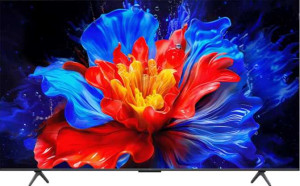
Both the TCL 75C6K and the TCL 75P8K share the same 74.5″ 4K panel fundamentals — identical resolution, pixel density, color depth, refresh rate, and full HDR format support (HDR10, HDR10+, Dolby Vision, and HLG). For a user glancing at the spec table, these two sets look nearly identical. But two differences fundamentally separate the display experience these TVs deliver.
The most impactful differentiator is brightness. The C6K achieves a 1000-nit typical brightness versus the P8K's 350 nits — nearly three times dimmer. This gap is directly tied to the C6K's panel technology: it uses a Mini-LED backlight, which packs thousands of smaller LEDs into precise local dimming zones, enabling far greater peak luminance and contrast control. In practice, this means the C6K can render HDR highlights — sunlit scenes, specular reflections, neon lights — with convincing intensity, which is exactly what HDR content is mastered for. At 350 nits, the P8K technically supports HDR formats, but cannot fully express the dynamic range those formats encode; HDR content will appear noticeably flatter. The second differentiator is adaptive sync: the C6K supports AMD FreeSync Premium Pro (the highest tier), while the P8K is limited to the base AMD FreeSync tier, meaning the C6K offers better low-framerate compensation and HDR support during variable refresh rate gaming.
The C6K holds a clear and decisive edge in this category. Its Mini-LED panel and 1000-nit output make it a materially superior display for HDR movie watching and gaming in any lighting condition, not just a marginal spec bump. The P8K's display is competent for standard content but is significantly outclassed the moment HDR or high-contrast performance is a priority.