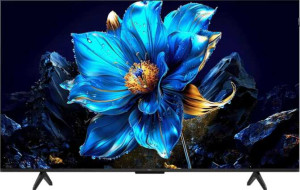
Both the TCL 75C6K and TCL 85P7K share a solid common foundation: native 4K (3840 x 2160) resolution, 10-bit panels capable of rendering 1070 million colors, and full HDR format support across HDR10, HDR10+, Dolby Vision, and HLG. Anti-reflection coating and an ambient light sensor are present on both, as are identical 178° horizontal and vertical viewing angles. These shared traits mean neither TV cuts corners on color depth or HDR versatility.
The differences, however, are substantial. The C6K's Mini-LED backlight technology is the first major dividing line — it enables far more precise local dimming zones, which directly translates to deeper blacks and better contrast versus the P7K's standard LED-backlit LCD panel. This is underscored by the brightness figures: the C6K delivers a 1000 nits typical brightness against the P7K's 450 nits, making HDR highlights significantly more impactful and the C6K a meaningfully better fit for bright or sunlit rooms. The refresh rate gap is equally decisive: the C6K's 144Hz panel versus the P7K's 60Hz means dramatically smoother motion for sports, action films, and especially gaming, where the C6K also supports AMD FreeSync Premium Pro (the highest tier) compared to the P7K's entry-level FreeSync.
The P7K's only offset is its larger physical screen — 84.6″ versus 74.5″ — but this comes at the cost of a lower pixel density (52 ppi vs. 59 ppi), meaning the C6K's image is actually sharper per inch despite being the smaller set. Overall, the TCL 75C6K holds a clear display advantage in every technical dimension that matters for picture quality and performance: superior backlighting technology, more than twice the brightness, more than double the refresh rate, and a better adaptive sync tier. The 85P7K is a reasonable choice if screen size is the primary priority and gaming or HDR performance are not.