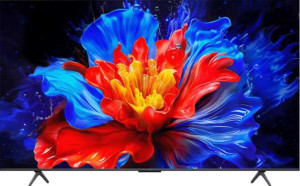
Both the TCL 75C6K and TCL 85P8K share a solid foundation: 4K (3840 x 2160) resolution, a 144Hz refresh rate, 10-bit color depth rendering 1.07 billion colors, and full HDR format coverage including HDR10, HDR10+, Dolby Vision, and HLG. Viewing angles are identical at 178° both horizontally and vertically, and both include an anti-reflection coating and ambient light sensor. For most content consumption use cases, these shared traits place both TVs on equal footing.
The meaningful gaps emerge in three areas. First, the C6K uses a Mini-LED backlighting layer that the P8K lacks — this directly enables its dramatically higher 1000 nits of typical brightness versus just 450 nits on the P8K. In practice, that difference is substantial: HDR highlights will appear far more vivid and true-to-intent on the C6K, and the set will hold up much better in bright rooms. Second, the C6K's slightly higher 59 ppi pixel density (vs. 52 ppi on the larger P8K) means marginally sharper fine detail at equivalent viewing distances, though both are 4K panels and the gap is modest. Third, the C6K supports AMD FreeSync Premium Pro — the highest tier of FreeSync — while the P8K offers only the base AMD FreeSync tier, making the C6K a noticeably better match for variable-refresh-rate gaming with compatible hardware.
The TCL 75C6K holds a clear display advantage: its Mini-LED-backed brightness, stronger HDR performance, and superior adaptive sync support outweigh the P8K's larger screen size. The TCL 85P8K is the better pick only if raw screen real estate is the top priority and the viewing environment is consistently dim.