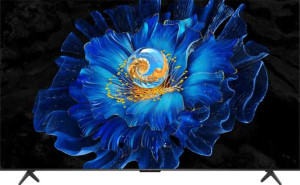
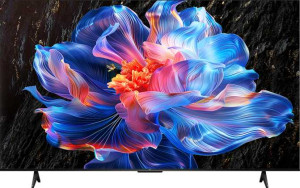
Both the TCL 75C6KS and the TCL 75P6K share the same 74.5″ panel size, 4K (3840 x 2160) resolution, 59 ppi pixel density, 10-bit color depth, and 1.07 billion displayable colors, meaning neither holds an inherent advantage in sheer pixel count or baseline color volume. They also both feature anti-reflection coatings and ambient light sensors, plus identical 178°/178° viewing angles, so picture uniformity when watching off-axis is equally capable on paper.
The meaningful differences emerge quickly, however. The C6KS uses a QLED Mini-LED panel, a significantly more advanced backlighting architecture that enables finer local dimming zones, higher peak brightness, and improved contrast compared to the P6K's conventional LED-backlit LCD panel. On motion handling, the gap is stark: the C6KS runs at a native 120Hz refresh rate, making fast-moving content — sports, gaming, action sequences — considerably smoother, while the P6K is limited to 60Hz, which can show more motion blur in the same scenarios. HDR support further widens the gap: the C6KS covers HDR10, HDR10+, Dolby Vision, and HLG, whereas the P6K supports only HDR10 and HLG, missing both HDR10+ and Dolby Vision — two formats increasingly common on streaming platforms.
The TCL 75C6KS holds a clear and meaningful advantage in this group. Its Mini-LED QLED panel, doubled refresh rate, and broader HDR ecosystem compatibility combine to offer a materially superior display experience, particularly for users who stream HDR content or care about motion clarity. The P6K covers the fundamentals competently, but it trails on every differentiating display specification.