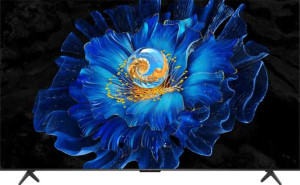
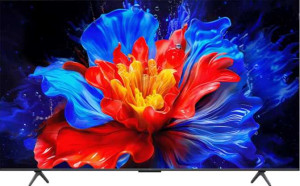
At the panel fundamentals level, the TCL 75C6KS and TCL 75P8K are largely identical: both deliver a 4K (3840 x 2160) resolution across a 74.5″ screen, yielding the same 59 ppi pixel density, 10-bit color depth, and 1.07 billion displayable colors. HDR support is also a perfect match, with both covering HDR10, HDR10+, Dolby Vision, and HLG — meaning neither has an advantage in format compatibility. Viewing angles, anti-reflection coating, and ambient light sensor are likewise shared, so ergonomics and glare handling are equivalent.
The single hardware differentiator is the panel technology underneath: the C6KS is a QLED Mini-LED LCD, while the P8K is a standard QLED LED-backlit LCD. Mini-LED backlighting uses thousands of smaller, more densely packed dimming zones compared to conventional LED arrays, which translates to tighter local dimming, deeper perceived blacks, and better control of blooming around bright highlights in dark scenes — advantages that matter most when watching HDR films or dark-room content. The P8K's lack of Mini-LED means its backlight control is inherently less precise, even though both panels share the same color and resolution specs on paper.
On refresh rate, the P8K holds a 144Hz panel versus the C6KS's 120Hz, which gives the P8K a tangible edge for high-frame-rate gaming — particularly on PC, where a GPU can actually push beyond 120fps. For console gaming or broadcast content, however, the difference is negligible. Overall, the C6KS has the display edge for most living-room use cases thanks to its Mini-LED backlight, while the P8K's higher refresh rate makes it the stronger choice specifically for competitive or high-fps gaming scenarios.