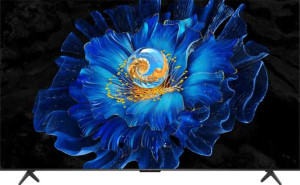
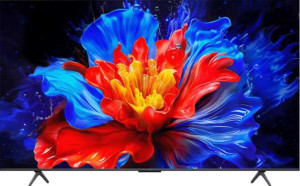
Both the TCL 75C6KS and the TCL 85P8K share a strong 4K UHD foundation — identical 3840 x 2160 resolution, 10-bit color depth, 1.07 billion display colors, and full HDR support across HDR10, HDR10+, Dolby Vision, and HLG. Anti-reflection coating and an ambient light sensor are also present on both, as are wide 178° viewing angles in both directions, making neither model a concern for off-axis viewing in a shared living space.
The most meaningful hardware distinction lies in the panel technology: the C6KS adds Mini-LED backlighting to its QLED LCD stack, which the P8K lacks. In practice, Mini-LED enables far more precise local dimming zones, translating to deeper perceived blacks, brighter highlights, and significantly better contrast in HDR content — a tangible advantage the P8K simply cannot match at the panel level. The C6KS also carries a higher pixel density (59 ppi vs 52 ppi), meaning its image is inherently sharper per inch, which matters especially for viewers seated closer to the screen. The P8K counters with a larger 84.6″ canvas and a faster 144Hz refresh rate versus the C6KS's 120Hz, giving it a smoother motion ceiling for gaming and fast-action content.
On balance, the TCL 75C6KS holds a clear display quality edge due to its Mini-LED backlighting and higher pixel density, making it the stronger choice for picture fidelity and HDR performance. The TCL 85P8K trades image precision for a larger screen size and a higher refresh rate ceiling — a worthwhile trade-off primarily for dedicated gamers or those prioritizing screen real estate over outright image quality.