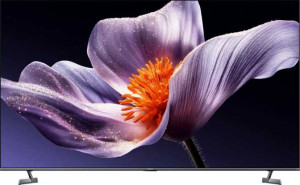
At 75 inches, neither TV is a compact piece of furniture, but the physical differences between them are more significant than the shared screen size might suggest. The footprints are nearly identical — widths of 1670 mm and 1667 mm respectively — but the TCL 75C6KS pulls ahead decisively in depth and mass. At 56.7 mm thick and 23.5 kg, it is considerably slimmer and lighter than the Xiaomi, which measures 73 mm deep and weighs 26.2 kg. That 16 mm difference in thickness and 2.7 kg gap in weight may seem abstract, but they translate directly into easier wall-mounting, simpler one- or two-person installation, and a cleaner profile when viewed from the side.
The volume figures reinforce this gap starkly: the TCL displaces roughly 90,900 cm³ against the Xiaomi's 116,600 cm³ — nearly 28% more bulk for the Xiaomi. Both support VESA mounting, so neither has an advantage on placement flexibility. Where the Xiaomi does recover ground is in its wider operating temperature range of 0°C to 40°C, versus the TCL's 5°C to 35°C. This makes the Xiaomi more tolerant of colder or warmer environments, relevant for installations in unconventional spaces like garages, conservatories, or climates with greater temperature extremes.
For most living room installations, the TCL holds a clear design advantage — it is meaningfully lighter, thinner, and less voluminous, making it easier to handle and less obtrusive once mounted. The Xiaomi's broader temperature tolerance is a niche benefit that only matters in specific installation scenarios.