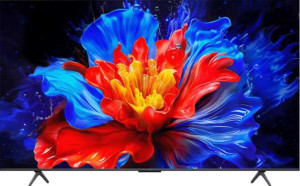
Both the TCL 75C7K and TCL 85P8K share a strong display foundation: native 4K (3840 x 2160) resolution, a 144Hz refresh rate, 10-bit color depth rendering 1.07 billion colors, and full support for every major HDR format — HDR10, HDR10+, Dolby Vision, and HLG. Wide 178° viewing angles on both axes and anti-reflection coatings are also common to both, meaning neither will disappoint in a well-lit room from off-center seating.
Where the two panels diverge sharply is in backlight technology and peak brightness. The C7K uses a Mini-LED backlight, which enables far more precise local dimming zones and dramatically higher luminance — a rated 3000 nits versus just 450 nits on the P8K's conventional LED-backlit panel. In practice, this gap is transformative: the C7K will produce specular highlights in HDR content that genuinely pop, deliver much deeper perceived contrast in bright rooms, and handle direct sunlight far more comfortably. The P8K's 450 nits is adequate for SDR and basic HDR, but it cannot unlock the full visual intensity that Dolby Vision and HDR10+ content is mastered for. On adaptive sync, the C7K also goes further with AMD FreeSync Premium Pro support, which adds low-latency HDR gaming to the standard tear-free sync — versus the P8K's entry-level AMD FreeSync only.
The P8K does offer a larger physical canvas at 84.6″ compared to the C7K's 74.5″, and its lower pixel density (52 ppi vs. 59 ppi) is a natural consequence of spreading the same pixel count across more screen — at typical viewing distances for a TV this size, neither difference is perceptible. Overall, the TCL 75C7K holds a clear display advantage: its Mini-LED architecture and near-seven-fold brightness lead make it the superior panel for HDR performance, bright environments, and HDR gaming, while the P8K's only meaningful edge is raw screen size.